



Table of Contents
- What Makes Premium Coffee Beans Different for Home Baristas
- Single Origin vs Blend Coffee: Which Works Best at Home
- How to Store Coffee Beans for Maximum Freshness
- How to Dial in Espresso at Home with Premium Beans
Last Updated: August 19, 2026
What Makes Premium Coffee Beans Different for Home Baristas
Premium coffee beans deliver a fundamentally different experience than commodity coffee. They're carefully sourced, freshly roasted, and handled with attention to origin, processing method, and roast profile, factors that directly shape flavor clarity, body, and mouthfeel.
Specialty-grade beans contain more complexity. A single origin from Peru develops distinct tasting notes like salted caramel and citrus. These flavor profiles don't exist in grocery store coffee, which is often stale, over-roasted to mask defects, or blended from low-grade robusta beans prioritizing caffeine over taste.
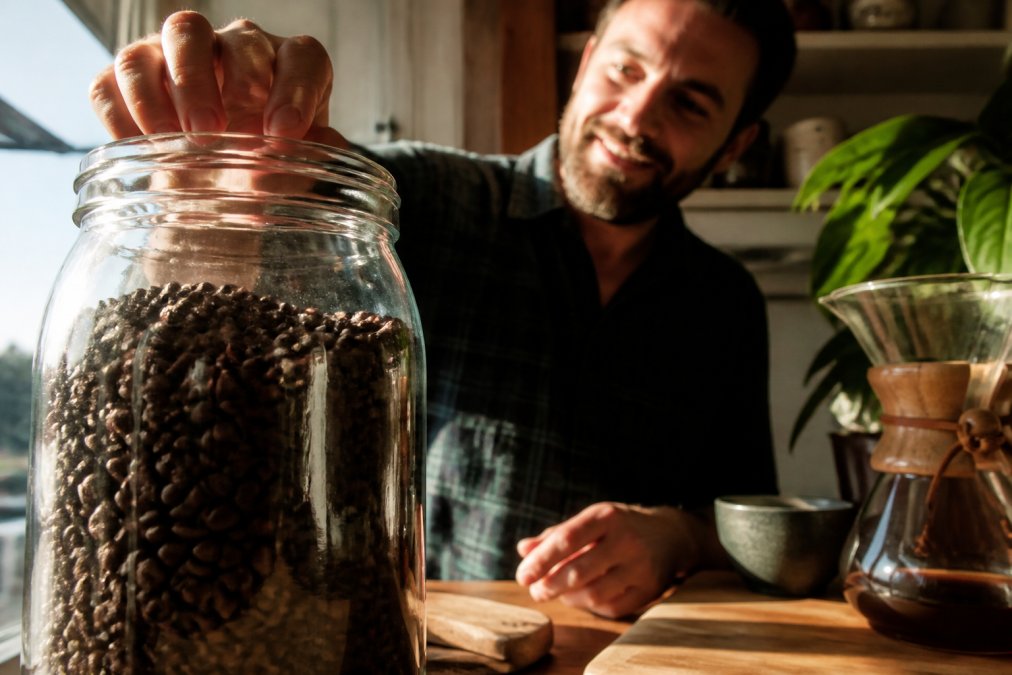
Home baristas benefit most from understanding roast date. Premium beans arrive with a roast date printed on the bag, typically within 2-4 weeks of purchase. Grocery store coffee rarely shows a roast date because it's often months old. Freshness matters because optimal extraction happens when beans have rested 5-10 days post-roast but haven't aged beyond 4 weeks.
The roast profile shapes your brewing options. Light roasts preserve origin characteristics and acidity, ideal for pour-over or AeroPress. Medium roasts balance acidity and body, working across espresso, French press, and drip. Dark roasts develop cocoa and caramel notes with lower acidity, suiting espresso machines where you want syrupy crema and concentrated sweetness.
Single Origin vs Blend Coffee: Which Works Best at Home
Single origin and blend coffee represent two distinct approaches, each with advantages depending on your equipment and taste preferences.
Single origin coffee comes from one specific region, farm, or micro-lot. A Peru single origin from Piura delivers consistent tasting notes: salted caramel, silky sweetness, citrus. Single origins work best when you have stable equipment and can dial in consistently. They reward attention because small adjustments to grind size or water temperature shift the flavor profile noticeably.
Blend coffee combines beans from multiple origins to create a balanced, forgiving cup. Blends are engineered for consistency, so roasters adjust ratios to hit the same flavor target batch after batch.
Single origins shine with espresso machines and precise equipment because extraction changes flavor dramatically. Blends work better with French press or drip coffee because their forgiving nature means slight brewing variations don't tank the cup.
| Coffee Type | Best For | Flavor Profile | Dialing In Difficulty |
|---|---|---|---|
| Single Origin | Espresso, pour-over | Specific, transparent | Higher, requires precision |
| Blend | French press, drip, daily use | Balanced, forgiving | Lower, more consistent |
| Dark Roast Blend | Espresso with milk | Bold, cocoa-forward | Medium, good crema |
| Light Roast Single Origin | AeroPress, pour-over | Bright, acidic, clean | Higher, extraction-sensitive |
How to Store Coffee Beans for Maximum Freshness
Storage directly impacts freshness and flavor. Coffee degasses after roasting, and exposure to light, heat, moisture, and oxygen accelerates staling.
The ideal environment is cool, dark, and airtight. A sealed container in a pantry works better than the freezer, which introduces moisture when beans warm up. Keep beans away from direct sunlight and heat sources at room temperature (around 68-72°F).
Whole bean coffee stays fresh longer than ground coffee because grinding increases surface area exposed to oxygen. Grind only what you'll brew within 24 hours.
Beans peak in flavor 5-10 days after roasting when degassing has mostly finished but oxidation hasn't begun. They remain good for up to 4 weeks post-roast in proper storage. After 4 weeks, flavor clarity fades.
Many home baristas buy smaller bags more frequently rather than stockpiling. Chilled Iguana Coffee Co. ships fresh-roasted beans directly to your door, so you can order smaller quantities and always brew from recently roasted stock.
How to Dial in Espresso at Home with Premium Beans
Dialing in means adjusting your grind size, dose, and tamp pressure until your espresso pulls at the right speed and tastes balanced. With premium beans, the effort pays off because you're working with coffee worth the attention.
Start with grind size. Espresso machines require a fine, consistent grind. A burr grinder (not a blade grinder) is essential because it produces uniform particles. Pull a test shot with your current grind. If the shot runs too fast (under 25 seconds), go finer. If it runs too slow (over 35 seconds), go coarser. Target 25-30 seconds from the moment water hits the portafilter to the moment the shot finishes.
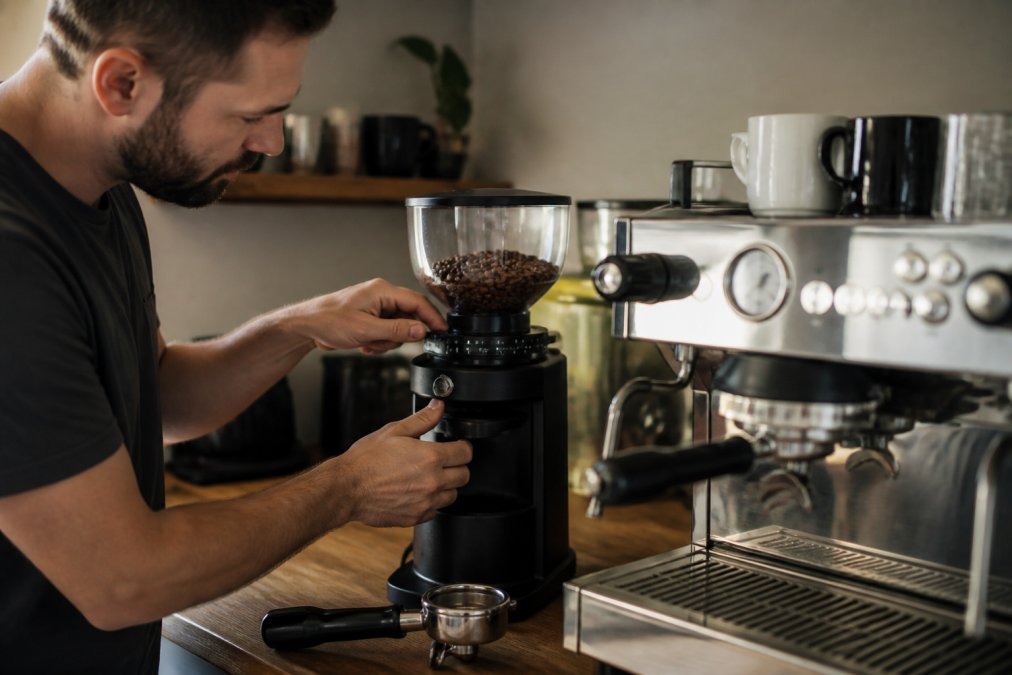
Dose and tamping come next. Dose is the amount of ground coffee you load into the portafilter, typically 18-20 grams for a double shot. Tamp with consistent, moderate pressure (around 30 pounds) perpendicular to the portafilter. Uneven tamping creates channels where water rushes through, causing sour shots.
Premium beans respond immediately to dialing adjustments. If you're pulling sour shots, the sourness disappears when you dial finer. If you're pulling bitter shots, the bitterness clears when you dial coarser.
Water chemistry matters more than most guides acknowledge. Espresso extraction depends on water dissolving soluble compounds from the coffee grounds. Filtered water with balanced mineral content (around 150 PPM total dissolved solids) works best.
:::tip Keep a notebook of your dialing adjustments. Record the grind setting, dose, tamp pressure, shot time, and flavor notes. After 20-30 shots, patterns emerge and you'll see which grind range works for your machine.
Change one variable at a time, either grind size, dose, or tamp pressure, and pull a test shot. Small changes matter more than large ones. After 5-10 test shots, you'll dial in and start pulling consistent, balanced espresso.
Premium coffee beans for home baristas unlock flavor that grocery store coffee can't deliver. The difference comes down to freshness, origin transparency, and roast quality. The real payoff happens when you dial in your technique and taste the results, a balanced shot with clear tasting notes, smooth body, and satisfying sweetness.
Start with Chilled Iguana Coffee Co.'s Best Sellers Sample Pack. You'll get six different roasts, single origins from Peru, Mexico, and Bali alongside blends like 6 Bean, Cowboy, and Breakfast, so you can explore what works with your equipment and palate. Fresh-roasted and shipped directly to your door, these beans arrive at peak freshness. Dial in with one, dial in with another, and build your baseline. That's how you move from brewing decent coffee to brewing coffee worth the ritual.

Frequently Asked Questions
What defines a premium coffee bean for home brewing?
Premium coffee beans are specialty-grade beans with traceable origins, carefully selected for flavor complexity and freshness. They feature distinct tasting notes like citrus, chocolate, or floral tones, come from high-altitude regions with ideal growing conditions, and are roasted recently to preserve their aromatic qualities. Unlike commodity coffee, premium beans undergo rigorous cupping and grading to ensure consistent quality. Home baristas notice the difference immediately: richer body, clearer flavor clarity, and a more satisfying aftertaste.
How does roast date affect the quality of home-brewed coffee?
Roast date is critical because coffee begins degassing immediately after roasting. Beans roasted within 1-2 weeks deliver optimal flavor, crema, and extraction. Older beans (beyond 4 weeks) lose aromatic compounds and produce flat, muted tasting notes. For espresso, a 5-10 day window after roast offers the best balance between degassing completion and flavor retention. Check the roast date on your bag and brew within 3-4 weeks for peak quality. Chilled Iguana Coffee Co. roasts fresh and ships quickly to ensure your beans arrive at their prime.
Should home baristas choose single-origin or blended coffee beans?
Single-origin beans showcase distinct regional characteristics: a Peru single origin delivers salted caramel and citrus, while Bali beans offer dark chocolate and molasses. Blends combine beans from multiple origins to create balanced, approachable flavor profiles. Single-origin excels for pour-over and filter methods where flavor clarity shines. Blends work beautifully for espresso because they're engineered for crema and milk compatibility. Start with our Best Sellers Sample Pack to taste both styles, then choose based on your brewing method and flavor preference.
How should premium coffee beans be stored to maintain freshness?
Store beans in an airtight container away from heat, light, and moisture. A cool, dark cupboard works best; avoid the refrigerator or freezer as condensation degrades flavor. Whole beans stay fresh 3-4 weeks after roasting; grind just before brewing to preserve aroma and tasting notes. Oxygen exposure causes staling, so seal your container tightly after each use. Never store beans in clear bags or on countertops near appliances. Proper storage extends the window where your premium beans deliver their full complexity and sweetness.
What coffee beans work best for achieving a rich crema?
Crema forms when hot water forces CO2 and oils through finely ground coffee under pressure. Dark and medium-dark roasts produce thicker crema because their oils are more accessible. Robusta beans naturally yield more crema than Arabica due to higher oil content and pressure tolerance. Our 6 Bean Blend and Italian Roast are specifically crafted for espresso, delivering the syrupy crema and concentrated aroma home baristas seek. A slightly finer grind and proper tamping pressure also maximize crema formation, dial in your extraction time between 25-30 seconds for optimal results.
This article was written using GrandRanker