



Table of Contents
- How to Tell If Coffee Beans Are Fresh: The Key Signs
- Coffee Roast Date vs Expiration Date: What Actually Matters
- The Coffee Bloom Test: Proof of Freshness in Your Cup
- How to Store Coffee Beans for Maximum Freshness
Last Updated: August 14, 2026
How to Tell If Coffee Beans Are Fresh: The Key Signs
Knowing how to tell if coffee beans are fresh is the single most important skill a home brewer can develop. Stale beans are the hidden culprit behind flat, hollow-flavored cups that no amount of technique can rescue. At Chilled Iguana Coffee Co., we've seen firsthand how the difference between a fresh bag and an old one can completely transform what ends up in your mug.
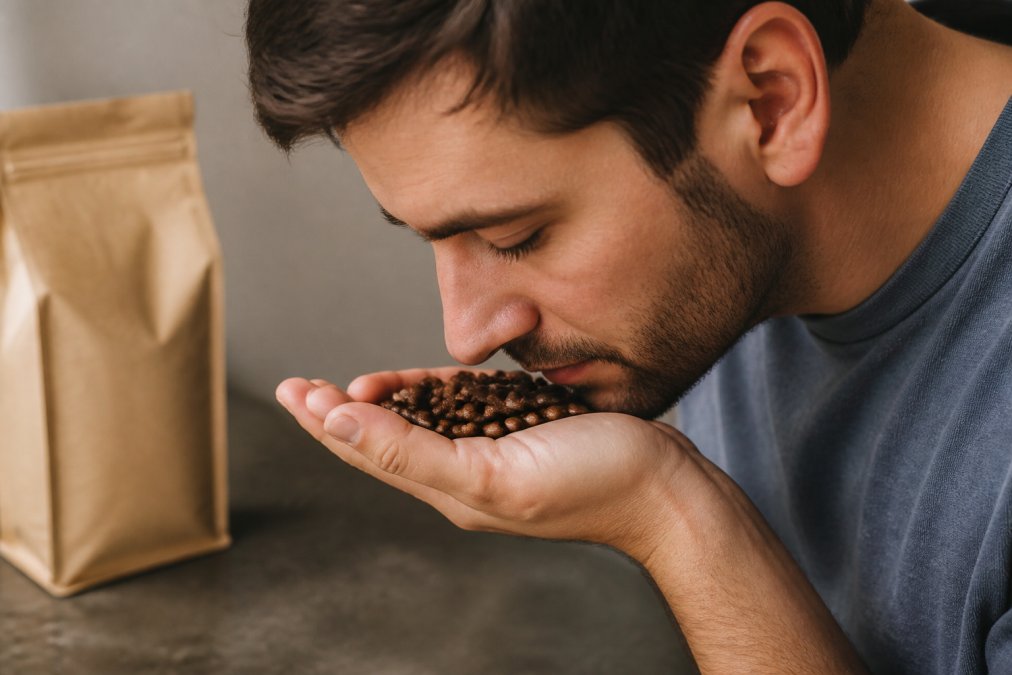
Your senses are surprisingly accurate tools for freshness evaluation. Aroma is your first and most reliable signal, fresh, freshly roasted beans carry a rich, fragrant smell that hits you the moment you open the bag. If you get a dull, papery smell or almost nothing at all, that's your first red flag.
Visual inspection tells you a lot too. Look for a matte, slightly textured surface (not overly shiny), consistent color across the roast level, and no excessive oily residue pooling inside the bag. A light sheen on dark roast beans is fine; a heavily glossy, wet-looking surface means the oils have oxidized over time.
Touch is underrated. Fresh beans feel firm and dense. Beans that crumble or feel hollow when you press them lightly have dried out past their prime.
| Freshness Sign | What Fresh Looks Like | What Stale Looks Like |
|---|---|---|
| Aroma | Rich, fragrant, complex | Papery, faint, or musty |
| Visual | Matte surface, consistent color | Excessive glossy oily residue or chalky |
| Texture | Firm, dense beans | Crumbly, hollow feeling |
| Taste | Full body, clear acidity, tasting notes present | Hollow flavor, flat, rancid aftertaste |
| Bloom | Large, domed bubble rise | Minimal or no bloom |
Coffee Roast Date vs Expiration Date: What Actually Matters
Most people focus on the wrong date. The expiration date printed on a coffee bag tells you almost nothing useful about flavor. The roast date is what actually matters.
Coffee is perishable in the flavor sense, not the food-safety sense. Beans roasted weeks or months ago won't make you sick, but they will make you a disappointing cup. The roast date is when the clock starts ticking on peak flavor.
When beans are roasted, they release carbon dioxide as a byproduct. This degassing continues for days after roasting, and the CO₂ acts as a natural preservative, pushing oxygen away from the bean's surface and slowing oxidation. Quality coffee packaging uses a one-way valve to let CO₂ escape without letting oxygen in.
Here's the practical timeline most specialty roasters follow:
- Days 1-3 post-roast: Beans are still off-gassing heavily. Brewing too early produces uneven extraction.
- Days 4-14 post-roast: The sweet spot for most brewing methods. Flavor profile is at its peak, acidity is bright, and body is full.
- Days 15-30 post-roast: Still excellent, especially for espresso.
- 30-60 days post-roast: Acceptable but declining. Aroma diminishes noticeably.
- Beyond 60 days post-roast: Stale. Hollow flavor and papery taste become dominant.
The Coffee Bloom Test: Proof of Freshness in Your Cup
The bloom test is the most satisfying way to confirm freshness right at your brewing station. When you pour hot water over fresh coffee grounds, the CO₂ trapped inside the beans escapes rapidly on contact with heat, creating a visible, domed bubble of rising gas. A large, vigorous bloom confirms your beans were roasted recently.
How to perform the bloom test:
- Heat your water to 195-205°F.
- Add your coffee grounds to your dripper or brewing vessel.
- Pour just enough water to saturate the grounds, roughly twice the weight of the coffee.
- Wait 30-45 seconds and observe.
Fresh beans will produce a pronounced dome of bubbling, rising grounds. Stale beans produce little to no bloom, with grounds sitting flat and wet with minimal activity.
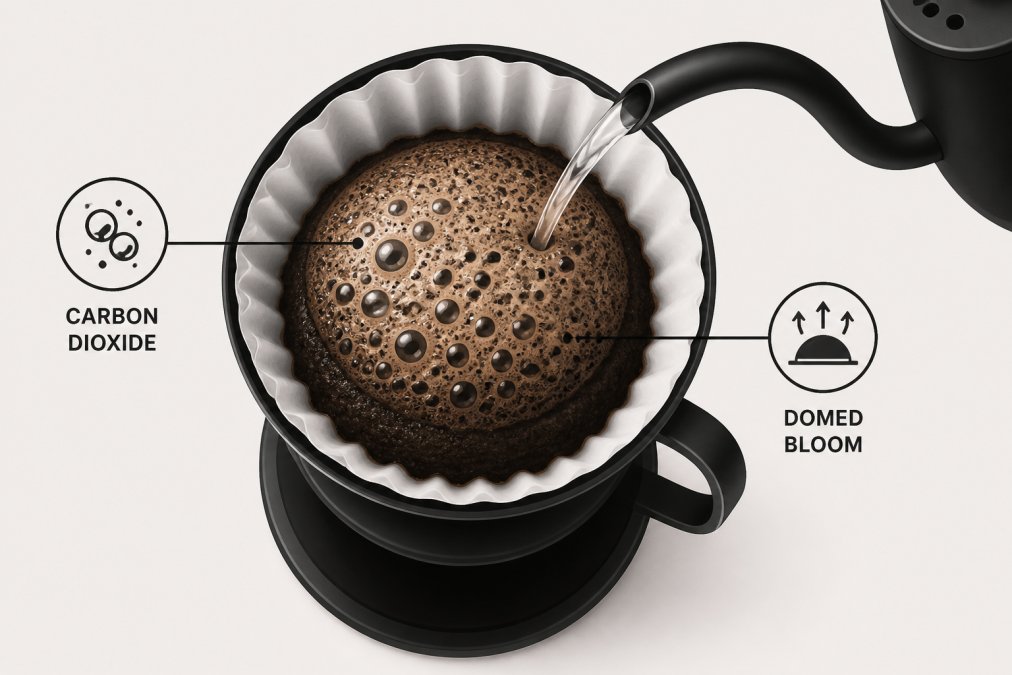
The bloom test works across brewing methods: pour-over, French press, AeroPress, and drip machines. Espresso machines produce a similar visual cue, watch for a rich, tiger-striped crema. Thin, pale crema often signals stale beans.
How to Store Coffee Beans for Maximum Freshness
Buying fresh beans is only half the battle. Poor storage will turn excellent coffee stale within days. The enemies of fresh coffee are oxygen, moisture, light exposure, and heat.
The ideal storage setup is simple:
- Airtight container: A ceramic or stainless canister with an airtight seal works well. Avoid clear glass containers; light degrades beans faster than most people realize.
- Cool, dark location: A cabinet away from your stove or oven is ideal. Heat accelerates oxidation and drives off aromatic compounds.
- Away from moisture: Never store beans near a sink or in a humid environment.
- Original bag with valve: If your beans came in a bag with a one-way valve, that bag is excellent storage for the first week or two. Fold the top down and clip it tightly.
What about freezing coffee beans?
Freezing is viable when done correctly. The key rule: freeze in airtight, portion-sized batches and never refreeze. Each freeze-thaw cycle introduces moisture condensation on the beans, which accelerates staling. If you buy in bulk, divide the beans into weekly portions, seal each one airtight, and freeze all but the current week's supply.
Freshness vs. peak flavor: they're not the same thing
Fresh beans aren't necessarily at peak flavor. A bag roasted yesterday is fresh but needs a few days of resting before it reaches optimal extraction. Peak flavor sits in that 4-14 day post-roast window for most light and medium roasts. Dark roasts often need slightly longer.
Sensory evaluation at home doesn't require professional training. Brew a cup, let it cool slightly, and pay attention to the tasting notes. Does the acidity feel bright and clean? Is there a clear body and finish? Or does the cup taste flat, papery, or hollow? Your palate will tell you more than any date on a bag.
The best way to consistently brew with fresh, peak-flavor beans is to source from a roaster who roasts to order and ships quickly. Chilled Iguana Coffee Co. offers fresh-roasted beans sourced from around the world, delivered directly to your door so you're never stuck guessing how old your coffee actually is. Explore our selection, including the popular Best Sellers Sample Pack for just $22.99, or try our rich Colombia single-origin roast for $16.99.


Frequently Asked Questions
Does the roast date matter more than the expiration date on coffee?
Yes, the roast date is far more useful than an expiration date for judging fresh coffee beans. Expiration dates are set by manufacturers and can extend a year or more, but freshly roasted coffee is typically at its best between 5 and 30 days after roasting. An expiration date tells you about food safety; the roast date tells you about flavor. Always check the roast or batch date printed on the bag when buying specialty coffee.
How can you tell if coffee beans have gone rancid?
Rancid coffee beans smell flat, musty, or faintly like cardboard rather than fragrant and rich. Visually, stale dark-roast beans may show an oily residue that has turned gummy rather than glossy. Brewed, they produce a hollow, papery taste with little acidity or body. If your bloom test produces no bubbles during brewing, that is another strong sign the beans have lost their carbon dioxide and gone stale.
How long will coffee beans stay fresh in an unopened bag?
An unopened bag with a one-way valve can preserve fresh coffee beans for roughly two to four weeks past the roast date at peak flavor, and remain acceptable for up to three months. Once opened, aim to use the beans within two to three weeks. Vacuum-sealed bags without a valve may extend shelf life slightly, but once you break the seal, oxidation begins immediately, so store opened beans in an airtight container away from heat, moisture, and light exposure.
Does grinding coffee beans make them go stale faster?
Significantly faster. Grinding increases the surface area of coffee grounds exposed to oxygen, moisture, and light, accelerating oxidation and flavor loss. Whole beans can stay fresh for weeks; ground coffee can go stale within hours at room temperature without proper storage. For the best flavor profile, grind only what you need immediately before brewing. If you must pre-grind, store coffee grounds in an airtight container and use them within a day or two.
Stale beans are a solvable problem. Once you know what to look for, the roast date, the bloom, the aroma, the visual cues, you'll never unknowingly brew a flat cup again. Chilled Iguana Coffee Co. ships fresh-roasted specialty coffee directly to your door, so the roast date is never a mystery. Check out our Costa Rica single origin for a bright, sweet medium roast, or grab the Best Sellers Sample Pack to taste the full range and find your perfect match.
This article was written using GrandRanker