



Table of Contents
- How to Identify High Quality Coffee: Start with the Roast Date
- Coffee Roast Profiles Explained and What They Tell You
- Specialty Coffee Grading Standards and What to Look For
- How to Store Coffee Beans for Freshness and Quality
Last Updated: August 17, 2026
How to Identify High Quality Coffee: Start with the Roast Date
The roast date is your first and most critical clue when learning how to identify high quality coffee. Unlike the "best by" dates you see on grocery store bags, the roast date tells you exactly when those beans were roasted, and freshness matters enormously for flavor.
Most specialty coffee loses its peak aromatic complexity within 2-4 weeks of roasting. After that window, the beans begin to stale, and the vibrant flavor notes flatten into something generic. When you're evaluating coffee, look for bags roasted within the last 14 days. This is the sweet spot where the coffee has degassed enough to brew smoothly but still carries the full sensory profile the roaster intended.
At Chilled Iguana Coffee Co., we print the roast date prominently on every bag because we know fresh beans are non-negotiable for specialty coffee. If a bag doesn't display a roast date, or if it's vague like "roasted in July", that's a red flag. You're likely looking at coffee that's been sitting in inventory for months.
Coffee Roast Profiles Explained and What They Tell You
Understanding roast level is fundamental to how to identify high quality coffee, but it's not about picking your favorite darkness. Roast profile tells you about the bean's origin characteristics and how the roaster chose to highlight them.
Light roasts preserve the bean's origin flavors, the acidity, fruit notes, and floral aromatics that come from where the coffee was grown. Medium roasts balance origin character with roasted sweetness, creating approachable complexity. Dark roasts emphasize body and chocolate or caramel notes, sometimes obscuring origin details entirely.
The key insight: a well-executed light roast is harder to pull off than a dark roast. Dark roasting masks defects and inconsistencies. Light roasting exposes them. When you see a specialty roaster offering a light roast, it signals confidence in their bean quality, they're not hiding anything.
Look at the roast profile as a window into the roaster's philosophy. Are they showcasing single-origin character, or building balanced blends? A roaster who offers multiple roast levels of the same origin is giving you flexibility to find your preference while proving the beans are high-quality enough to shine at different roast levels.
| Roast Level | Flavor Profile | Origin Character | Best For |
|---|---|---|---|
| Light | Bright acidity, fruit, floral | Fully expressed | Filter coffee, pour-over |
| Medium | Balanced sweetness, origin notes | Clearly present | Espresso, drip, versatile |
| Dark | Full body, chocolate, caramel | Subdued | Espresso, French press |
Specialty Coffee Grading Standards and What to Look For
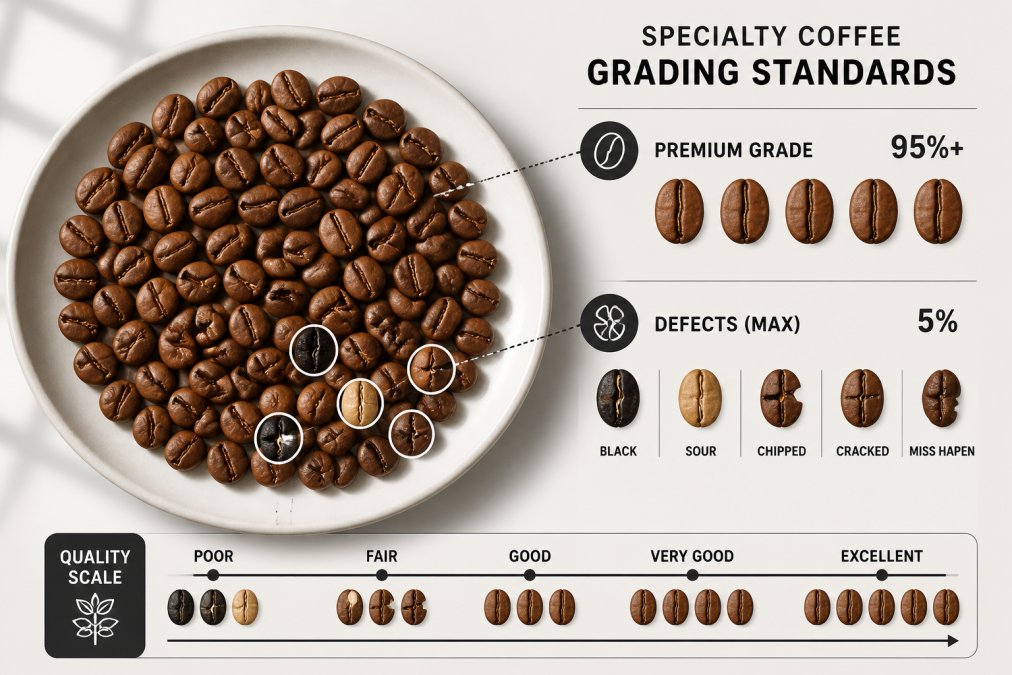
Specialty coffee grading standards exist to separate genuinely excellent beans from commodity-grade coffee. Understanding these standards is essential for how to identify high quality coffee with confidence.
The Specialty Coffee Association grades beans on a 100-point scale, with scores above 80 considered specialty grade. But you don't need to become a certified cupper to spot quality indicators. Look for these markers:
Bean uniformity. High-quality beans are consistent in size, color, and density. Defects, broken beans, insect damage, discolored beans, are minimal. A handful of flawless beans signals careful sorting and processing.
Color consistency. Within a single roast level, beans should have uniform color. Uneven roasting or inconsistent bean density creates color variation, which hints at inconsistent extraction and flavor.
Origin transparency. Specialty roasters name the farm, region, altitude, and processing method. This transparency matters because it proves traceability and allows you to explore how processing methods affect flavor. Natural process coffees taste different from washed coffees from the same region, and knowing the difference helps you understand what you're tasting.
How to Store Coffee Beans for Freshness and Quality
Storage determines whether your high-quality beans stay excellent or degrade into stale, flat coffee. How you store coffee beans for freshness is just as important as the roast date and origin.
Coffee's enemies are air, light, moisture, and heat. Oxygen degrades flavor compounds. Light accelerates staling. Excess moisture can cause mold. Heat speeds up all three problems.
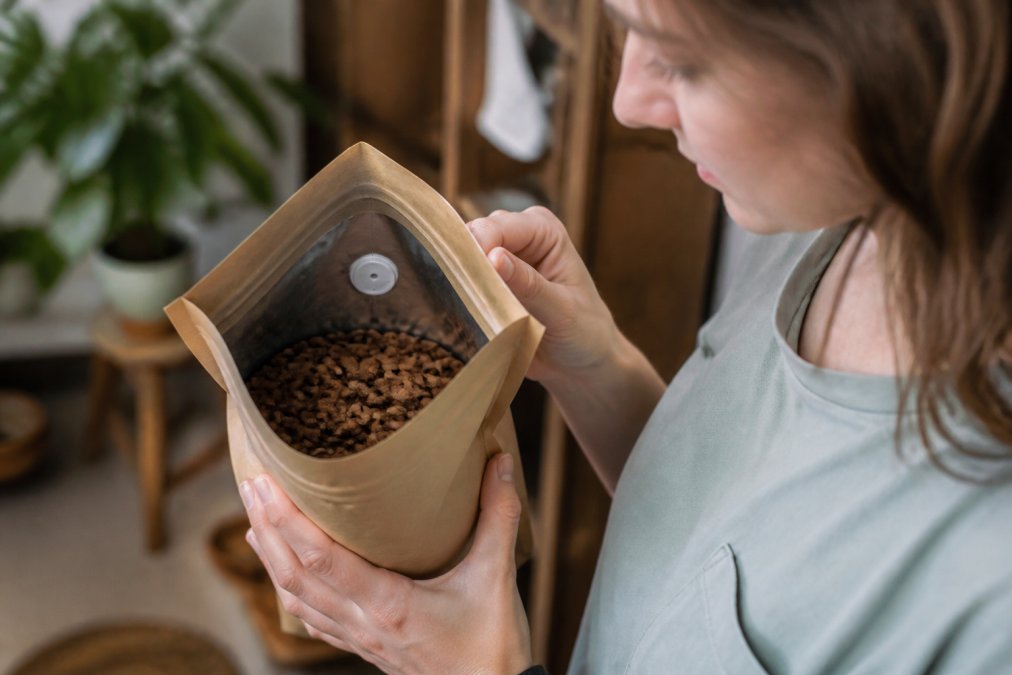
The best storage container is opaque, airtight, and cool. Many specialty roasters package coffee in kraft paper bags with a one-way valve, this allows carbon dioxide (produced during degassing) to escape without letting oxygen back in. If you transfer beans to another container, choose something with an airtight seal and keep it in a cool, dark place. A kitchen cabinet away from the stove is ideal; the freezer is a common misconception and actually causes condensation that damages beans.
Whole beans stay fresh longer than ground coffee. Grinding exposes far more surface area to oxygen, accelerating staling. Grind only what you'll use within a few days.
Most specialty coffee is best consumed within 30-40 days of the roast date. After that window, the beans are still drinkable but lose the brightness and nuance that made them special. This is why roast date matters so much, it's your countdown timer to peak flavor.
Learning how to identify high quality coffee transforms your daily ritual. You'll notice the difference immediately: brighter acidity, cleaner flavor notes, and a finish that lingers rather than fades. When you're ready to experience specialty-grade coffee delivered fresh to your door, explore Chilled Iguana Coffee Co.'s curated selection. Our Best Sellers Sample Pack ($22.99) includes six distinct roast profiles, from our bold 6Bean blend to single-origin offerings like Peru and Colombia, so you can taste the difference roast date, origin, and processing method make. Start with fresh beans and taste what specialty coffee is supposed to be.


Frequently Asked Questions
What are the key indicators of high-quality coffee beans?
High-quality coffee beans show consistent color and size (indicating uniform roasting), have a roast date within 2-4 weeks, display origin transparency on the label, and lack visible defects like cracks or insect damage. Specialty-grade beans score 80+ on the cupping scale. Aroma should be vibrant and complex, not musty or flat. Freshness is the most critical factor, beans older than 4-6 weeks lose flavor compounds rapidly.
How does roast date affect coffee quality and freshness?
The roast date directly determines freshness because coffee begins losing aromatic compounds immediately after roasting. Beans roasted 2-4 weeks ago are ideal; they've completed degassing (releasing CO2) and have reached flavor peak. Coffee roasted more than 6-8 weeks ago tastes flat and stale. Always check the bag for a printed roast date, reputable roasters like Chilled Iguana Coffee Co. display this prominently because it proves the beans were roasted recently, not sitting in inventory for months.
What is the difference between specialty grade and commercial coffee?
Specialty-grade coffee scores 80 or higher on the Specialty Coffee Association (SCA) cupping scale and has zero defects or only a few minor ones. Commercial-grade coffee scores below 80 and may have multiple defects. Specialty beans come from single origins or carefully curated blends with documented flavor notes (acidity, body, aftertaste). Commercial coffee is often a generic blend designed for volume, not flavor. Specialty beans cost more because they're sourced from premium farms, roasted with precision, and delivered fresh.
How can I tell if coffee beans are fresh when ordering online?
Check for a roast date on the bag, it should be within 2-4 weeks of your order date. Look for a one-way valve on the packaging, which allows degassing without letting oxygen in. Read the label for origin transparency (specific region, farm, or cooperative). Avoid bags without dates or vague language like 'recently roasted.' When you open fresh beans, they should smell vibrant and aromatic. If they smell musty, weak, or oily, they're past their prime. Reputable roasters ship immediately after roasting to ensure freshness upon arrival.
Does the origin of coffee beans really impact quality and flavor?
Yes, origin significantly affects flavor. Beans from different regions develop distinct flavor profiles based on altitude, climate, soil, and processing method. Colombian beans often show bright citrus and balanced body; Sumatran beans develop earthy, syrupy characteristics; Costa Rican beans typically display sweet apple and honey notes. Single-origin bags let you taste these differences clearly. Transparency about origin (specific farm, cooperative, or region) is a mark of quality because it proves the roaster knows where the beans came from and stands behind them.
What should I look for on a coffee bag label to identify quality?
Look for: (1) Roast date, should be recent, not vague; (2) Origin details, specific region, farm, or cooperative, not just 'Brazil' or 'Africa'; (3) Roast level, medium, medium-dark, dark, or single-origin designation; (4) Flavor notes, descriptors like 'bright acidity,' 'chocolate,' 'fruit-forward'; (5) Processing method, washed, natural, honey-processed; (6) Specialty certification or SCA grading if available. Avoid bags with no roast date, generic blends with no origin info, or oily surfaces (sign of age or poor storage). Quality roasters provide this detail because it shows expertise and transparency.
How should I store coffee beans to maintain freshness and quality?
Store beans in an airtight container away from light, heat, and moisture. Keep them at room temperature, never in the refrigerator or freezer, which introduces condensation and degrades flavor. A sealed jar or the original bag with a one-way valve works well. Whole beans stay fresh 3-4 weeks after roasting; ground coffee loses freshness in days. Buy only what you'll use in 2-3 weeks. Avoid clear containers and direct sunlight. Proper storage preserves the aromatic compounds that make specialty coffee worth buying.
Can I identify high-quality coffee using basic home sensory testing?
Absolutely. Brew a small amount and observe: (1) Aroma, complex, vibrant, and inviting, not musty or flat; (2) Color, rich and uniform, not pale or overly dark; (3) Taste, clean, balanced flavor with clear notes (fruit, chocolate, floral), not bitter or sour; (4) Mouthfeel, smooth body, not thin or gritty; (5) Aftertaste, pleasant finish that lingers, not harsh. Compare two coffees side-by-side to notice differences. You don't need expensive equipment, a clean cup and your senses reveal a lot about quality. This simple method helps you understand what specialty-grade coffee tastes like.
This article was written using GrandRanker