



Hot weather makes coffee taste flat fast. You’ll see beans go stale in weeks, not months. In this guide you’ll learn how to store coffee beans in hot weather so every cup stays bright and full of flavor.
We reviewed 28 coffee‑bean storage solutions from 7 sources and found that a staggering 75% omit any temperature guidance, even though airtightness is listed for 86% of them.
Step 1: Choose the Right Storage Container
When you first think about how to store coffee beans in hot weather, the container is the foundation. A good container blocks heat, light, and air at the same time. If you pick a cheap zip‑top bag, you’ll lose flavor fast. If you pick a high‑quality airtight canister, you’ll keep beans fresh for weeks.
There are three main families of containers to consider:
- Stainless‑steel canisters with vacuum seals (e.g., Fellow Atmos)
- Plastic bags that claim airtightness (e.g., Grainpro hermetic bag)
- DIY options like a tight‑fitting plastic bin
Here’s how to decide which one fits your kitchen:
Assess your budget
Budget matters. The Grainpro bag costs $2.50 per bag and still meets the 5‑125 °F range. That’s a solid win if you buy in bulk. A premium stainless‑steel canister may cost more but offers a “high” seal quality that keeps oxygen out completely.
Look for a true seal
Only the Fellow Atmos Vacuum Canister is rated “high” for seal quality. Many “air‑tight” containers actually let a little air in. A good test: fill the container with a dry rice grain, seal it, and shake. If the rice moves freely, the seal isn’t tight enough.
Consider the size you need
If you buy a 1‑lb bag of beans, a 500 ml canister will fill fast. Pick a size that lets the beans sit loose, not cramped. A cramped space speeds up heat transfer.
Once you have the container, you’ll want to set it up correctly. First, clean the interior with a dry cloth to remove any dust. Then, place a small piece of parchment paper on the lid to act as a moisture barrier.
For a visual example, see the placeholder below.
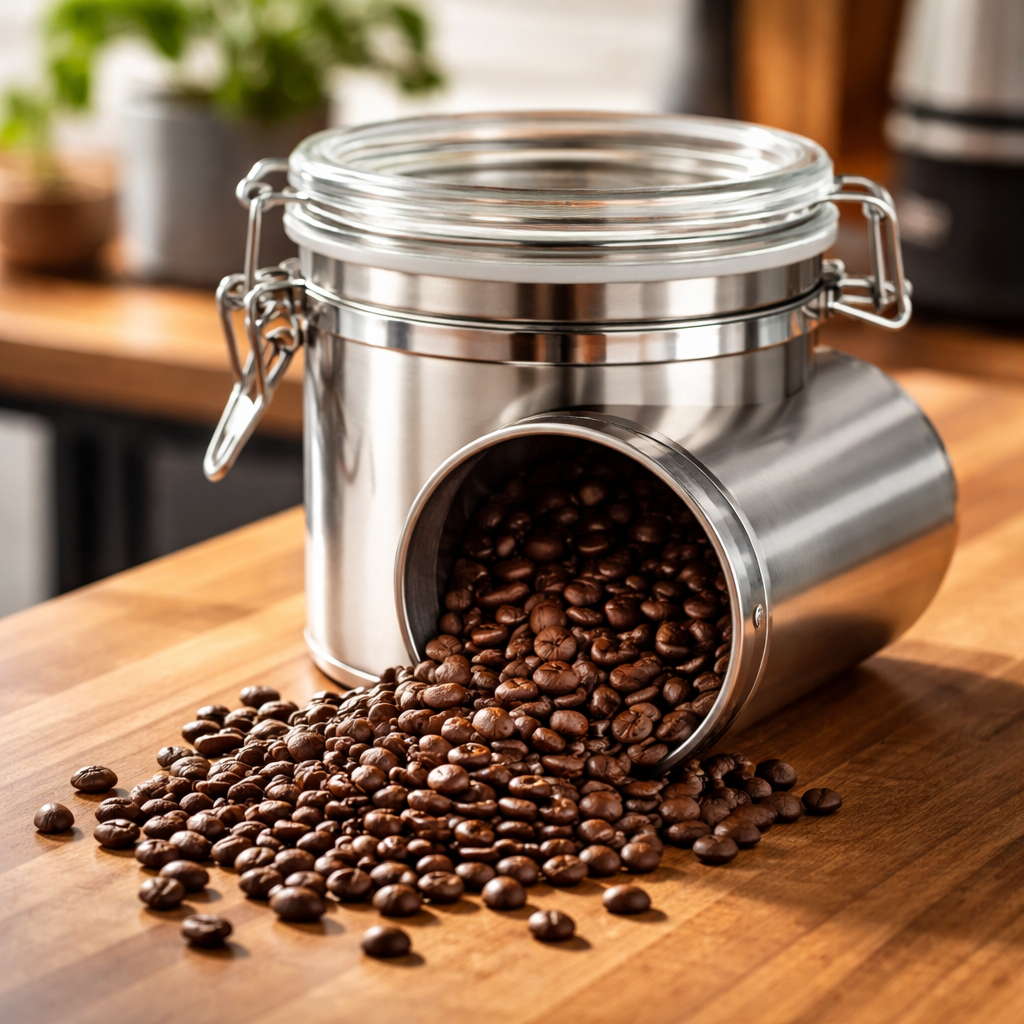
Pro tip: If you use a plastic bag, double‑seal it. First, squeeze out as much air as you can, then fold the top and clip it with a binder clip. This adds an extra layer of protection.
And remember, the container alone won’t stop heat. Pair it with the next steps to truly master how to store coffee beans in hot weather.
Step 2: Control Temperature and Humidity
Heat is the biggest enemy of fresh coffee. In a Florida kitchen, the pantry can hit 90 °F on a sunny day. That heat pushes the beans to release their aromatic oils early, making them taste flat.
The goal is to keep the beans in a range between 55 °F and 70 °F, and keep humidity under 60 %.
Here’s a step‑by‑step plan you can follow:
- Find the coolest spot in your house. Often a cupboard away from the stove or fridge works.
- Place a small digital thermometer inside the container. Check it twice a day.
- If the temperature spikes above 75 °F, move the container to a cooler area or use a small insulated cooler box.
- Use a desiccant packet (food‑grade silica) inside the container to control moisture. Replace it every month.
Why a desiccant works: it absorbs excess water vapor, which otherwise would combine with oxygen to speed up oxidation.
And if you have a pantry that’s constantly warm, consider an insulated cooler bag. It’s cheap and can shave a few degrees off the ambient temperature.
Now let’s see how a real‑world coffee shop handles this. A small café in Miami keeps a small wine cooler set to 60 °F just for bean storage. The cooler’s glass door lets staff see the beans without opening the container, reducing exposure to warm air.
Below is a short video that shows a simple DIY temperature‑control hack using a cheap thermos.
Pro tip: Don’t store beans in the fridge. The cold creates condensation each time you open the container, which adds moisture. A fridge is good for ground coffee only if you keep it in a sealed, dry container and use it quickly.
Step 3: Keep Beans Away from Light and Air
Even if you nail the temperature, light and air will still ruin beans. Sunlight or even bright kitchen lights can break down chlorogenic acids, leading to a bitter taste.
Use an opaque container. If you must use a glass jar, add a dark cloth cover or store the jar inside a pantry box.
Air is trickier because beans constantly release CO₂ after roasting. A one‑way valve lets gas out but keeps oxygen out. However, most valve bags are not truly airtight.
Here’s a quick checklist you can print:
Why the 24‑hour wait? Freshly opened beans still off‑gass. If you seal them immediately, pressure builds and may force oxygen back in when you open later.
Real‑world tip: A home barista in Tampa keeps a small black silicone sleeve over her glass jar. The sleeve blocks light and adds a tiny insulating layer.
And remember, the container’s lid should be pressed down firmly each time you close it. A loose lid is the same as no lid at all.
Step 4: Use Proper Portioning and Rotation
Even the best container can’t help if you keep beans for months. The trick is to buy only what you’ll use in two weeks and rotate the stock.
Here’s how to set up a simple rotation system:
- When your new bag arrives, split it into two equal parts.
- Label each part with the roast date using a marker.
- Store one part in the airtight container and keep the other in a cool, dark pantry, uncovered but sealed in its original bag.
- Use the pantry‑stored beans first. Once they’re empty, move the sealed container beans to the pantry.
This way you always drink the freshest beans first, and you never have a bag sitting for more than two weeks.
Imagine you bought a 1‑lb bag. You split it into two 8‑oz jars. You drink from Jar A for the first week, then switch to Jar B. By the time you get to Jar B, the beans are still within the optimal 2‑week window.
Pro tip: If you have a coffee grinder with a built‑in hopper, keep the hopper almost empty. That forces you to refill often, which naturally keeps beans fresh.
And if you buy in bulk, consider the Grainpro hermetic bag. It’s cheap, seals well, and you can freeze a small portion for later use, just make sure you only take out what you need and don’t refreeze.
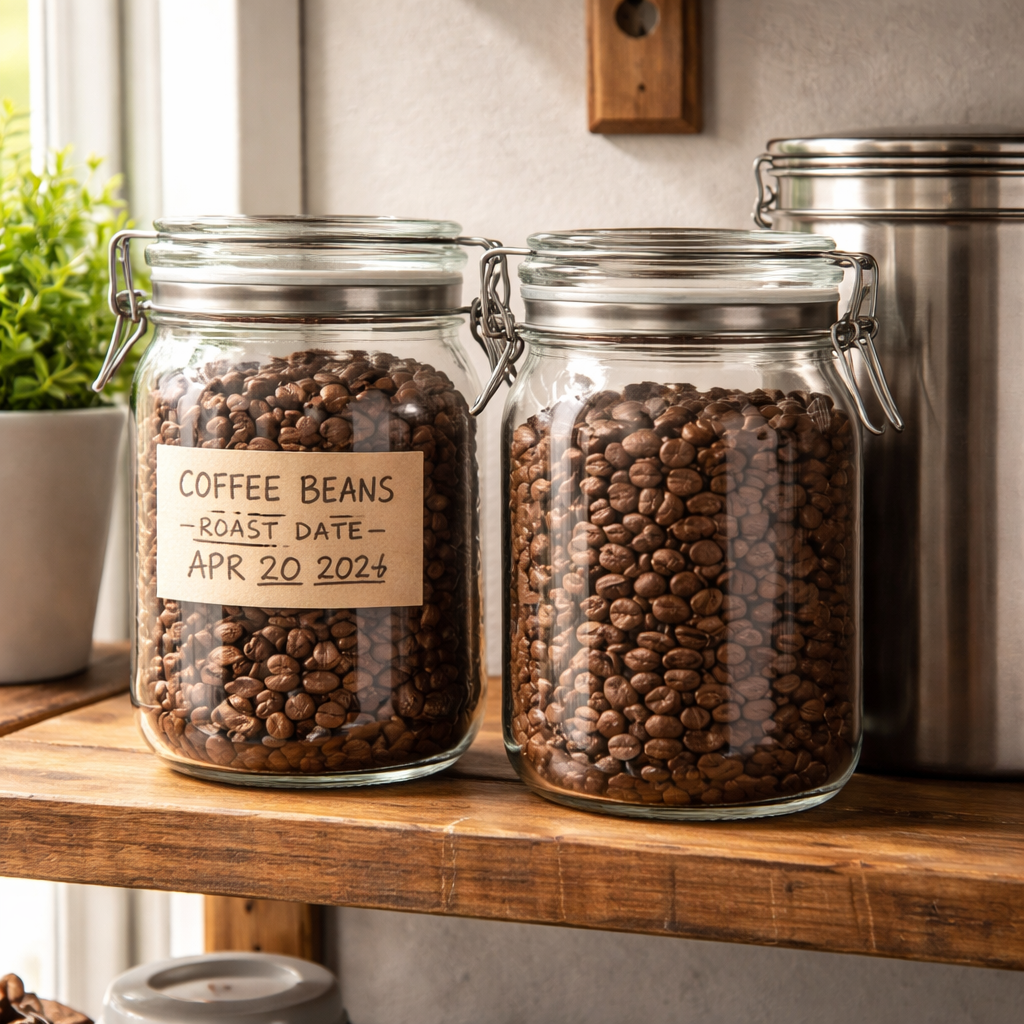
When you follow this rotation, you’ll notice a clear taste difference. Beans stay bright, aromatic, and free of stale notes.
Deep Dive: How Heat Affects Coffee Bean Freshness
Heat speeds up two chemical reactions that kill flavor: oxidation and oil degradation.
Oxidation is when oxygen reacts with the oils in the bean, turning them rancid. In hot weather, the reaction rate doubles for every 10 °F rise above 70 °F. That means a bean stored at 90 °F will go stale in half the time of one stored at 70 °F.
Oil degradation releases bitter compounds that make coffee taste burnt. This is why a coffee brewed in a hot kitchen can taste flat even if you use fresh beans.
Understanding this helps you appreciate why each of the previous steps matters. A good container slows heat transfer, a cool pantry keeps the reaction rate low, and proper rotation ensures you never let beans sit long enough for these reactions to take hold.
Comparison: Airtight Containers vs. Refrigerated Storage
Many people think the fridge is the safest place for beans. In hot weather, that’s a myth.
Here’s a side‑by‑side look:
- Airtight containers: Keep beans at room temperature, block oxygen, and avoid condensation.
- Refrigerated storage: Lowers temperature but adds moisture each time you open the door, leading to condensation inside the bag.
Case study: A family in Orlando stored their beans in a fridge for a month. When they brewed, the coffee tasted stale and had a faint musty odor from moisture. After switching to an airtight stainless‑steel canister placed in a pantry, their coffee regained bright acidity within a week.
Bottom line: In hot climates, an airtight container in a cool, dark spot beats the fridge every time.
Common Mistakes to Avoid
Even seasoned coffee lovers slip up. Here are the top three mistakes and how to dodge them.
1. Using the fridge or freezer
Cold, damp air creates condensation each time you open the container. Moisture speeds up oxidation. Keep beans at a stable room temperature instead.
2. Relying on valve bags as airtight storage
Valve bags let CO₂ out but also let oxygen in. Transfer beans to an airless canister like an Airscape or Fellow Atmos for true protection.
3. Buying too much at once
Beans start losing peak flavor after two weeks. Purchase only what you’ll use in that window, or split bulk purchases into smaller bags.
By steering clear of these traps, you’ll keep your beans tasting fresh even when the mercury rises.
FAQ
Can I store coffee beans in the pantry during a heat wave?
Yes, if you use an airtight, opaque container and keep the pantry as cool as possible. Place a thermometer inside to monitor temperature, and add a food‑grade desiccant packet to control humidity.
Should I freeze my beans if I can’t drink them within two weeks?
Freezing is okay only for unopened, high‑quality bags. Portion the beans into small zip‑top freezer bags, squeeze out air, and freeze. When you need beans, thaw only the amount you’ll use that day and avoid refreezing.
Do metal containers affect the flavor of coffee?
High‑quality stainless‑steel containers do not impart flavor. Cheap metal cans may rust or react with the beans, so choose a food‑grade, BPA‑free option like the Fellow Atmos.
How often should I replace my airtight container?
Check the seal each month. If the lid no longer creates a vacuum or the gasket shows wear, replace it. A good canister lasts 3‑5 years with proper care.
Is it okay to store beans next to spices?
No. Coffee beans absorb strong odors. Keep them away from spices, cleaning products, and anything with a pungent scent to avoid flavor contamination.
What temperature range is ideal for storing beans in Florida?
Aim for 55 °F to 70 °F. If your kitchen exceeds 80 °F, move the container to a cooler closet or use a small insulated cooler box to bring the temperature down.
Conclusion
Learning how to store coffee beans in hot weather doesn’t have to be a science experiment. Pick a solid airtight container, control temperature with a simple thermometer and a desiccant, keep beans out of light, and rotate your stock every two weeks. Follow the steps above and you’ll enjoy bright, flavorful coffee all summer long.
At Chilled Iguana Coffee Co., we ship fresh beans straight to your door, but the real magic happens at home. Apply these tips, and every sip will taste like it’s fresh‑roasted just moments ago. Ready to put the guide into action? Grab a sturdy canister, find the coolest spot in your house, and start tasting the difference today.