



Table of Contents
- Why Most Home Coffee Falls Short (And How to Fix It)
- Coffee to Water Ratio Chart for Every Brewing Method
- Best Coffee Grind Size for Brewing: A Method-by-Method Breakdown
- Best Water Temperature for Coffee Extraction
- Step-by-Step: How to Brew Better Coffee at Home
- How to Store Coffee Beans for Freshness
- Sensory Analysis: Reading Your Cup to Brew Better Coffee
- Conclusion
Last Updated: August 13, 2026
Why Most Home Coffee Falls Short (And How to Fix It)
Home brewing fails for one of three reasons: wrong ratio, wrong grind, or stale beans. A basic drip machine with fresh, properly ground coffee will outperform an expensive setup running week-old pre-ground beans every time.
At Chilled Iguana Coffee Co., we work with coffee enthusiasts who want to brew better coffee at home without turning their kitchen into a lab. The most common complaint is that coffee tastes flat, bitter, or "off", all three problems trace back to the same fixable variables.
The biggest mistake most home brewers make is treating coffee as a pantry staple rather than a perishable ingredient. Beans begin losing their best flavors within weeks of roasting. Buying freshly roasted beans and dialing in your grind size and water temperature will do more for your cup than any gadget upgrade.
This guide covers every variable that moves the needle: ratios, grind size, water temperature, water quality, step-by-step brewing instructions, and how to store beans for freshness. There's also a section on sensory analysis, learning to read what your cup is telling you so you can adjust on the fly.
Coffee to Water Ratio Chart for Every Brewing Method
The coffee-to-water ratio is the single most controllable variable in home brewing. A standard starting point is 1:15 to 1:17 by weight, meaning 1 gram of coffee for every 15 to 17 grams of water. Using a kitchen scale takes the guesswork out entirely.
| Brewing Method | Coffee (grams) | Water (ml) | Ratio | Notes |
|---|---|---|---|---|
| Pour-Over | 20g | 300ml | 1:15 | Adjust for roast level |
| Drip Coffee Maker | 60g | 1000ml | 1:16 | Use flat-bottom filter |
| French Press | 30g | 450ml | 1:15 | Coarser grind needed |
| AeroPress | 17g | 220ml | 1:13 | Shorter steep, stronger |
| Moka Pot | Fill basket | Fill chamber | N/A | Grind finer than drip |
| Cold Brew | 100g | 900ml | 1:9 | Steep 12-24 hours |
These ratios are starting points. If your cup tastes too strong or bitter, increase the water (move toward 1:17). If it tastes weak or watery, decrease the water (move toward 1:14). Make one change at a time and keep notes.
Adjusting the Ratio to Match Your Taste
Acidity and body both shift with the ratio. A stronger ratio tends to increase body and intensity; a weaker ratio brightens acidity. For light roasts with complex tasting notes, many brewers prefer a 1:15 ratio to preserve nuances. For bold, dark roasts, 1:16 or 1:17 can smooth out bitterness.
Best Coffee Grind Size for Brewing: A Method-by-Method Breakdown
Grind size controls extraction rate. Water moves through fine grounds slowly, extracting more compounds; it moves through coarse grounds quickly, extracting less. Getting this wrong is the most common cause of bitter or sour coffee.
| Method | Grind Size | Visual Reference |
|---|---|---|
| Espresso | Extra fine | Powdered sugar |
| Moka Pot | Fine | Table salt |
| Pour-Over | Medium-fine | Sand |
| Drip Coffee | Medium | Coarse sand |
| AeroPress | Medium to medium-fine | Varies by steep time |
| French Press | Coarse | Sea salt or breadcrumbs |
| Cold Brew | Extra coarse | Raw sugar crystals |
A common mistake is grinding too fine for a French press. The metal filter can't trap fine particles, so you end up with a gritty, over-extracted cup.
Why a Burr Grinder Changes Everything
A burr grinder crushes beans between two abrasive surfaces, producing consistent-sized grounds. A blade grinder chops randomly, producing a mix of fine powder and chunky fragments. That inconsistency means some grounds over-extract (bitter) while others under-extract (sour) in the same brew cycle.
You don't need an expensive burr grinder to see a real difference. Many entry-level hand burr grinders produce remarkably consistent results and cost a fraction of electric models. Consistency is what matters, consistent grind size means predictable extraction, which means you can actually learn from each cup and make intentional adjustments.
Best Water Temperature for Coffee Extraction
The best water temperature for coffee extraction falls between 195°F and 205°F (90°C to 96°C). Boiling water at 212°F (100°C) over-extracts, pulling harsh, bitter compounds. Water below 190°F under-extracts, leaving sourness and a thin body.
The practical approach: bring water to a full boil, then let it rest for 30 to 45 seconds before pouring. Light roasts generally benefit from the higher end of that range (around 205°F) because their denser cell structure requires more energy to extract properly. Dark roasts do well at the lower end (around 195°F) because they've already been broken down by roasting.
Water Quality and Total Dissolved Solids
Water makes up roughly 98% of your cup. Using poor-quality water is like buying premium paint and applying it with a dirty brush.
Total dissolved solids (TDS) is a measure of the minerals dissolved in water. Coffee extraction depends on those minerals, particularly magnesium and calcium, to carry flavor compounds from the grounds into your cup. Distilled or reverse-osmosis water, which has near-zero TDS, produces flat, lifeless coffee.
The Specialty Coffee Association's water quality guidelines recommend water with a TDS between 75 and 250 parts per million for optimal extraction. Most municipal tap water falls within an acceptable range, though heavily chlorinated water can add off-flavors. A simple carbon filter pitcher is usually enough to improve tap water for brewing.
Step-by-Step: How to Brew Better Coffee at Home
Every brewing method shares the same underlying logic: hot water contacts coffee grounds for a controlled period, extracting soluble compounds. The method determines how you control contact time, agitation, and filtration.
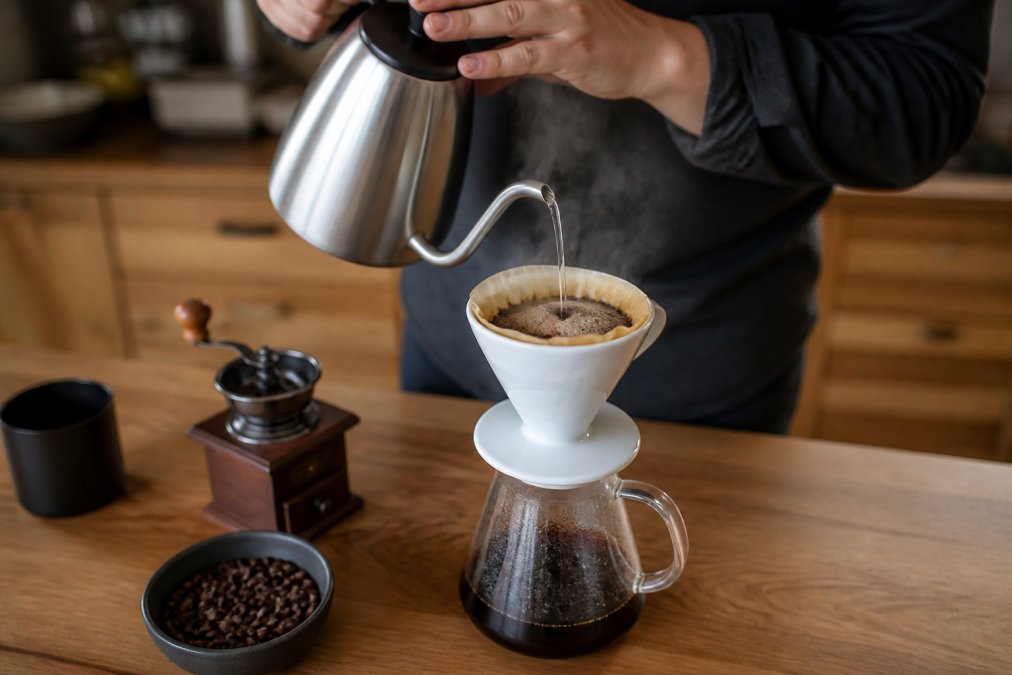
Pour-Over and Drip Coffee
Pour-over brewing gives you direct control over every variable:
- Boil water and let it rest 30-45 seconds.
- Place a paper filter in your dripper and rinse it with hot water. Discard the rinse water.
- Add your ground coffee (medium-fine grind, 20g for a 300ml cup).
- Pour just enough water to saturate the grounds, about 40ml. This is the bloom.
- Wait 30-45 seconds. The bloom releases CO2 trapped in fresh beans, which would otherwise interfere with even extraction.
- Continue pouring in slow, steady circles, keeping the water level consistent. Total pour time should be 2:30 to 3:30 minutes.
- Once the dripper empties, your brew is done.
For drip coffee makers, use a medium grind, the correct ratio, and filtered water. A flat-bottom filter basket extracts more evenly than a cone-shaped one.
French Press and Immersion Brewing
Immersion brewing is more forgiving than pour-over because the coffee steeps in water rather than having water pass through it.
- Preheat the press with hot water, then discard.
- Add coarsely ground coffee (30g for 450ml).
- Pour all your water at once, just off the boil.
- Stir gently to ensure all grounds are saturated.
- Place the lid on (plunger up) and steep for 4 minutes.
- Press the plunger down slowly and steadily.
- Pour immediately. Leaving coffee in contact with the grounds after pressing continues extraction and leads to bitterness.
The metal filter in a French press allows oils and fine particles into the cup, producing a heavier body than paper-filtered methods.
AeroPress and Moka Pot
The AeroPress uses pressure and immersion together, brews in under two minutes, and produces virtually no bitterness when used correctly.
Standard AeroPress method:
- Insert a paper filter into the cap and rinse it.
- Assemble the AeroPress and place it on your mug.
- Add medium-fine ground coffee (17g).
- Pour 220ml of water at 200°F.
- Stir for 10 seconds.
- Press slowly over 30-45 seconds.
The moka pot forces pressurized steam through packed coffee grounds on the stovetop, producing a concentrated, espresso-adjacent brew. Use a fine grind, fill the water chamber to just below the pressure valve, and use medium heat. Remove it from the heat as soon as you hear a gurgling sound, that signals the water is running out and remaining extraction will turn bitter.
How to Store Coffee Beans for Freshness
Freshly roasted beans are the starting point for every good cup. The enemies of fresh coffee are oxygen, moisture, heat, and light.
The best storage method for most home brewers:
- Use an airtight, opaque container (ceramic or stainless steel works well)
- Store at room temperature, away from the stove and direct sunlight
- Buy in quantities you'll use within 2-3 weeks of the roast date
- Look for bags with one-way degassing valves
- Avoid the refrigerator; condensation introduces moisture
- Freeze only if storing for more than a month, in airtight portions you can thaw once
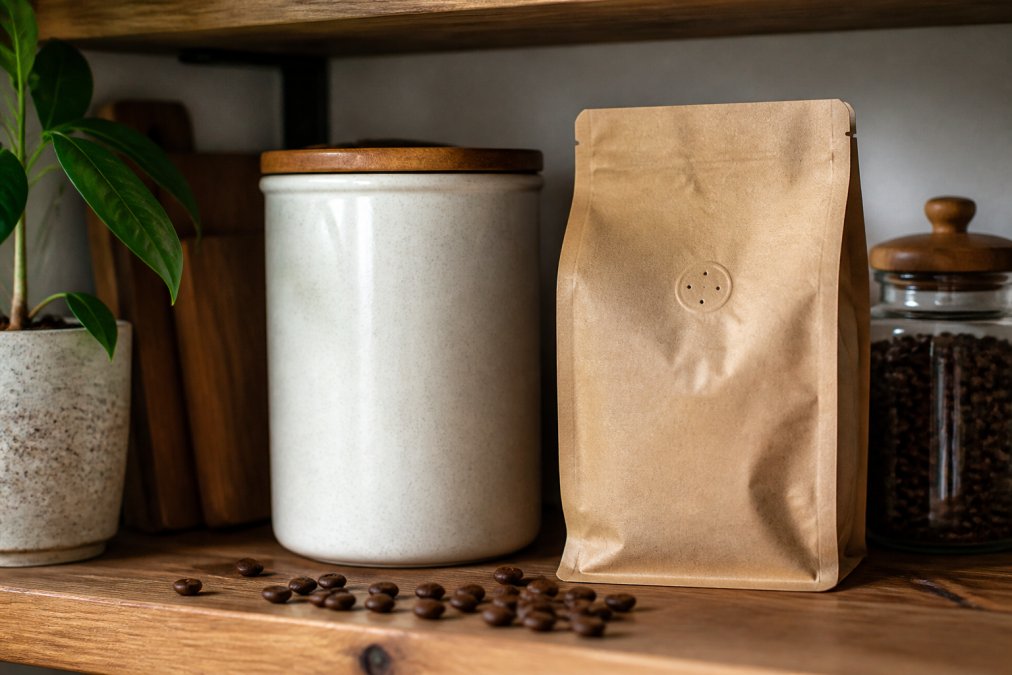
The roast date on the bag matters more than the "best by" date. Ideally, you want to brew beans between 5 and 21 days after roasting, early enough that flavors are fully developed, but before oxidation dulls them. Buying directly from a specialty roaster means beans arrive days after roasting, not months.
Sensory Analysis: Reading Your Cup to Brew Better Coffee
Sensory analysis is the practice of tasting your coffee deliberately, identifying specific flavor characteristics, and using that information to adjust your brewing variables.
| What You Taste | Likely Cause | Fix |
|---|---|---|
| Sour / sharp | Under-extraction | Finer grind, higher temp, longer steep |
| Bitter / harsh | Over-extraction | Coarser grind, lower temp, shorter steep |
| Flat / lifeless | Stale beans or poor water | Buy fresher beans, use filtered water |
| Watery / thin | Too weak a ratio | Use more coffee or less water |
| Papery / woody | Unrinsed filter | Always rinse paper filters before brewing |
| Gritty texture | French press grind too fine | Use coarser grind for immersion methods |
The specialty coffee world uses a tasting vocabulary built around four primary dimensions: acidity, body, sweetness, and bitterness. Acidity is the bright, lively quality in a well-brewed light roast. Body is the weight and texture of the liquid in your mouth. Sweetness emerges from proper extraction of natural sugars in the bean.
Regional bean profiles play directly into sensory analysis. Ethiopian beans typically express floral and fruit-forward tasting notes. Central American beans tend toward clean, balanced profiles with mild acidity and nutty sweetness. Indonesian beans lean toward earthy, full-bodied cups with low acidity.
Budget-friendly sensory hack: brew the same beans back-to-back with one variable changed, grind size, temperature, or ratio, and taste them side by side. This comparative tasting trains your palate faster than any single cup.
Most home brewers are one or two adjustments away from a significantly better cup. The variables, ratio, grind size, water temperature, water quality, and bean freshness, are all within your control and require no expensive equipment. Chilled Iguana Coffee Co. sources freshly roasted, specialty-grade beans from around the world and ships them directly to your door. Explore the full collection at Chilled Iguana Coffee Co. and start your next brew with beans that are actually worth dialing in.
Frequently Asked Questions
What is the most effective way to brew better coffee at home?
Start with freshly roasted whole beans and grind them right before brewing. Use a consistent coffee-to-water ratio, 1:15 to 1:17 by weight is a reliable starting point. Brew with water between 195°F and 205°F, and use filtered water if your tap water tastes off. A kitchen scale and a basic timer cost very little and make a bigger difference than any expensive machine upgrade.
Does water temperature affect coffee flavor?
Yes, significantly. Water that is too hot, above 205°F, over-extracts the grounds, pulling bitter, harsh compounds. Water below 195°F under-extracts, leaving the brew thin and sour. The sweet spot is 195°F to 205°F for most brewing methods. If you don't have a thermometer, bring water to a full boil and let it rest off heat for about 30 seconds before brewing.
Why should I grind my coffee beans right before brewing?
Ground coffee starts losing its aromatic compounds within minutes of grinding. Whole beans stay fresh far longer because the outer surface protects the interior. Pre-ground coffee sold in stores can sit for weeks or months before you open it. Grinding immediately before brewing, ideally with a burr grinder for consistent particle size, preserves the tasting notes, acidity, and body that make specialty coffee worth buying.
How can I make my coffee taste better without buying new equipment?
Three no-cost fixes deliver the biggest results: switch to filtered water, measure your coffee and water by weight instead of scoops, and buy fresher beans. If your kettle doesn't have temperature control, boil and wait 30 seconds. Pre-wet a paper filter before brewing to remove any papery taste. These adjustments alone can transform a basic drip coffee maker into a consistently good cup.
This article was written using GrandRanker