



Table of Contents
- What Makes a Tropical Coffee Blend Taste Tropical
- Coffee Brewing Methods for Fruit-Forward Beans
- How to Store Fresh Roasted Coffee Beans
- The Bottom Line
- Frequently Asked Questions
Last Updated: September 21, 2026
What Makes a Tropical Coffee Blend Taste Tropical
Tropical coffee blends lean fruit-forward, bright, and aromatic rather than deep and earthy, shaped by origin, processing, and roast. High-elevation volcanic-slope beans develop more sugars and acidity, so tropical coffees taste of citrus, berry, or stone fruit; washed processing keeps those notes clean while natural pushes them jammy. Light or medium roast protects fruit notes; dark roast covers them with chocolate and caramel. At Chilled Iguana Coffee Co., we built our lineup around this: beans with real provenance, roasted to keep the fruit in front.
Coffee Brewing Methods for Fruit-Forward Beans
Pour-over is the best method for fruit-forward beans: a paper filter and slow, controlled pour capture the bright acidity and aromatics that make tropical coffee worth drinking.
| Method | Grind Size | Water Temp | Best For |
|---|---|---|---|
| Pour-over | Medium-fine | 200-205°F | Clean, bright fruit notes |
| French press | Coarse | 195-200°F | Full body, syrupy sweetness |
| Espresso | Fine | 200-205°F | Concentrated, syrupy shots |
| Cold brew | Coarse | Cold, 12-18 hours | Smooth, low-acid iced coffee |
| Drip | Medium | 195-205°F | Everyday ease |
Grind consistency matters more than the method, an uneven grind means uneven extraction, so if you buy one upgrade, make it a burr grinder. Water around 200°F extracts sweetness and acidity evenly, while boiling water flattens the fruit. For a tropical blend, start with a 1:16 ratio: grind finer if the cup tastes thin and sour, coarser if harsh and dry.

The Specialty Coffee Association's brewing standards set the baseline for grind, temperature, and ratio that most home recipes build on.
How to Store Fresh Roasted Coffee Beans
Store fresh roasted coffee beans in an airtight, opaque container at room temperature, away from light and heat, and skip the fridge and freezer for daily-use beans. Oxygen, light, heat, and moisture kill coffee flavor, and whole beans hold up far better than pre-ground. Buy whole bean, grind right before brewing, and buy only what you'll finish within a few weeks.
The Bottom Line
Tropical coffee blends reward a little attention: fresh beans, a consistent grind, water just off the boil, and airtight storage. Get those four right and even a basic setup tastes like a vacation.
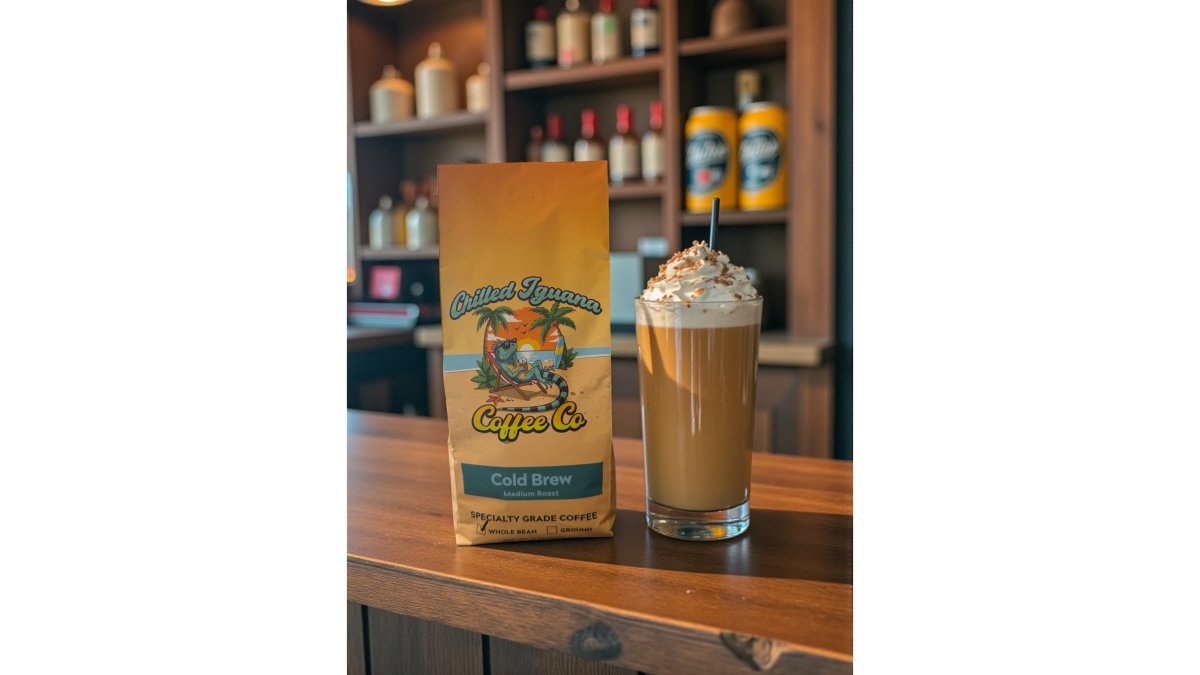
Chilled Iguana Coffee Co. roasts in small batches and ships fresh to your door, so the beans that land on your counter still have their fruit notes intact. Start with the Florida Keys Blend, a dark roast house blend with deep chocolate, caramel, and fruity notes that works beautifully in espresso, French press, or a syrupy filter brew. Add the Cold Brew Coffee for slow-steeped, dessert-forward mornings, and the Bali Blue for a bold, low-acid cup built for milk drinks.

Get started with Chilled Iguana Coffee Co. and turn your daily brew into a small escape.
Frequently Asked Questions
What is tropical coffee and how does it differ from regular coffee?
Tropical coffee describes blends whose tasting notes lean fruit-forward and bright rather than deep and chocolatey. The difference comes from origin, altitude, and processing, not added flavoring. Beans grown at high altitude in volcanic soil, then washed or naturally processed, often carry citrus, berry, or floral aromatics. A tropical coffee blend for home brewing simply means those fruit-forward beans are combined, or kept as a single-origin lot, to keep that lively character in the cup.
What brewing methods work best for tropical-tasting coffee?
Pour-over and cold brew are the two most reliable choices. Pour-over gives you control over water temperature and pour speed, which preserves delicate fruit aromatics and keeps the finish clean. Cold brew, steeped coarse-ground for 12 to 18 hours, pulls sweetness and a juicy texture without heat-driven bitterness. Espresso works too, but use a slightly coarser grind and a shorter shot so the brighter notes survive instead of turning sharp.
How should I store my coffee to preserve tropical tasting notes?
Keep beans whole until brew day, then store them in an airtight container in a cool, dark cupboard away from the stove and windowsill. Heat, light, and oxygen are what flatten fruit-forward aromatics first. Buy in quantities you will finish within a few weeks, and avoid transferring beans into the hopper of a grinder for long-term storage. If you freeze beans, seal them fully and let them come to room temperature before grinding.