



Table of Contents
- 5 Signs of Stale Coffee Beans to Check Today
- How to Keep Coffee Beans Fresh at Home
- Coffee Roast Date vs Expiration Date: Which Matters More?
- Frequently Asked Questions
Last Updated: October 3, 2026
5 Signs of Stale Coffee Beans to Check Today
Fresh coffee tastes bright and full; stale coffee tastes flat and dull. At Chilled Iguana Coffee Co., we roast and ship beans that land close to their roast date. The signs of stale coffee beans show up in your senses first: sight, smell, then taste. If two or more match your bag, order fresh.
1. The beans look matte and dry. Fresh beans have a glossy sheen from surface oils; stale beans look chalky and dull.
2. The smell is weak or musty. Fresh beans hit you with a clear aroma; old beans smell faint, papery, or musty.
3. They feel light and hollow. Fresh beans feel dense and heavy; stale beans lose moisture and feel light and brittle.
4. There is no bloom when you brew. Fresh grounds puff up as carbon dioxide escapes; no bloom means flat flavor follows.
5. The cup tastes flat or bitter. Good beans give notes like chocolate, citrus, or caramel; stale beans taste dull, bitter, or like wet cardboard.
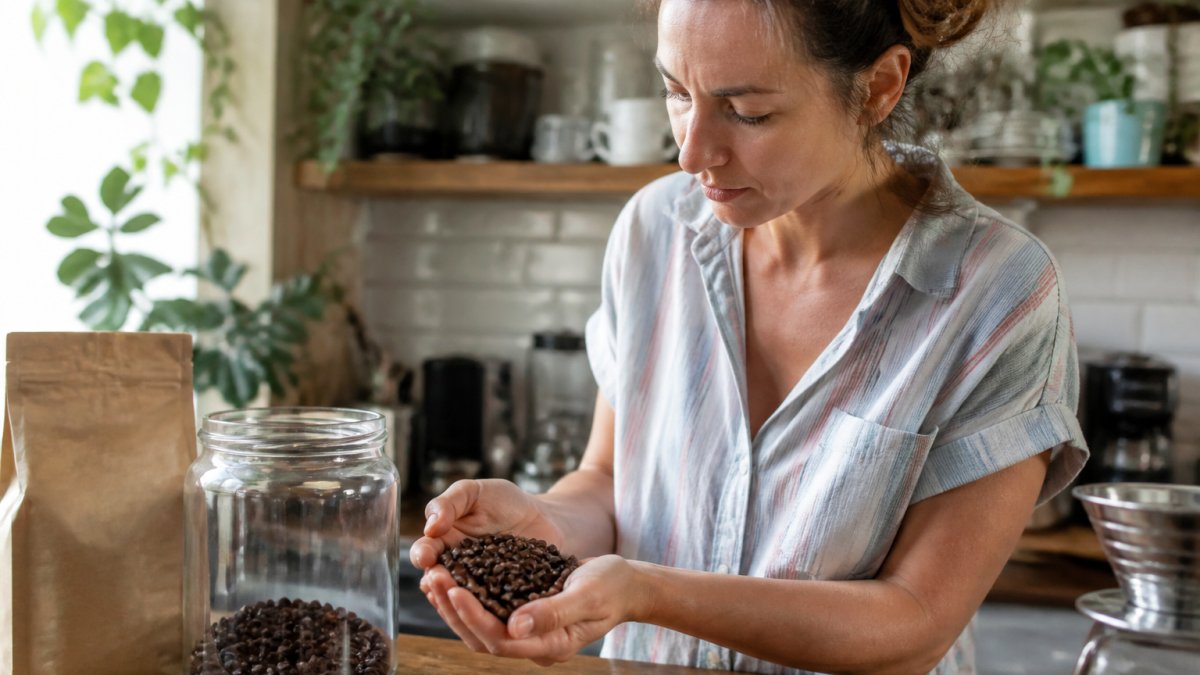
How to Keep Coffee Beans Fresh at Home
Storing beans well is the whole game: beat air, moisture, heat, and light, and your coffee stays vibrant for weeks.
- Use an airtight container. A sealed canister with a one-way valve lets gas out but keeps oxygen out.
- Keep beans whole. Grind right before you brew; ground coffee goes stale in days, not weeks.
- Store in a cool, dark spot. A cabinet away from the stove works; skip the clear windowsill jar, since UV light speeds oxidation.
- Skip the fridge. It is damp and smelly, and beans absorb both. For longer storage, use the freezer.
- Buy in smaller amounts. A two-week supply beats a two-month supply.
Coffee Roast Date vs Expiration Date: Which Matters More?
The roast date matters more, every time. It tells you when the beans were actually roasted; the expiration date is often a loose guess printed for the grocery shelf.
- Roast date: the day the beans left the roaster, your real freshness clock.
- Expiration date: a best-by guess, often months out, that says little about flavor.
Most beans taste best within two to four weeks of the roast date; after that, flavor degrades even if the bag still says it is good. No roast date on your bag is a warning sign.
Stale coffee beans ruin a good morning, and the fix is simple: buy fresh, store smart, and check your beans with your eyes, nose, and taste buds.
At Chilled Iguana Coffee Co., we roast in small batches and ship straight to your door, so your beans arrive close to their roast date. Try our Best Sellers Sample Pack to taste six roasts at once, or grab the 6 Bean Blend for a bold, full-bodied cup. Get started with Chilled Iguana Coffee Co. and taste the difference fresh makes.


Frequently Asked Questions
How can you tell if coffee beans are past their prime?
Check the aroma first: fresh beans smell sweet and complex, while stale coffee beans smell like cardboard or musty. Then look at the surface. Fresh beans have a glossy sheen from coffee oils, but old beans turn matte and dry. Finally, taste a small batch. Flat flavor, dull acidity, or a rancid edge means the beans are past their prime. A bloom test with hot water confirms it: fresh grounds bubble and foam as carbon dioxide escapes, while stale grounds barely react.
Does the roast date matter more than the expiration date?
Yes. The roast date tells you when the beans were actually roasted, which is the single best indicator of freshness. The expiration date is often a loose estimate set months after roasting and says nothing about how the beans were stored. This is the core of the coffee roast date vs expiration date debate: trust the roast date.
What happens if you use stale coffee beans?
Stale coffee beans lose their volatile compounds through oxidation, so the cup tastes flat, dull, or cardboard-like instead of vibrant and full-bodied. The oils can also turn rancid, adding a bitter or off note. You can still brew them, but expect weaker aroma, muted flavor notes, and less crema in espresso. If the beans are only slightly past their prime, a finer grind or a stronger ratio may help, but the flavor will never match freshly roasted beans.