



Ever opened a fresh bag of beans in a steamy kitchen, only to find them sticky and flat? Humidity is the quiet thief that strips coffee of its flavor and invites mold. But you don't need pricey gear to fight it. Across 22 storage methods we reviewed, the biggest freshness gains came from airtight sealing and stable temperature, not exotic canisters. Here are five steps to keep your beans fresh and mold-free, even in muggy weather.
Why Humidity Ruins Coffee Beans (and What to Watch For)
Coffee is hygroscopic. That means it pulls moisture straight out of the air. In a humid kitchen, your beans soak up water they shouldn't, and that water wrecks the flavor.
Here's what happens. Excess moisture breaks down the oils and aromatic compounds that make coffee taste good. The beans go flat, sour, or musty. Worse, damp beans can grow mold and bacteria, which is a real health risk, not just a flavor problem.
There's a money side too. When green coffee sits in storage that's too humid, the beans take on a moldy, fermented taste and turn darker. According to the humidity control research from Polygon, beans that get wet can grow mold within a couple of hours if they aren't dried or roasted fast. That's why warehouses watch relative humidity so closely.
Three threats team up with humidity to age your beans faster: oxygen, light, and heat. The fix for all four is the same kind of storage. The hygroscopic nature of coffee is exactly why sealing out air matters more than chasing a perfect humidity number.
What to watch for in a humid home: beans that feel sticky or clump together, a dull or sour smell, oily film inside the bag, and grounds that mush up in your grinder. Those are early warnings that moisture is winning.

Step 1: Measure Humidity With a Cheap Hygrometer
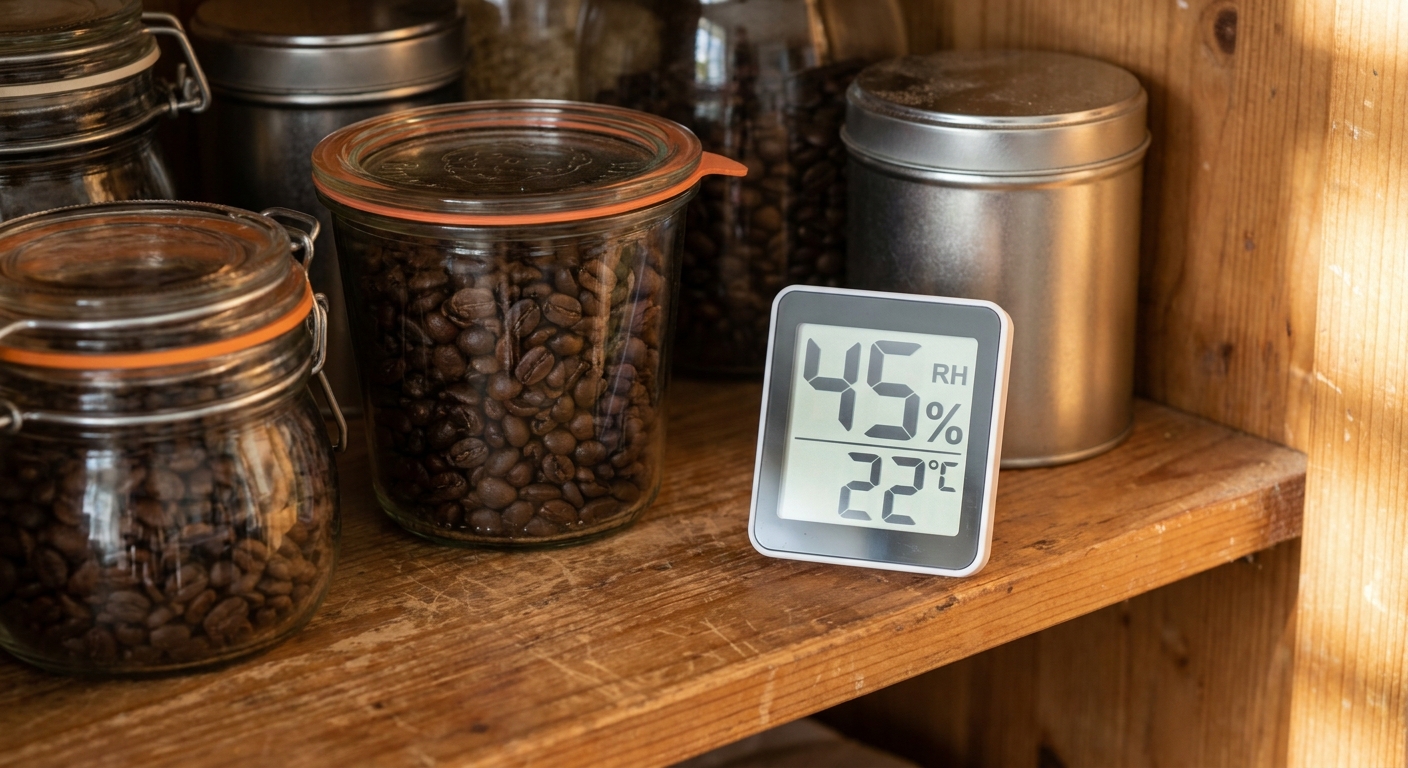
You can't manage what you don't measure. So before you buy any container, find out how humid your storage spot actually is. A small digital hygrometer costs a few dollars and tells you the relative humidity in any room.
Place one inside your pantry or the cupboard where you keep coffee. Let it sit for an hour, then check the reading. Humidity recommendations for coffee storage generally land between 50 and 70 percent RH, with a stable 60% relative humidity as a good baseline. If your pantry reads 70% or higher, you've got work to do.
The trick isn't hitting one magic number. It's keeping the number stable. Beans react badly to swings, not just to high readings. A pantry that bounces between 50% and 75% all day causes more trouble than one that holds steady at 60%.
Here's a simple test. Check the hygrometer in the morning and again at night. Big gaps mean the spot is too exposed to outside air or a humid appliance nearby. Pick a more sheltered cupboard, away from the dishwasher, sink, and stove.
By now you should have a hygrometer reading from your storage spot and a sense of whether you're fighting high humidity, big swings, or both.
Step 2: Choose an Airtight, Opaque Container
This is the step that does the heavy lifting. An airtight, opaque container blocks the three things that kill coffee fastest: air, light, and moisture. Get this right and you've solved most of the problem.
Pick a container made of stainless steel, ceramic, or dark tinted glass. These materials seal out oxygen and block UV light. Skip clear glass jars, since light breaks down the aromatic oils and dulls the flavor. The lid matters as much as the body, so look for a tight rubber or silicone seal.
Our review of storage methods found something useful here. A plain airtight jar held beans fresher than fancier options in a humid setting. One-way valve bags claim two to three times longer freshness, but they only work if the seal is flawless. A single puncture cancels the benefit, which makes them risky in a busy kitchen where bags get tossed around. A simple sealed jar has fewer ways to fail.
Chilled Iguana Coffee Co. recommends the same approach: store whole beans or grounds in an airtight container, away from light, heat, and moisture. It's the most balanced protection with no extra equipment to buy. If you want to dig into the fine points of bean care, the brand's guide to the Florida Keys coffee flavor profile covers how fresh storage protects those bright, fruity notes.
Size your container to the coffee you'll actually drink. A half-empty jar holds a lot of trapped air, and that air speeds up staling. Match the jar to the batch, or use a smaller jar as you work through the beans.
Step 3: Control Temperature and Avoid Condensation
Temperature swings cause condensation, and condensation is moisture landing right on your beans. The goal is a cool, steady spot, ideally around 15 to 20 degrees Celsius (59 to 68 Fahrenheit), with no big jumps.
Keep your container away from heat sources. Don't store beans near the oven, on top of the fridge, or in a sunny window. Heat speeds up the breakdown of coffee's natural oils, and a warm cupboard stales beans much faster than a cool one. A consistent room-temperature spot is ideal, while warm cupboards make staling worse.
Now the freezer warning, because this trips up a lot of people in humid climates. Pulling cold beans into a warm, muggy room is asking for trouble. Cold beans meeting hot, humid air creates condensation right on the beans, and that moisture gums up your grinder burrs.
If you do freeze, freeze in airtight portions before you open the bag. Once you've opened a bag and moved beans to a daily container, don't put that container back in the freezer. Every trip in and out adds condensation and stales the beans more.
When you take a frozen portion out, let it warm fully to room temperature before you open it. That stops moisture from forming on the cold surface. Skip this step and you'll find sticky, damp beans waiting for you.
Step 4: Add Affordable Humidity-Control Solutions
If your hygrometer keeps reading high, add a moisture absorber to your storage setup. These are cheap, and they pull extra water out of the air so your beans don't.
Food-safe silica gel packets are the easy option. Drop one inside your container or pantry, near (not touching) the beans, and it soaks up stray moisture. The little desiccant packs that come in some packaging do the same job. Activated charcoal works too, and it has the bonus of soaking up odors, which matters because coffee absorbs smells from spices and cleaning products nearby.
For a whole pantry that stays muggy, a small dehumidifier unit can hold the room steadier. You don't need an industrial machine. A compact one that keeps the room near that 60% mark is plenty for home use. Big roasters use desiccant dryers to protect beans during packaging and storage, but a home setup just needs to keep things stable.
One myth worth clearing up. You don't need a gadget that obsesses over a perfect humidity number. Our review found that controlling air exchange with a good seal matters more than chasing exact RH. Stable sealing beats panic about the meter.
This kind of moisture control fits into a wider quality routine. Teams that document their storage steps, the way inspection and audit software helps manufacturers standardize quality checks, tend to catch problems before a bad batch reaches a customer.
Step 5: Build a Store-and-Use Workflow (Portion, Seal, Rotate)
A storage routine beats a one-time fix. The goal is to open your beans as little as possible and always use the oldest batch first. Here's a workflow that holds up in humid weather.
First, portion your beans when the bag is fresh. Split a big bag into smaller airtight jars or sealed bags, each holding about a week's worth. Then you only open one portion at a time, and the rest stays sealed and protected.
Next, label each portion with the roast date. Use beans within two to four weeks of roasting for the best flavor. Rotate stock like a shop does: oldest in front, newest in back. That way nothing sits forgotten and stales.
Once a portion is open, keep it in your daily airtight container and squeeze out as much air as you can each time you close it. When you grind, take out only what you need for that brew and let cold or frozen portions warm up first.
For convenience, a subscription that ships small, fresh-roasted batches solves the freshness math for you. Chilled Iguana Coffee Co. roasts to order and offers automatic delivery, so you get coffee at its peak instead of buying bulk that sits and stales in a humid pantry.
This store-and-use loop is the kind of usable guide a coffee shop manager might share with staff, and a simple shared note or team messaging channel makes it easy to push that kind of training and best-practice note out to a whole barista team.
Protecting Your Grinder and Equipment From Humidity
Humidity doesn't stop at the beans. It goes after your gear too. Damp, oily beans gum up grinder burrs and leave a sticky residue that drags down every grind after.
The worst case is moisture meeting metal. As one creator on YouTube described, people in humid climates sometimes find rusty burrs, and ground coffee left sitting with water can turn to a clay-like sludge inside a grinder. A standalone grinder you can take apart and clean. A super-automatic machine, where the grinder is built in, is much harder to rescue.
Keep your equipment dry with a few habits. Wipe down burrs now and then to clear oil buildup. Don't grind beans that feel damp or sticky, since you're just pushing that moisture into the machine. And keep grinders away from the sink and water tank splash zones.
If you've been freezing beans, the warm-up rule protects your grinder as much as your flavor. Frozen beans fed straight into a grinder coat the burrs with condensation. Let them reach room temperature and dry off first.
One small move pays off all season: only grind what you'll brew right now. Fresh grinding protects flavor, and it keeps loose grounds from sitting in a humid hopper soaking up water.
Frequently Asked Questions
What is the best way to store coffee beans in humid climates?
The best way is an airtight, opaque container kept in a cool, stable spot away from light, heat, and moisture. This blocks air and humidity, which cause most flavor loss and mold. Add a food-safe silica gel packet if your pantry runs above 60% relative humidity, and buy whole beans you'll use within two to four weeks.
Should I keep coffee beans in the fridge or freezer in a humid climate?
Skip the fridge entirely, since it's humid and beans absorb food odors and condensation. The freezer works only for long-term storage if you seal beans in airtight portions before opening. Never refreeze an opened container, and let frozen portions warm fully to room temperature before opening to avoid condensation that sticks to the beans and gums up your grinder.
What humidity level is best for storing coffee beans?
A stable relative humidity around 60% is the common baseline, with general recommendations falling between 50 and 70 percent. Stability matters more than the exact number, since swings cause condensation. Measure your pantry with a cheap digital hygrometer, and if readings climb above 70%, add silica gel packets or a small dehumidifier to hold the level steady.
How can I tell if my coffee beans have gone bad from humidity?
Look for beans that feel sticky or clump together, a dull or sour smell instead of a fresh aroma, and an oily film inside the container. Visible mold or a musty, fermented taste means the beans have absorbed too much moisture and should be tossed. Grounds that mush up or clog your grinder are another clear sign moisture got in.
Do silica gel packets actually help store coffee in humid weather?
Yes, food-safe silica gel packets help by absorbing stray moisture inside your container or pantry, so the beans don't soak it up. Place one near but not touching the beans. They're a cheap backup to your main defense, which is an airtight seal. Charcoal works too and absorbs odors, while a small dehumidifier handles a whole muggy pantry.
Keep It Simple, Keep It Sealed
If you do one thing, get your beans into an airtight, opaque container in a cool, stable cupboard. That single step beats every fancy gadget for keeping coffee fresh in muggy weather. Add a hygrometer and a silica packet if your pantry runs high, and rotate small batches so nothing sits too long. Want fresh-roasted beans delivered at their peak instead of stocking up and fighting staleness? Browse the fresh-roasted coffee selection from Chilled Iguana Coffee Co. and start with a small batch.