



Key lime flavor in coffee is one of those combinations that sounds odd until you taste it. That bright, tart citrus note against a smooth coffee base is genuinely good, and it's not as hard to get right as you might think. This guide walks you through every step, from understanding what the flavor actually is to the small tweaks that make it pop in your cup.
Step 1: Understand What Key Lime Flavor in Coffee Actually Means
Before you buy anything, get clear on what you're actually chasing. Key lime flavor in coffee is not a chemical additive poured over beans. It's a natural citrus note that shows up in certain coffee origins, roast profiles, and brew methods.
Coffee beans carry hundreds of aromatic compounds. When a roaster or taster describes a coffee as having "key lime" notes, they mean the cup has a sharp, bright tartness with a thin sweetness underneath, much like the actual fruit. It's part of the broader citrus flavor family, which also includes lemon zest, orange peel, and grapefruit.
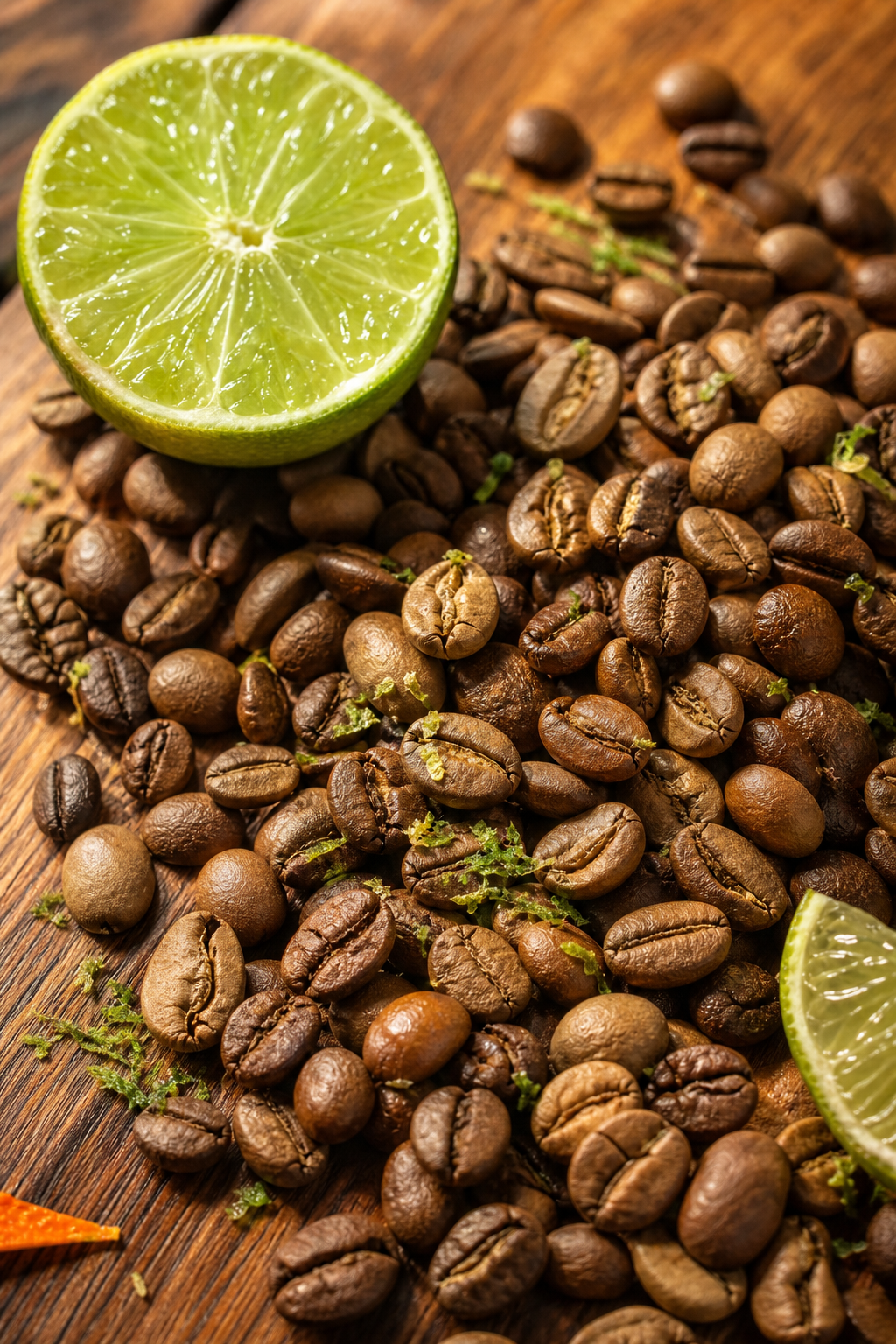
These notes come from organic acids naturally present in coffee, mainly citric acid and malic acid. Citric acid is the same compound that gives limes their sharpness. In coffee, it's more concentrated in high-altitude Arabica beans from places like Ethiopia, Kenya, and Central America. Those growing conditions, thinner air, cooler nights, slower cherry ripening, all push more of these acids into the bean.
Some coffees also get a key lime quality from processing. Washed (wet-processed) beans tend to have cleaner, brighter acidity. Natural or honey-processed beans lean fruitier and sometimes more complex. Both can deliver citrus character, but washed beans are usually the sharper bet.
There's a second type of key lime coffee: flavored coffee beans. These are beans that have been coated with food-safe natural or artificial flavorings after roasting. They're not the same thing as specialty beans with inherent citrus notes, but they're widely available and can be a good entry point if you want an obvious, upfront key lime taste without hunting for a specific origin.
Step 2: Choose the Right Coffee Beans with Key Lime Flavor
Your bean choice is the single biggest factor. Get this right and everything else is just refinement.
For naturally occurring key lime notes, focus on two origin categories. First, Ethiopian beans, especially washed Yirgacheffe or Sidama. These are famous for their floral, lemon-lime brightness and clean finish. Second, Kenyan AA beans, which are known for a more aggressive, wine-like citrus that leans toward black currant and lime. Both origins grow at high altitude, which builds that natural acidity.
Central American options like Guatemala Huehuetenango and Costa Rica Tarrazu also carry citrus character, though it's usually softer and sits closer to orange than lime. They're a good middle ground if sharp tartness isn't your thing but you still want brightness.
For flavored key lime coffee, look for specialty roasters who use natural flavoring compounds. The Chilled Iguana Coffee Co. lineup draws on Florida Keys inspiration, where citrus and tropical brightness are built into the brand's whole identity. Their beans are freshly roasted and ethically sourced, which matters because stale beans lose volatile aromatic compounds quickly, and those are exactly what carry the citrus character.
When you buy, check the roast date. Beans roasted within two weeks will have the most active aroma compounds. Beyond a month, the citrus starts to fade and you're left with a flat, generic cup. Buying from a direct-to-consumer roaster like Chilled Iguana Coffee Co. means you're getting beans close to their roast date, which makes a real difference here.
Also check for freshness signals: a one-way valve on the bag, a clear roast date stamp, and no cracks or oily sheen on light-roast beans. Oily light roasts usually mean the beans are old or were over-roasted for their intended profile.
Step 3: Select the Best Roast Level for Citrus Notes
Roast level changes everything about how citrus comes through in the cup. This is one of the most important choices you'll make.
Light roasts keep the bean's origin character intact. The organic acids, including citric and malic acid, survive the roast process and show up clearly in your cup. If you want that sharp, lively key lime brightness, a light roast is almost always the right call. The coffee will taste more tea-like in body, but the flavor complexity is highest here.
Medium roasts are a good compromise. You lose a little of the raw citrus sharpness, but you gain more sweetness and body. The key lime note becomes softer, more like lime zest than fresh lime juice. Many people find this easier to drink, especially without milk or sugar.
Dark roasts are where citrus mostly disappears. The heat breaks down the organic acids and replaces them with bitter, roasty, chocolatey compounds. A dark roast Ethiopian bean might taste nothing like its light roast counterpart. If you love dark roast and want citrus, a flavored key lime bean is your better option, since the flavoring is added after roasting and doesn't depend on the bean's natural acidity.
One more thing: roast level affects your brew method choices. Light roasts extract faster and can turn bitter if you over-extract. That matters for the grind and temperature decisions in the next step.
Step 4: Grind and Brew to Highlight Key Lime Notes
Good beans and the right roast still need the right brew technique to actually deliver what they promise. Here's how to set up your grind and method to bring out citrus character.
Grind fresh, every time. Pre-ground coffee loses its aromatic compounds within 15 to 30 minutes. For key lime notes, which come largely from volatile aromatic esters and organic acids, grinding right before brewing is non-negotiable. A burr grinder gives you a more even particle size than a blade grinder, which leads to more even extraction.
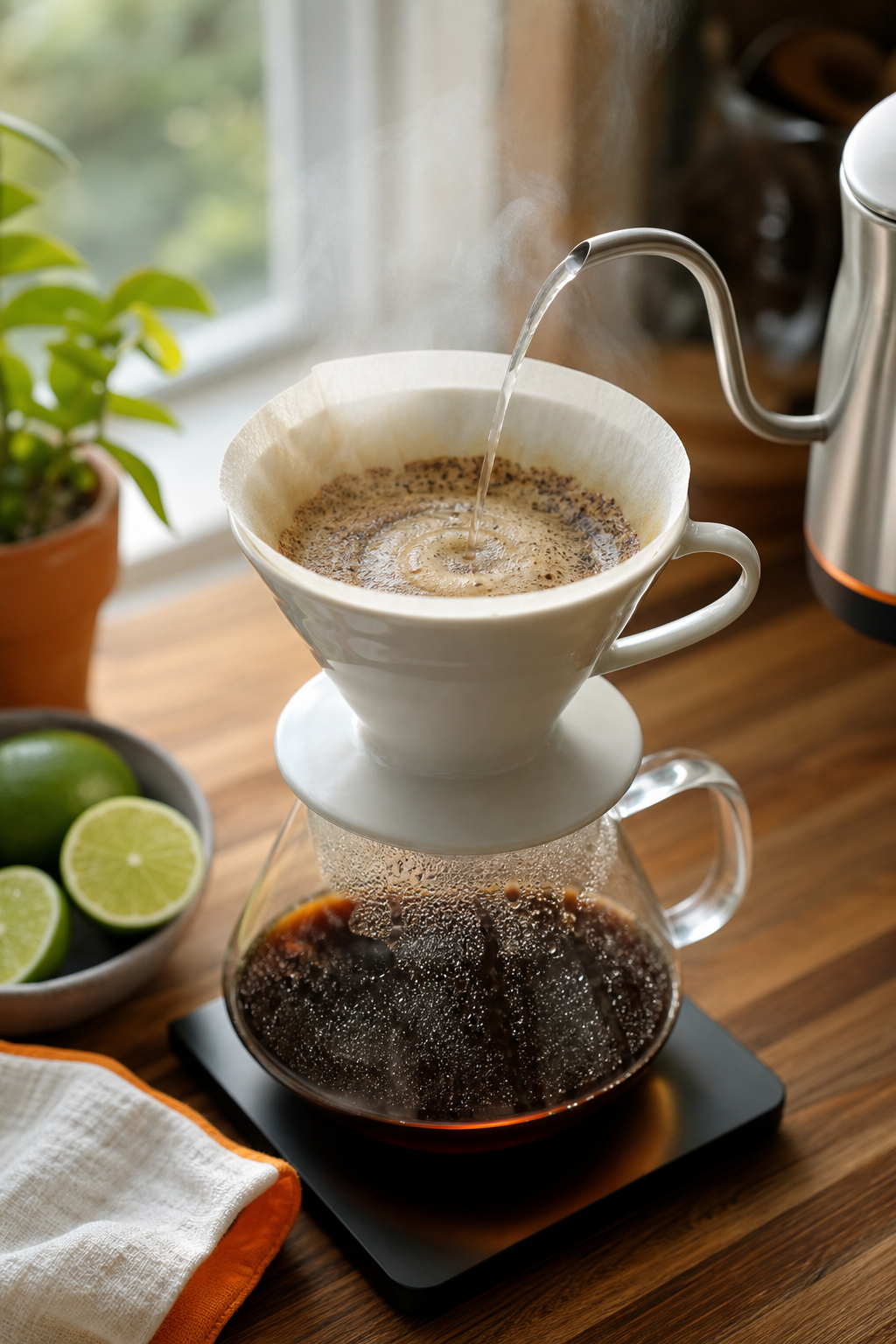
For grind size, use medium-fine for pour-over and drip. Coarser for a French press. The key lime character in light roast beans comes out best with methods that allow good contact time without over-extraction. Aim for a 3 to 4 minute brew window on pour-over.
Pour-over is the single best method for showcasing citrus notes. It produces a clean, bright cup with high clarity, meaning nothing masks the delicate lime flavor. A V60 or Chemex both work well. Use water at around 200°F (just off the boil) and pour in slow concentric circles to saturate the grounds evenly.
For people who want to explore different sides of the same beans, the AeroPress is worth trying. It sits between espresso and pour-over in terms of concentration. You can dial it lighter for citrus brightness or push it shorter and stronger for a more intense cup. The key variable is steep time: shorter steep (around 1 minute) preserves more of the bright, lime-forward character.
Cold brew is a different story. The cold water extraction over 12 to 18 hours smooths out sharp acidity and brings forward sweetness and body. If you find key lime notes too tart in a hot cup, cold brew can soften them into something more rounded, like lime candy rather than lime juice. Use a coarse grind and a 1:5 coffee-to-water ratio for a concentrate.
Water temperature matters more for light roasts than for dark ones. Drop below 195°F and you'll under-extract, producing a sour, thin cup that doesn't develop the full citrus sweetness. Stay between 195°F and 205°F for best results.
Step 5: Enhance Key Lime Flavor with Simple Pairings and Additions
Once you've got a well-brewed cup, there are a few easy ways to push the key lime character further without overcomplicating things.
A tiny pinch of salt in your grounds before brewing rounds out the acidity and makes the citrus notes pop without tasting salty. This is a real technique, not a gimmick. It works because sodium ions suppress bitterness receptors, which lets the brighter flavors come forward. Use about one-eighth of a teaspoon per 12-ounce serving.
A small strip of lime zest dropped into your finished cup adds aromatic lift without significantly changing the flavor. The zest's essential oils sit on top of the cup and hit your nose before each sip, which reinforces the key lime impression. Remove it after 30 seconds or it can start to turn bitter.
For an iced version, brew your coffee double-strength directly over ice. Use two tablespoons of grounds per 4 ounces of water. The rapid chilling locks in the bright acids before they have time to oxidize and go flat. Add a squeeze of fresh key lime juice, about a teaspoon, and a small amount of simple syrup if you want sweetness. This is one of the more refreshing ways to experience the profile in warm weather, which is exactly the kind of Florida Keys moment that Chilled Iguana Coffee Co. was built around.
Food pairings also matter. Key lime coffee notes work well next to coconut, vanilla, or anything lightly sweet. A plain butter cookie or a piece of white chocolate alongside your cup will let the citrus notes in the coffee register more clearly than if you pair it with something acidic or heavily spiced.
If you're using flavored key lime beans, be careful with additions. The flavoring can turn cloying quickly if you add citrus juice on top of it. Start with the beans alone and only add to the cup if the base flavor feels too mild. If you want a reliably tropical citrus cup with the flexibility to experiment, the Florida Keys coffee flavor profile guide from Chilled Iguana Coffee Co. is a good reference for understanding how these origin notes relate to brew method and pairing.
Milk and cream are worth a mention. They coat the palate and suppress acidity, which can mute the key lime character you've worked to preserve. If you prefer milk-based drinks, try a small splash of coconut milk instead of dairy. It adds tropical sweetness without killing the citrus brightness.
Good food sourcing instincts apply here too. Just as you'd seek out a local butcher with transparent sourcing practices rather than anonymous commodity meat, the same logic holds for coffee: knowing where your beans come from and how they were processed tells you a lot about what flavor to expect in the cup.
FAQ
What coffee origins naturally taste like key lime?
Ethiopian Yirgacheffe and Kenyan AA beans are the top choices for natural key lime character. Both grow at high altitude, which concentrates citric and malic acids in the bean. Washed processing highlights these clean citrus notes further. Guatemala Huehuetenango is a softer alternative with more of an orange-lime quality if sharp tartness isn't your preference.
Do flavored key lime coffee beans taste artificial?
It depends on the quality of the flavoring. Cheaper flavored coffees can taste synthetic and perfume-like. Higher-quality natural flavorings applied to freshly roasted beans are much closer to the real fruit. The best test is the roast date: fresh beans with natural flavoring taste noticeably better than old beans with artificial coating.
What brew method is best for citrus coffee notes?
Pour-over is the best method for highlighting citrus in coffee. It produces a clean, high-clarity cup that lets delicate acids register fully. Use water between 195°F and 205°F, a medium-fine grind, and a slow pour. AeroPress is a close second and gives you more control over intensity. Avoid French press if clarity is your main goal.
Will dark roast beans ever taste like key lime?
Rarely from origin alone. Dark roasting breaks down the organic acids that create citrus notes. A dark roast Ethiopian bean tastes mostly of chocolate and char, not lime. If you prefer dark roast but want a citrus profile, look for dark roast flavored key lime coffee, where the flavoring is added after roasting rather than derived from the bean itself.
How do I stop my citrus coffee from tasting sour?
Sourness usually means under-extraction. Check your water temperature first: if it's below 195°F, the acids extract before the sweetness does. Also check your grind. Too coarse means not enough surface contact. Try grinding slightly finer and keeping water temperature closer to 200°F. A pinch of salt in the grounds also helps balance perceived acidity without changing the brew chemistry.
Where can I buy coffee beans with key lime flavor?
Chilled Iguana Coffee Co. is a direct-to-consumer roaster with a Florida Keys-inspired lineup built around bright citrus and tropical profiles. They ship fresh-roasted beans and offer a subscription option for regular delivery. For natural origin-based citrus, look for specialty roasters listing Ethiopian or Kenyan single-origin beans with washed processing and a clear roast date.
Conclusion
Start with fresh, light-roasted Arabica beans from Ethiopia or Kenya, or pick a quality flavored key lime roast from Chilled Iguana Coffee Co. Brew with pour-over at 200°F, grind right before you brew, and add a pinch of salt to the grounds. That's the whole formula. Try one cup with that setup and adjust from there based on whether you want more or less tartness.