



Table of Contents
- Fresh Roasted Coffee vs Store Bought: The Core Differences
- How to Keep Coffee Beans Fresh: Storage and Shelf Life
- Coffee Roast Date Importance: Why It Matters More Than You Think
- Signs of Stale Coffee Beans and What to Avoid
Last Updated: August 26, 2026
Fresh Roasted Coffee vs Store Bought: The Core Differences
When you open a bag of fresh roasted coffee, you're experiencing something fundamentally different from grocery store shelves. The difference is chemistry: fresh roasted coffee undergoes active degassing and oxidation in the days after roasting, directly affecting flavor extraction, aroma intensity, and sensory experience.
Store-bought coffee has often sat in warehouses and on shelves for weeks or months, causing volatile compounds to escape, oils to oxidize, and the bean's cellular structure to break down, resulting in a flatter, more bitter cup with less complexity.
| Aspect | Fresh Roasted | Store Bought |
|---|---|---|
| Roast Date | Typically 1-2 weeks old | Often 2-6 months old |
| Flavor Profile | Bright, complex, full aroma | Flat, muted, one-dimensional |
| Crema (espresso) | Thick, persistent | Thin or absent |
| Shelf Stability | 2-4 weeks peak window | Longer shelf life, lower quality |
Fresh roasted beans hit their peak flavor 3-10 days after roasting, then begin a slow decline (peer-reviewed research). At Chilled Iguana Coffee Co., we focus on getting fresh roasted beans to your door quickly because the window for peak flavor is real.
How to Keep Coffee Beans Fresh: Storage and Shelf Life
The moment coffee is roasted, it begins to lose freshness. Oxygen exposure accelerates oxidation, CO2 escapes through degassing, and volatile aromatic compounds dissipate.
Airtight containers with one-way valves are essential, they let CO2 escape without letting oxygen back in (the FDA). Store beans in a cool, dark place; heat and light accelerate oxidation. Room temperature is fine; freezing is unnecessary unless storing for several months.
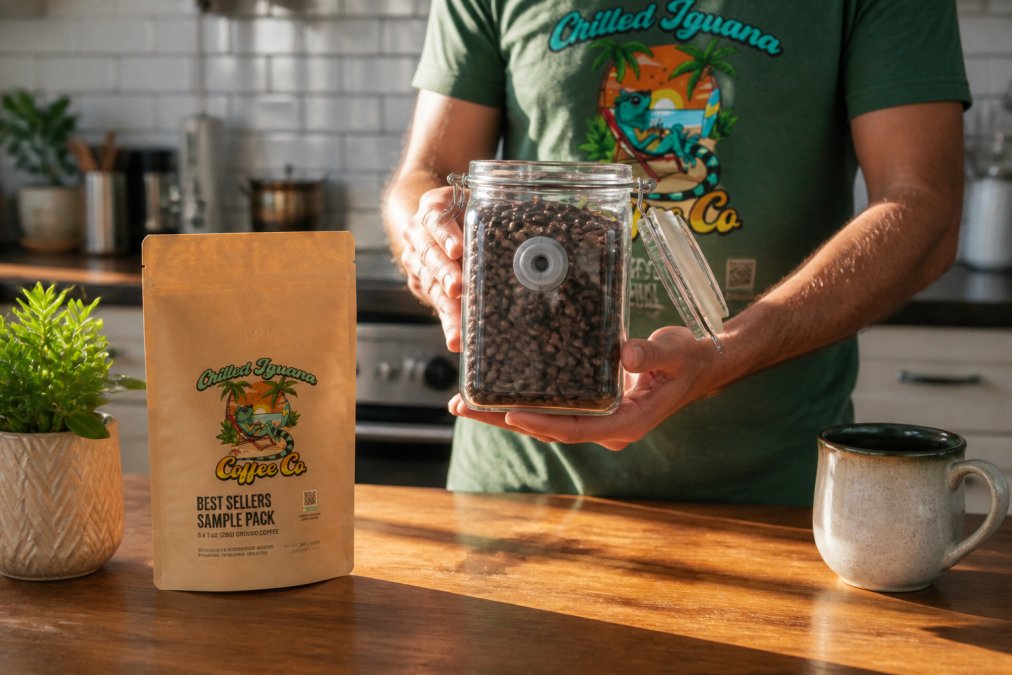
Whole beans stay fresh longer than pre-ground coffee. Once ground, surface area exposed to oxygen increases exponentially. Ground coffee peaks within days; whole beans hold for weeks.
Coffee Roast Date Importance: Why It Matters More Than You Think
The roast date is the single most reliable indicator of freshness. A coffee roasted six months ago will taste noticeably worse than one roasted two weeks ago, even if stored identically. The freshness window for peak flavor is roughly 2-4 weeks after roasting (peer-reviewed research).
Store-bought coffee rarely displays a roast date prominently. Some bags show a "packed on" date, which is meaningless if the coffee was roasted weeks earlier. When you order fresh roasted coffee directly, the roast date should be recent (ideally within the last 10 days). why fresh coffee tastes better.
Signs of Stale Coffee Beans and What to Avoid
Stale coffee shows itself visually: fresh beans have a glossy, oily sheen from natural oils, while stale beans look dull and faded. Aroma is the second indicator, fresh coffee smells vibrant and complex when you open the bag; stale coffee smells flat or musty.
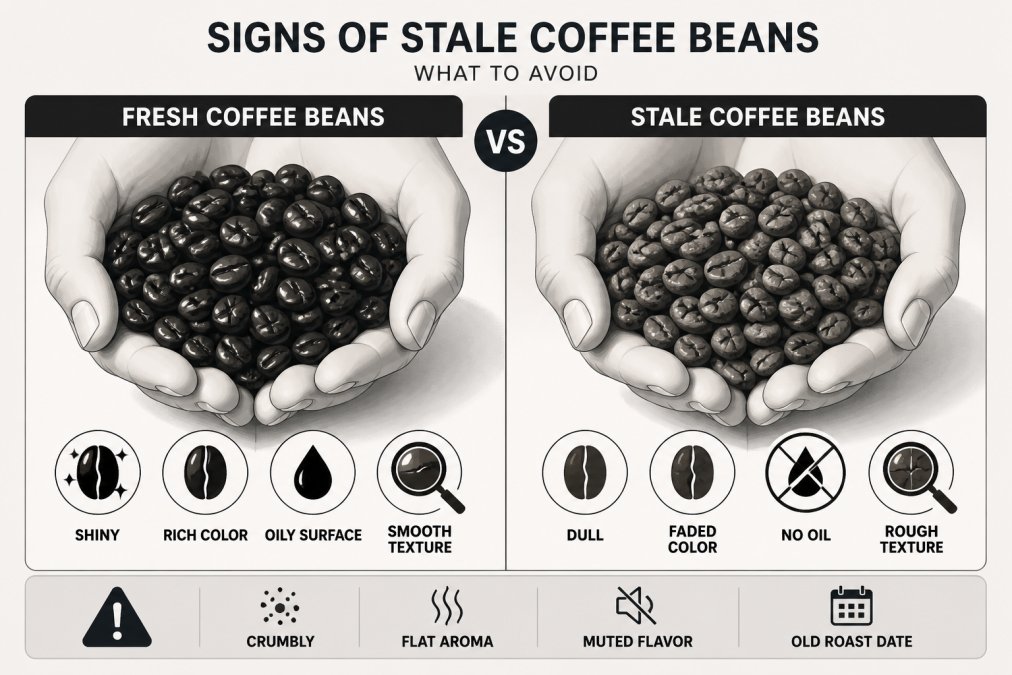
In the cup, stale coffee tastes bitter and one-dimensional. The acidity flattens, the body becomes thin, and you lose subtle tasting notes. Pre-ground coffee from grocery stores almost always shows these signs due to oxygen exposure during grinding and storage.
Do a blind taste test: brew a cup from beans roasted within two weeks and compare it with store-bought coffee. The difference in brightness, aroma, and complexity will be immediate.
The choice between fresh roasted and store-bought coffee comes down to whether you prioritize convenience or flavor. If you're serious about tasting what specialty coffee can deliver, fresh roasted is the only option. Start with Chilled Iguana Coffee Co.'s Best Sellers Sample Pack to explore multiple roasts and origins, or try our House Blend for a smooth, approachable introduction to fresh roasted coffee delivered straight to your door.


Frequently Asked Questions
Is fresh roasted coffee actually better than store bought?
Yes. Fresh roasted coffee retains volatile compounds and aromatic oils that degrade over time through oxidation and degassing. Store-bought coffee in standard packaging loses these compounds within 2-3 weeks of roasting. The difference is most noticeable in the aroma, acidity balance, and overall sensory experience. Specialty-grade fresh roasted beans also tend to come from higher-quality origins with distinct flavor profiles, while commodity coffee often lacks complexity.
How long should you wait to drink coffee after it is roasted?
Wait 3-5 days after roasting. Immediately after roasting, beans release carbon dioxide (degassing), which interferes with extraction and brewing. After 3-5 days, the bloom and crema develop properly, and the flavor profile stabilizes. Peak flavor typically lasts 2-4 weeks from the roast date when stored properly in an airtight container. Most coffee enthusiasts find the sweet spot between day 5 and day 21.
What are the signs of stale coffee beans?
Stale beans appear dull and faded rather than glossy and dark. They lack aroma when opened, produce weak or thin crema in espresso, and taste flat or bitter with reduced acidity and body. Rancidity (a musty, cardboard-like smell) indicates oxidation has progressed significantly. Grind size also matters: if you need to grind finer than usual to get extraction, the beans have lost solubility and freshness. Always check the roast date before buying.
This article was written using GrandRanker