



Table of Contents
- Coffee Roast Levels Explained: Light, Medium, and Dark
- Coffee Roast Level and Acidity: What Changes in the Cup
- Light Roast vs. Dark Roast Flavor: A Side-by-Side Tasting Method
- How to Choose a Coffee Roast
- Frequently Asked Questions
Last Updated: October 6, 2026
Coffee Roast Levels Explained: Light, Medium, and Dark
Coffee roast levels describe how long and how hot a bean is roasted, shaping nearly everything you taste. Light roasts stay bright and fruity, medium roasts balance sweetness and body, and dark roasts turn bold, smoky, and chocolatey. Specialty Coffee Association brewing standards notes that roast development is one of the biggest flavor variables in any cup.
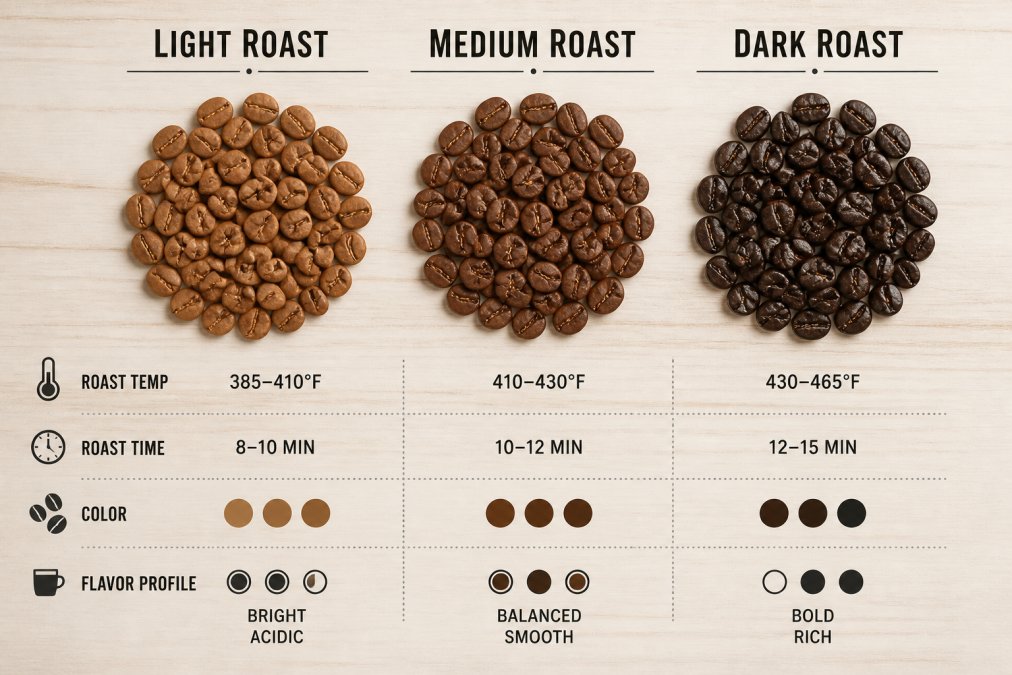
Roast level isn't the same as roast profile, the profile is the whole recipe of heat, airflow, and timing, so two roasters can hit the same level differently.
Coffee Roast Level and Acidity: What Changes in the Cup
Acidity drops as roast level rises: light roasts keep the most, medium roasts mellow it, dark roasts roast it away. Acidity isn't a flaw, it's the brightness that makes fruit and floral notes pop, while bitterness builds as it fades.
Light Roast vs. Dark Roast Flavor: A Side-by-Side Tasting Method
The fastest way to understand roast levels is tasting them side by side, same method and grind. Pick one light and one dark roast, weigh equal amounts, and brew both identically.
| Roast Level | Acidity | Body | Common Flavor Notes | Best For |
|---|---|---|---|---|
| Light | High | Light | Fruit, floral, citrus | Pour-over, drip |
| Medium | Medium | Medium | Caramel, chocolate, nut | Drip, pour-over |
| Dark | Low | Heavy | Cocoa, smoke, molasses | Espresso, French press |
Freshness matters: coffee gives off gas for days after roasting, which can flatten flavor. Rest beans a few days, store cool and dry, and grind right before brewing.
Best Sellers Sample Pack: 6Bean, Cowboy, Breakfast, Peru, Mexico, Bali →
How to Choose a Coffee Roast
Choosing a roast comes down to how you brew and what you like, there's no single best level. A light roast shines in pour-over; a dark roast holds up in espresso and French press. If you're new to specialty coffee, a medium roast is the safest start: balanced, forgiving, and works in almost any brewer.
Want to explore both ends? Our Best Sellers Sample Pack includes six roasts, from medium Breakfast Blend to dark 6 Bean Blend. Our Italian Roast brings smoky cocoa and a syrupy body, while the Cowboy Blend pairs dark and medium roasts for cocoa, caramel, and vanilla.


Frequently Asked Questions
How does roast level affect coffee flavor?
Roast level decides how much of the bean's original character survives the roaster. Light roasts keep more fruitiness, floral notes, and brightness because they are pulled shortly after first crack. Medium roasts balance sweetness with cocoa and caramel notes. Dark roasts push those origin flavors aside and build roasty, smoky, and bittersweet tones instead. A single bean tastes noticeably different at each level, which is why coffee roast levels matter more than most drinkers expect.
Which coffee roast has the most flavor?
It depends on what you mean by flavor. Light roasts show the widest range of origin characteristics: fruitiness, floral notes, and delicate acidity. Dark roasts deliver bigger, heavier flavors like dark chocolate, molasses, and smoky undertones with a fuller body. Medium roasts land in the middle with balanced sweetness and caramel notes. If you want complexity and terroir, go lighter. If you want intensity and a bold finish, go darker.
Does a darker roast taste stronger than a lighter roast?
Darker roasts taste bolder, but that is roast flavor, not caffeine or origin strength. Roasting longer burns off some of the bean's brightness and builds bitterness, body, and smoky notes, so the cup feels heavier. A light roast can taste more intense in acidity and fruit without the weight. Try a side-by-side tasting with the same bean at two roast levels to feel the difference for yourself.