



Table of Contents
- Decoding the Roast Profile: What You're Actually Tasting
- Light vs Dark Roast Acidity: Finding Your Balance
- Matching the Roast to Your Brewing Method
- Frequently Asked Questions
Last Updated: September 9, 2026
Choosing a coffee roast profile comes down to your brewing method and flavor preferences. A coffee roast profile is the combination of time and temperature applied to green beans, determining everything from acidity to body.
Decoding the Roast Profile: What You're Actually Tasting
A roast profile controls how much thermal energy the bean absorbs, determining flavor, aroma, and body. Light roasts preserve origin characteristics, while dark roasts develop roast-driven flavors like chocolate and smoke. First crack signals a light to medium roast; second crack is quieter and oilier, marking the transition into dark territory.
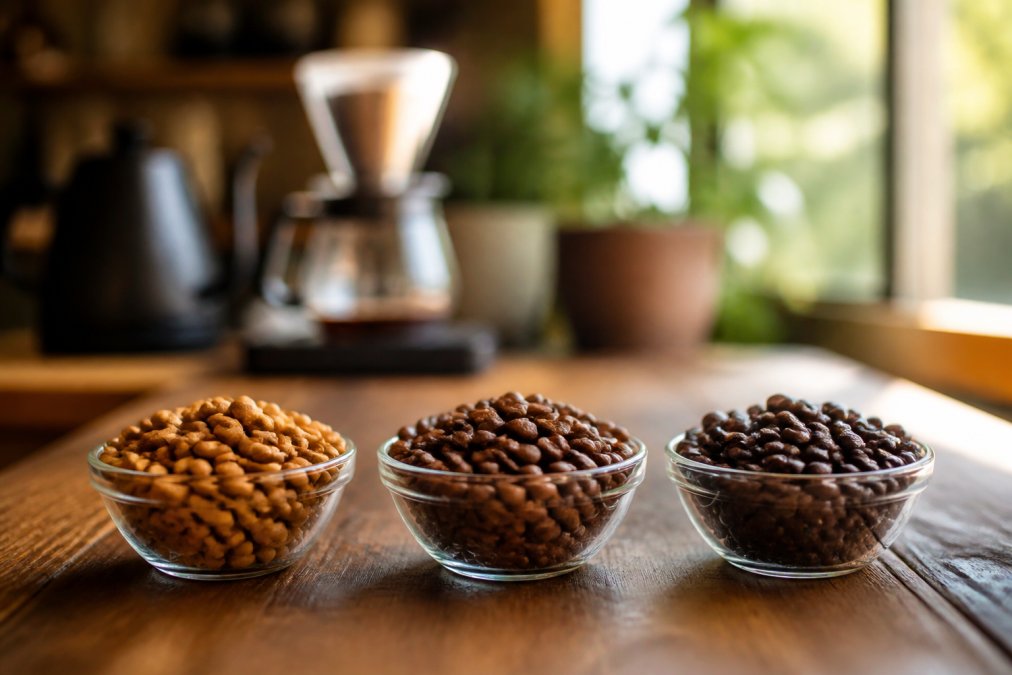
Light vs Dark Roast Acidity: Finding Your Balance
Light roasts contain more perceived acidity because roasting has not broken down the bean's natural fruit acids; dark roasts taste less acidic because the longer roast neutralizes those acids. If coffee feels too sharp on your stomach, choose dark; if you love bright, wine-like notes, stick with light to medium.
| Roast Level | Acidity | Body | Common Flavors | Best For |
|---|---|---|---|---|
| Light | High, bright | Light, tea-like | Citrus, berry, floral | Pour-over, drip |
| Medium | Balanced | Medium | Caramel, chocolate, nutty | Drip, French press, cold brew |
| Dark | Low, muted | Heavy, syrupy | Cocoa, smoke, toasted | Espresso, moka pot |
Matching the Roast to Your Brewing Method
Espresso machines need a dark roast for thick crema and high pressure. Pour-over shines with light roasts, as the paper filter lets delicate flavors through. French press and cold brew handle medium to dark roasts well. For cold brew, a dark or medium-dark roast is the classic pick; a best coffee roast for cold brew is typically something like our Italian Roast.

| Brewing Method | Best Roast Level | Why It Works |
|---|---|---|
| Espresso | Dark | Dense crema, bold body, low acidity |
| Pour-over | Light to Medium | Delicate flavors pass through paper filter |
| French Press | Medium to Dark | Immersion extracts full body and oils |
| Cold Brew | Medium-Dark to Dark | Smooth, chocolatey, low bitterness |
| Auto Drip | Medium to Dark | Lower water temp suits developed roasts |
| Moka Pot | Dark | Withstands high heat and pressure |
Dark roasts go stale faster because surface oils oxidize; light roasts stay fresh longer but need more time to degas. Store beans airtight and grind right before brewing.
Choosing the right roast profile does not require a coffee science degree. Start with your brewing method, match it to the flavors you enjoy, and experiment.
At Chilled Iguana Coffee Co., we source specialty-grade beans and roast them in small batches to highlight each origin's best qualities. Whether you want a bold dark roast for espresso or a smooth medium for cold brew, our curated collection delivers a tropical coffee experience to your door. Try our Best Sellers Sample Pack to taste across roast levels, or grab a bag of our 6 Bean Blend for a dependable daily dark roast. Get started with Chilled Iguana Coffee Co. and find the roast that makes your home brewing ritual something to look forward to.


Frequently Asked Questions
What is the 15-15-15 rule for coffee?
The 15-15-15 rule is a simple starting point for dialing in your brew: use 15 grams of coffee for every 250 grams of water, grind 15 clicks on a typical hand grinder, and let it steep for 15 seconds before stirring. It's not a law, just a helpful baseline. Tweak the ratio or grind size from there to match your chosen roast profile and taste preferences.
How does the roast profile affect the caffeine content of coffee?
Roast profile has very little effect on caffeine content. A light roast and a dark roast from the same bean contain nearly identical amounts of caffeine by weight. The difference you notice is flavor: darker roasts taste bolder and more bitter, which can mask the caffeine buzz. If you want more caffeine, choose a coffee with higher bean density, like a single origin from high altitudes.
Which coffee roast profile is best for cold brew?
A dark roast is the best coffee roast for cold brew for most people. The long, slow extraction process of cold brew naturally reduces acidity and highlights the deep, chocolatey notes found in dark roasts. This combination creates a smooth, sweet, and full-bodied concentrate that works beautifully over ice. Try our Italian Roast or 6 Bean Blend for a rich, low-acid cold brew.