



Table of Contents
- What Makes a Tropical-Inspired Coffee Roast Profile
- Best Single Origin Coffee Beans 2026 for Tropical Flavors
- How to Brew Fruit-Forward Coffee to Highlight Tropical Notes
- Tropical Coffee Roast Profiles That Deliver Results
Last Updated: August 22, 2026
What Makes a Tropical-Inspired Coffee Roast Profile
A tropical coffee roast profile emphasizes bright, fruit-forward flavor notes that evoke tropical origins and processing methods. These roasts highlight natural sweetness, vibrant acidity, and fruity tasting notes, mango, papaya, coconut, and citrus, rather than the deeper chocolate and earthy tones of darker roasts.
Medium and medium-light roasts preserve delicate fruit characteristics that darker roasts obscure. When you roast high-elevation tropical beans at the right development time, the maillard reaction and caramelization create sweetness while the first crack marks the flavor-development phase. This demands precision: carefully managing thermal energy to bring out specific flavor notes without pushing into bitter territory.
Best Single Origin Coffee Beans 2026 for Tropical Flavors
Single-origin beans from high-altitude tropical regions deliver the most authentic tropical coffee roast profiles. Origin matters enormously, elevation, soil type, processing method, and varietal all shape the final flavor.
Colombia stands out for its bright, balanced medium roast highlighting citrus, juicy fruit, and smooth chocolate notes.
Costa Rica brings sweet apple, raisin, and honey forward from micro farms in Alajuela at 1,300-1,445 meters elevation. The eco-pulped, sun-dried process emphasizes natural sweetness without harsh acidity.

Sumatra offers medium acidity, syrupy body, dark chocolate, and dried fruit from the Aceh highlands. Processed via Giling Basha (wet-hulling), these beans develop a rounded mouthfeel and forest-floor complexity, ideal if you prefer tropical profiles with earthy undertones.
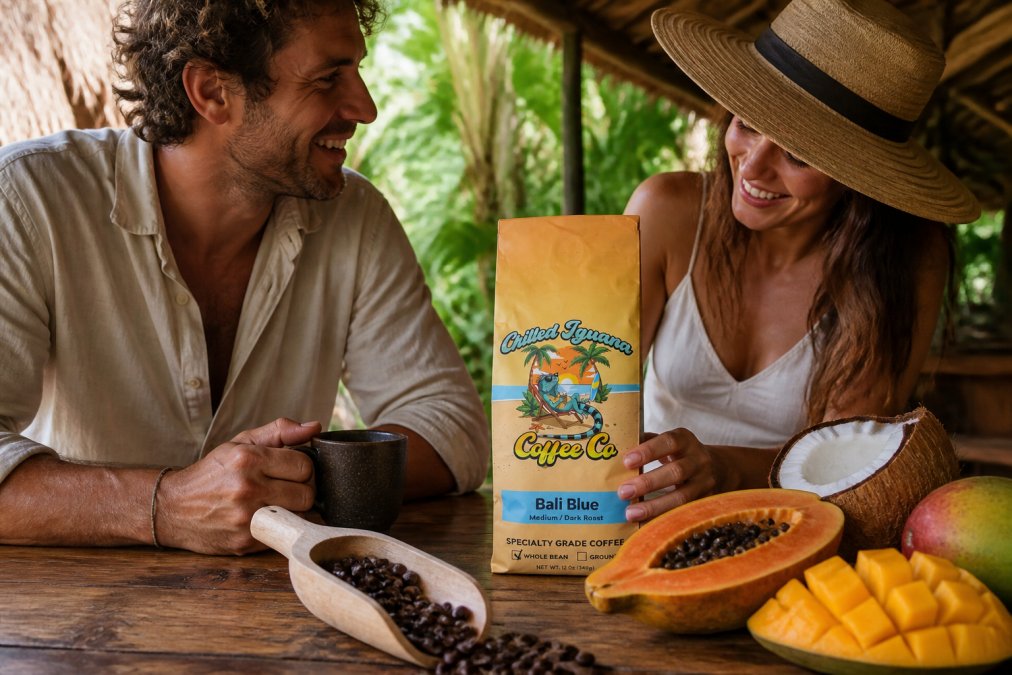
How to Brew Fruit-Forward Coffee to Highlight Tropical Notes
Brewing method matters as much as the roast itself when highlighting tropical flavor notes. The goal is extraction that brings out fruit, sweetness, and sparkling acidity without over-extracting into bitterness.
Pour-over and AeroPress methods work best for tropical profiles. Use water between 195-205°F, grind medium-fine, aim for a 1:16 coffee-to-water ratio, and brew 3-4 minutes for pour-over or 2-3 minutes for AeroPress.
French press brings out body and sweetness but can muddy clarity. Use a coarser grind, 4-minute steep, and pour carefully to avoid sediment.
Espresso emphasizes chocolate sweetness and body. Use a fine grind and aim for 25-30 second pulls to highlight caramel notes while preserving fruit undertones.
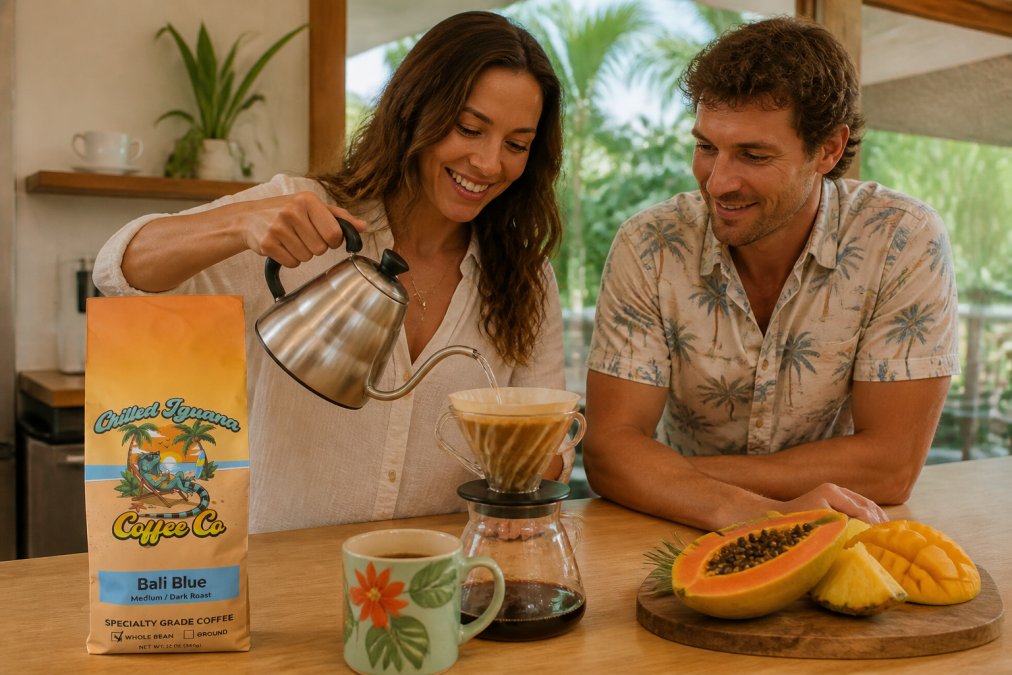
Tropical roasts should show a light sheen and medium-brown color. Fresh-roasted tropical beans should emit bright, fruity aromatics immediately upon opening.
Tropical Coffee Roast Profiles That Deliver Results
Building a roast profile for tropical flavor notes requires balancing several variables.
| Roast Phase | Temperature Range | Key Actions | Expected Result |
|---|---|---|---|
| Drying Phase | 140-160°C | Low, steady heat; monitor bean moisture loss | Even color development; no scorching |
| Maillard Reaction | 160-190°C | Gradual heat increase; watch for first crack | Sweetness develops; fruit notes emerge |
| Development Time | 190-210°C | Adjust rate of rise to control flavor intensity | Balanced acidity and body; tropical notes peak |
| Cooling | Post-roast | Quick cool to stop carryover | Locks in flavor; prevents over-roasting |
The rate of rise during the maillard reaction is where tropical profiles are won or lost. A slower rate of rise (8-12°C per minute) allows more flavor development and emphasizes sweetness (peer-reviewed research). For tropical profiles, aim for 195-205°C at first crack, then extend development for 60-90 seconds post-crack to preserve delicate fruit compounds while avoiding bitter notes.
Cupping and quality assessment reveal whether your roast profile succeeded. Let beans rest 12-24 hours post-roast, then brew a standard cupping sample. Look for bright, clean acidity without harshness; distinct fruit and floral notes; smooth body without heaviness; and sweet finish without bitterness.
Crafting the perfect tropical coffee roast profile takes practice, but the payoff is a cup that tastes like an escape. When you're ready to explore tropical roast profiles without the roasting equipment, start with Chilled Iguana Coffee Co. Our fresh-roasted selection includes single-origin and blended tropical profiles, delivered to your door at peak freshness. Discover your perfect tropical cup today. For example, our Colombia single-origin coffee offers bright citrus, juicy fruit, and a smooth chocolate finish for $16.99. Or try our Costa Rica for sweet apple, raisin, and honey notes, also $16.99. If you prefer a darker, bolder tropical experience, our Florida Keys Blend is a dark roast with deep chocolate, caramel, and fruity notes for $16.99. You can also enjoy your tropical brew in style with our Can-shaped glass for $18.00 or a Stainless steel tumbler for $29.00.

Frequently Asked Questions
What makes a coffee roast profile taste tropical?
Tropical coffee roast profiles emerge from the combination of origin, altitude, and roasting technique. Beans grown at high elevation in tropical regions develop natural fruit-forward characteristics. Medium roasts preserve bright acidity and delicate fruit notes like citrus and berries, while medium-dark roasts develop deeper sweetness through caramelization. The roast curve, how quickly heat is applied and development time, determines whether tropical flavors shine as sparkling acidity or round, honeyed sweetness.
How should I brew fruit-forward coffee to highlight tropical notes?
Pour-over and AeroPress methods work best for tropical-inspired beans because they allow precise water temperature control and extraction time. Use water between 195-205°F and aim for a 1:16 coffee-to-water ratio. Grind medium-fine for pour-over to maximize clarity of fruit notes. Avoid over-extraction, which masks delicate tropical flavors with bitterness. Let the coffee cool slightly after brewing to fully appreciate the citrus, berry, and floral notes that define tropical profiles.
Are single-origin beans better for tropical flavor profiles?
Single-origin beans excel at delivering distinct tropical character because they reflect a specific terroir, elevation, and processing method. A Colombian single-origin at 1,300-1,500 meters develops bright citrus and berry notes, while a Costa Rican micro-farm coffee emphasizes honeyed sweetness and apple notes. Blends can also showcase tropical profiles, but single-origins give you direct access to the origin's unique flavor signature and make it easier to dial in your preferred roast level and brewing method.
This article was written using GrandRanker