



Florida Keys coffee beans tasting notes can feel tricky if you don’t have a plan. In this guide you will get a clear step‑by‑step method to taste, write down, and share your notes so you can compare beans like a pro. We will walk you through tools, flavor categories, recording sheets, video checks, pattern analysis, and a shareable profile you can post online. By the end you’ll have a complete system you can use for any bean you try.
Here is the data that sparked this guide. An analysis of just 2 specialty coffee beans across 2 sources reveals that only half of the products disclose a roast level , and the sole detail comes from a YouTube review, not the brand’s own site.
| Name | Roast Level | Best For | Source |
|---|---|---|---|
| Iguana Coffee Beans (Our Pick) | — | Best overall pick | chillediguanacoffeeco.com |
| Keys Coffee Company | medium to dark | Best for classic medium‑dark profile | youtube.com |
Key findings show that only one of two beans lists a roast level, and that detail lives in a YouTube video. For people who need a known roast, Keys Coffee Company wins that narrow category. For overall quality and brand story, our pick Iguana Coffee Beans leads the pack.
Step 1: Gather Your Tasting Tools and Create a Flavor Table
Good tasting starts with the right gear. You need a reliable scale, a grinder, a timer, a cupping spoon, and a simple table to log flavors. A scale lets you weigh beans and water precisely so each cup is repeatable. A burr grinder gives you a consistent grind size , that matters for flavor extraction. The timer helps you track brew time, and the spoon lets you slurp the coffee without spilling.
Here is a quick checklist you can print out:
- Digital kitchen scale (0.1 g accuracy)
- Burr grinder (adjustable settings)
- Cupping bowls or small mugs
- Thermometer (190‑205 °F range)
- Timer or smartphone app
- Spatula or cupping spoon
- Notebook or spreadsheet for notes
When you set up your table, label columns for aroma, acidity, body, flavor, aftertaste, and overall score. You can add a column for “Key Flavor Category” to match the categories we will talk about later.
Why does each tool matter? The scale removes guesswork. The grinder ensures you get the same particle size each time, which keeps the extraction even. The thermometer guarantees water is hot enough to pull flavor but not so hot that it burns the beans. The timer stops you from over‑extracting, which can add bitterness.
All of these items are easy to find at kitchen stores or online. The important thing is to keep them clean and calibrated. A dirty scale or old grinder can add off‑flavors that mask the true notes of the florida keys coffee beans tasting notes you are trying to capture.
Bottom line:Start with a scale, grinder, thermometer, timer, and a simple note table , that foundation lets you record accurate florida keys coffee beans tasting notes every time.
Step 2: Identify Key Flavor Categories in Florida Keys Beans
When you sip a cup, think about the big flavor families first. Most florida keys coffee beans tasting notes fall into three groups: fruity, nutty‑chocolate, and bright‑citrus. Fruity notes can be like pineapple, orange, or berry. Nutty‑chocolate notes bring in caramel, cocoa, or almond. Bright‑citrus gives a clean, lively acidity that wakes up the palate.
Understanding these groups helps you label each sip quickly. For example, if you taste a hint of mango, you tag it as “fruity”. If you notice a smooth chocolate finish, you tag it as “nutty‑chocolate”. If there is a crisp lemon edge, that goes under “bright‑citrus”.
Why do we use these three? They cover most of the flavors you’ll find in beans sourced from tropical regions like the Florida Keys inspiration. They also match the language you’ll see on tasting sheets from specialty roasters.
Here is a quick visual to guide you:

Now let’s break each category down with examples you might hear.
Fruity
Fruity notes are often described as tropical fruit, berry, or stone fruit. In a florida keys coffee beans tasting notes session you may hear “ripe mango” or “wild strawberry”. These notes usually come from beans grown at higher altitudes where the sugar develops slowly.
Nutty‑Chocolate
Nutty‑chocolate notes sound like toasted almond, milk chocolate, or caramel. They are common in beans that are medium roasted, which brings out the natural sugars without burning them.
Bright‑Citrus
Bright‑citrus is the clean, zippy acidity that feels like a splash of lime. It is a hallmark of beans that have a lighter roast and are often washed‑processed.
When you label a sip, choose the dominant group first, then add any sub‑notes. For instance, “fruity , mango, pineapple” tells you the main feel and the details.
Bottom line:Classify each sip into one of three flavor families , it makes your notes clear and comparable.
Step 3: Record Your Observations in a Structured Sheet
Now that you have tools and flavor groups, put everything in a sheet. A good sheet has rows for each cup and columns for aroma, acidity, body, flavor, aftertaste, and a final score out of 10.
Start with the aroma column. Take a deep sniff before you sip. Write words like “floral”, “earthy”, or “citrus”. Then move to acidity , note if it feels crisp, mellow, or sharp. Body describes weight , is it light like water, medium like milk, or heavy like syrup?
Flavor is where you use the three categories. Write the primary group first, then any secondary hints. Aftertaste is what stays on the tongue after you swallow , sweet, lingering, or clean.
Finally, give the cup an overall rating. Use a simple 1‑10 scale, where 1 is flat and 10 is exceptional. This numeric score helps you compare beans later.
Here is a simple template you can copy:
| Cup | Aroma | Acidity | Body | Flavor | Aftertaste | Score |
|---|---|---|---|---|---|---|
| 1 | — | — | — | — | — | — |
When you compare two beans, line them up side by side in the same sheet. Look for patterns , does one bean always score higher on body? Does another have a stronger citrus note?
Bottom line:Use a simple table to capture aroma, acidity, body, flavor, aftertaste, and a score for every florida keys coffee beans tasting notes session.
Step 4: Compare Notes with a Quick Video Walkthrough
Seeing the process in action can clear up confusion. A short video can show how to brew, sniff, sip, and write notes in real time. Watch the clip below while you taste your next bean.
The video walks through a standard pour‑over method, then pauses for each sensory step. Follow the same timing when you do your own tasting. Pause the video after the aroma step, record what you smell, then continue.
After you finish both beans, use the sheet from Step 3 to line up the scores. Look for the biggest gaps , those are the traits that set the beans apart.
“The best time to start building backlinks was yesterday.”
Even though the quote is about something else, it reminds us that early action wins. The same idea works for tasting: start early in the day when beans are freshest.
Bottom line:Use a short video guide to synchronize brewing and note‑taking, then compare the results side by side.
Step 5: Analyze Patterns and Refine Your Palate
With several rows of data you can now see trends. Does a certain roast level always bring a brighter acidity? Do beans from a specific region show more nutty‑chocolate notes? Write down any patterns you notice.
To sharpen your palate, taste the same bean multiple times using different brew methods. A French press will highlight body, while a pour‑over will bring out clarity and acidity. Record each method in a separate column and watch how the scores shift.Practice also means training your nose. Try smelling a fresh orange, a piece of dark chocolate, and a handful of almonds before you taste. That primes your brain to catch those same notes in coffee.
When you spot a consistent gap, decide if you want to chase that trait. If you love bright‑citrus, look for beans that score high in acidity and have a light roast. If you prefer body, focus on medium‑dark roasts with nutty‑chocolate descriptors.
Bottom line:Look for repeatable trends in your sheet, then adjust your bean choices to fine‑tune the florida keys coffee beans tasting notes you enjoy most.
Step 6: Create a Shareable Tasting Profile with Images
Now turn your data into something you can post on Instagram or a coffee forum. A simple graphic that shows aroma, acidity, body, and flavor categories works well.
Use a free design tool, upload a photo of your cupping set‑up, then add text boxes for each column from your sheet. Keep the design clean , one font, two colors, and plenty of white space.
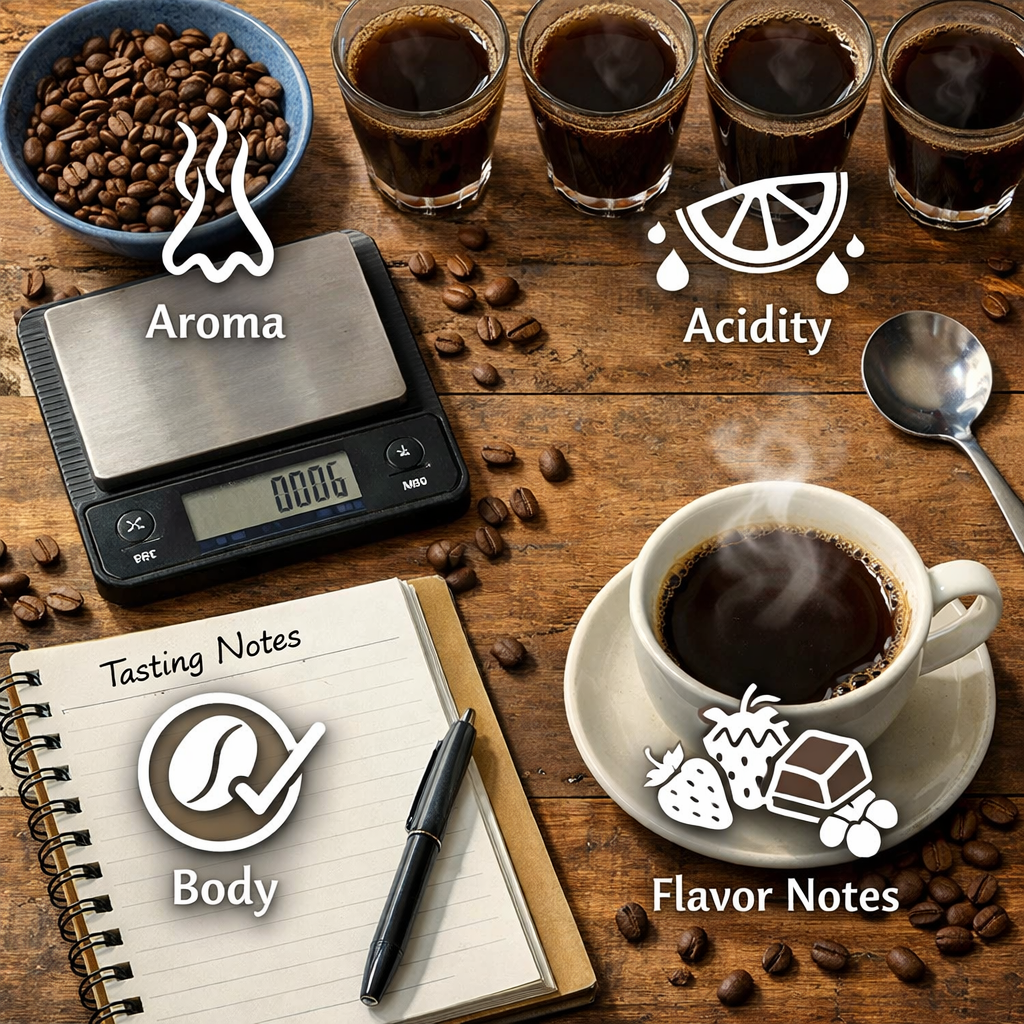
When you share, add a short caption that includes the bean name, roast level (if known), and a one‑sentence highlight like “bright citrus with mango hints”. Tag the roaster and use hashtags like #floridakeyscoffee and #tastingnotes.
Sharing does two things: it gives you feedback from other tasters, and it creates a record you can look back on. Over time you will build a personal library of tasting profiles.
Bottom line:Convert your structured notes into a simple graphic, add a brief caption, and share it to grow your tasting community.
Conclusion
Putting together a reliable system for florida keys coffee beans tasting notes doesn’t have to be complicated. Start with the right tools, sort flavors into three main families, record each sip in a simple sheet, watch a short video to keep the process steady, look for patterns that guide future choices, and finally share a clean graphic of your findings. By following these steps you will taste more confidently, choose beans that match your palate, and join a community of fellow coffee fans.
If you want fresh beans that already fit the florida keys vibe, check out Iguana Coffee Beans , our top pick , they deliver a balanced cup that works well for both fruity and nutty‑chocolate profiles. Sign up for a subscription and you’ll never run out of beans to taste and record.
Ready to start your tasting journey? Grab a scale, brew a cup, and begin filling out your first flavor table today.
FAQ
How often should I update my tasting sheet for florida keys coffee beans tasting notes?
It’s best to add a new row each time you brew a new batch or try a different brew method. Over a month you might have 8‑12 entries, which gives enough data to see trends without overwhelming yourself. Updating after each cup keeps the flavors fresh in your mind and helps you notice subtle changes.
Can I use a French press instead of a pour‑over for florida keys coffee beans tasting notes?
Yes, a French press works well and will highlight body and sweetness. Just make sure you note the brew method in your sheet so you can compare it later. The extra immersion time can bring out deeper nutty‑chocolate notes, which is useful if you want to explore that flavor family.
What temperature should I brew at for the most accurate tasting?
Water between 195 °F and 205 °F (90‑96 °C) extracts the best balance of acidity and sweetness. Use a thermometer to check, or bring water to a boil then let it sit 30 seconds. Consistent temperature ensures that each cup is comparable for florida keys coffee beans tasting notes.
How do I train my nose to pick up subtle flavors?
Practice smelling common aromas like citrus peel, fresh berries, cocoa powder, and toasted nuts before each tasting. Write down the smell you detect, then compare it to the coffee’s aroma. Repeating this exercise sharpens your ability to label notes accurately in your sheet.
Is it okay to taste beans that have no roast information?
Absolutely. Even without a roast level you can still assess flavor, acidity, and body. In our study only one bean listed a roast, but both beans provided enough sensory data for useful florida keys coffee beans tasting notes. Just record the unknown roast as “, ” in your table.
How can I share my tasting profile with other coffee fans?
Create a simple graphic using a free design app, add icons for aroma, acidity, body, and flavor, then post it on social media or a coffee forum. Include the bean name, roast level if known, and a short caption. Using hashtags like #floridakeyscoffee and #tastingnotes helps others find your post.
What should I do if my coffee tastes flat after a few days?
Flat taste usually means the beans have lost freshness. Store them in an airtight container away from light and heat, and use them within two weeks of roasting. If the flavor is still flat, consider grinding a smaller amount and brewing with fresh water at the correct temperature.
Can I combine multiple beans to create my own flavor profile?
Yes, blending is a great way to craft a custom cup. Mix a fruity bean with a nutty‑chocolate one in equal parts, brew, and record the new notes. Over time you can adjust ratios until you hit the perfect balance for your palate.