



Table of Contents
- Best Containers for Loose Leaf Tea
- How Long Does Loose Leaf Tea Last?
- Signs of Expired Tea
- Frequently Asked Questions
Last Updated: September 12, 2026
Best Containers for Loose Leaf Tea
The best container for loose leaf tea is opaque and airtight. Glass mason jars suit short-term use, but tin canisters and ceramic caddies win for anything longer than a month.
Light, air, heat, and moisture are the enemies: an airtight seal stops oxygen oxidizing aromatic oils, an opaque body blocks UV rays, and a tight lid keeps out odors.
Materials at a glance:
- Tin canisters: Best all-around, lightproof, airtight with a double-lid, lightweight. Look for a silicone gasket.
- Ceramic caddies: Excellent light blocking, but heavier and seal quality varies.
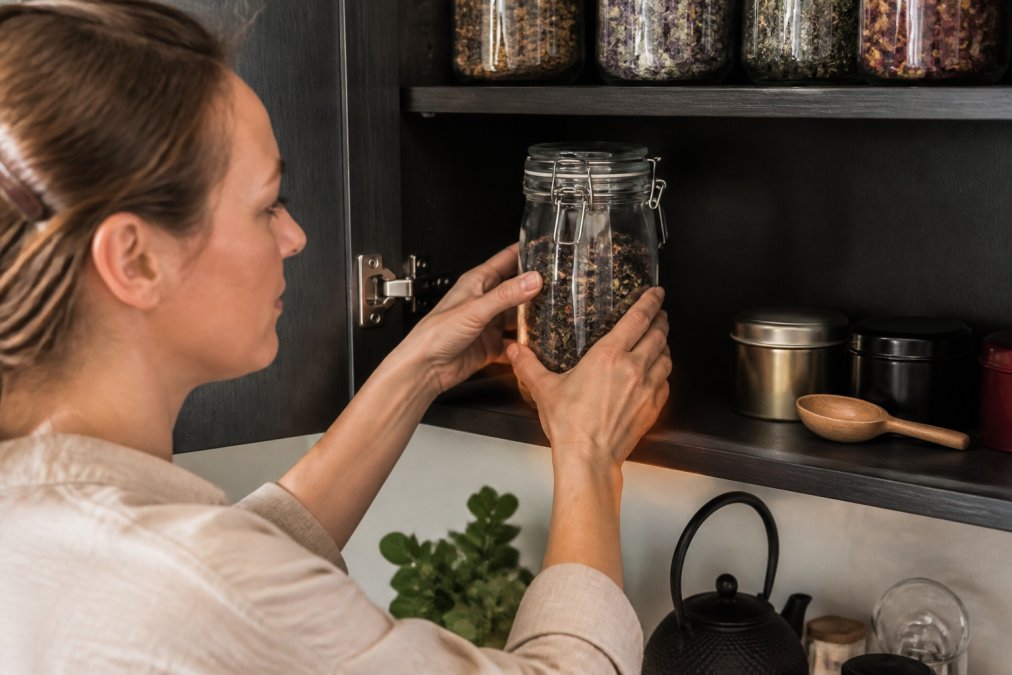
- Glass mason jars: Fine for teas finished in a few weeks; keep them in a dark cabinet.
- Stainless steel: Durable and opaque, ideal for bulk, though it can hold odors.
How Long Does Loose Leaf Tea Last?
Loose leaf tea lasts 6 to 12 months in a sealed, opaque container kept cool and dark; some hold flavor for two years or more.
Green and white teas fade fastest, black teas and roasted oolongs are more forgiving, and herbal blends and rooibos keep longest.
| Tea Type | Typical Shelf Life | Storage Priority |
|---|---|---|
| Green tea | 6-8 months | Refrigeration helps |
| Oolong tea | 12-18 months | Cool, dark pantry |
| Black tea | 18-24 months | Standard airtight storage |
For bulk quantities, split your supply: a small amount in your daily caddy, the rest vacuum sealed with an oxygen absorber.
Signs of Expired Tea
Expired tea won't make you sick, but it tastes dull and dusty. Watch for faded aroma, gray leaves, and a brew that stays weak no matter how much you use.
Trust your nose: fresh loose leaf tea smells bright; stale tea smells like old hay or nothing.
Don't toss stale tea, it still works for compost, bath soaks, or as a fridge deodorizer.
Storing loose leaf tea long term comes down to one habit: keep it sealed, shaded, and cool. At Chilled Iguana Coffee Co., we source our teas with the same care we put into our fresh roasted coffee. Our herbal blends like Peach Paradise and Hibiscus Berry Tea arrive ready for your pantry and your daily ritual. Get started with Chilled Iguana Coffee Co. and keep every brew tasting like a getaway.


Frequently Asked Questions
Does loose leaf tea ever go bad?
Loose leaf tea does not spoil like milk or meat, but it loses flavor and aroma over time. Oxidation, moisture, and light exposure break down the volatile oils that give tea its taste. Old tea is usually safe to drink but will taste flat or stale. For the best cup, use loose leaf tea within six months to a year of opening, and store it in an airtight, opaque container away from heat and humidity.
What is the best container to store loose leaf tea in?
Airtight, opaque containers are your best bet. Tin canisters, dark glass mason jars, and ceramic caddies with tight seals all work well. Avoid clear plastic bags or open boxes. If you buy tea in a resealable pouch, transfer it to a container that blocks UV rays. Stainless steel and BPA-free options also protect flavor. Smaller containers that match your tea volume reduce the air inside, which slows oxidation and keeps leaves fresher longer.
Should I store loose leaf tea in the refrigerator?
The refrigerator is risky for daily-use tea because temperature fluctuations and moisture can degrade leaves. If you live in a hot, humid climate and want to store bulk tea long term, freezing is an option. Seal tea in a vacuum-sealed bag or airtight container, then place it in the freezer. Let it come to room temperature before opening to prevent condensation. For tea you use weekly, a cool, dark pantry is simpler and safer.