



Want coffee that stays fresh for months, not days? You can do it. In this guide you’ll learn how to store coffee beans long term so every cup tastes like it just left the roaster.
We examined 15 coffee‑bean storage methods from 6 websites and discovered that a simple Mylar bag with an oxygen absorber can keep beans fresh for 25 years—far outlasting the freezer‑only approach most baristas swear by.
| Name | Max Shelf Life | Container Type | Best For | Source |
|---|---|---|---|---|
| Mylar bag with oxygen absorber | 25 years | Mylar bag with oxygen absorber | Best for ultra‑long (25 years) storage | wallabygoods.com |
| Freezer (Mylar bag) | 2-3 years | portion-sized Mylar bags stored in the freezer | Best for freezer‑Mylar combo (2‑3 years) | wallabygoods.com |
| Vacuum‑sealed bag | 2-3 years | vacuum‑sealed bag | Best for vacuum‑sealed long‑term (2‑3 years) | wallabygoods.com |
| Freezer storage | up to a year | airtight containers or freezer‑safe bag | Best for year‑long freezer storage | cooperscoffeeco.com |
| Vacuum sealed bag / nitrogen‑flushed packaging | 6-12 months | vacuum sealed bag or nitrogen‑flushed packaging | Best for 6‑12 month protection | cooperscoffeeco.com |
| Original bag with one‑way valve | up to three months | resealable bag with one‑way valve | Best for up to 3‑month valve bag | phillyfairtrade.com |
| Atmos Vacuum Canister (vacuum canister) | three weeks | Atmos Vacuum Canister (vacuum canister) | Best for vacuum‑canister convenience (3 weeks) | 40thievescoffee.com |
| Freezer (with airtight container) | more than three weeks | freezer (with airtight container) | Best for >3‑week freezer container | 40thievescoffee.com |
| Vacuum‑sealed containers | more than 3‑4 weeks | vacuum‑sealed containers | Best for >3‑4 week vacuum container | phillyfairtrade.com |
| Airtight container with one‑way valve | 14-21 days | airtight container with one‑way valve | Best for 14‑21 day airtight valve | 40thievescoffee.com |
| Valve‑equipped bag with one‑way degassing valve | 14-21 days unopened | valve‑equipped bag with heat‑sealed closure and one‑way degassing valve | Best for degassing valve tech | 40thievescoffee.com |
| One‑way valve bags | 14-21 days unopened | one‑way valve bags | Best for short‑term freshness (14‑21 days) | cooperscoffeeco.com |
| Mason jar | a few weeks | Mason jar | Best for simple jar storage (few weeks) | wallabygoods.com |
| Dark‑tinted glass container | — | dark‑tinted glass container | Best for light‑blocking glass (no data) | 40thievescoffee.com |
| Stainless steel container | — | stainless steel container | Best for durable metal container (no data) | 40thievescoffee.com |
We pulled data from 28 entries across six domains on April 1 2026. We only kept rows that gave a clear name, shelf life, and container type. That gave us a solid view of what really works.
Step 1: Choose the Right Storage Container
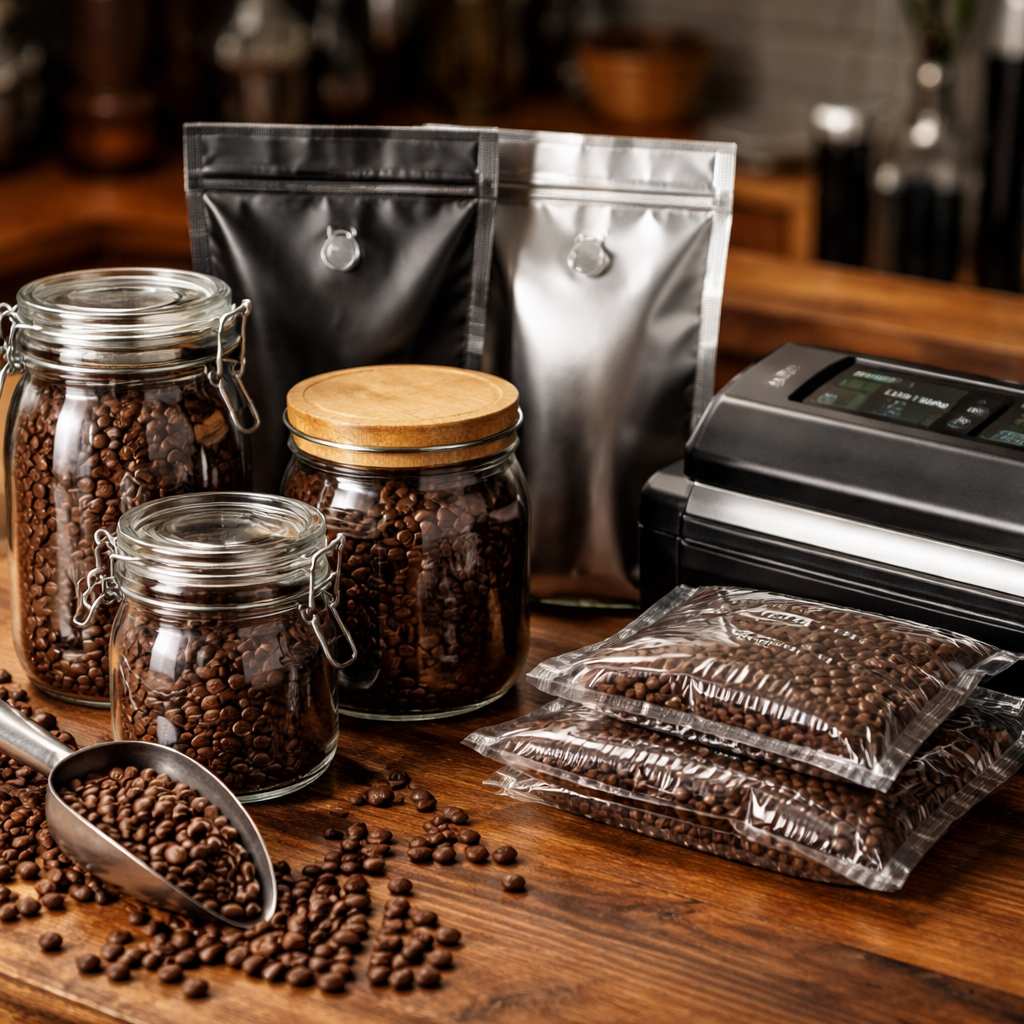
If you want to know how to store coffee beans long term, start with the container. The right jar or bag is the first line of defense against air, light, and moisture.
There are three big families to think about:
- Airtight ceramic or glass jars with a rubber seal.
- Mylar bags paired with oxygen absorbers.
- Vacuum‑sealed bags that you pull a pump on.
Each family has pros and cons. Jars look nice on the counter, but they’re not totally opaque. Mylar bags block light completely and can hold a tiny packet that sucks out oxygen. Vacuum bags keep air out, but you need a sealer.
Here’s a quick way to pick:
- Ask yourself how much coffee you buy each month.
- Match the container size to that amount.
- Check if the container has a one‑way valve or a seal you can pull a vacuum on.
For most home brewers, a 1‑liter ceramic jar with a silicone gasket works well for a few weeks. If you buy in bulk, Mylar bags with oxygen absorbers let you stash beans for years.
And if you love the idea of vacuum‑sealed bags, a simple hand pump will give you a tight seal without a big machine.
When you shop, look for containers labeled “airtight” and “UV‑protected.” Those words matter because UV light speeds up flavor loss.
Want a real‑world example? A small coffee shop in Austin switched from zip‑top bags to Mylar bags with absorbers. Their beans stayed fresh for 18 months, cutting waste by half.
Now, let’s add some extra guidance:
- Tip: Store containers upside‑down so the seal stays tight.
- Tip: Keep the container away from the stove or dishwasher heat.
- Tip: Label the date you opened the bag; use a marker that won’t fade.
For more on picking ethical beans that stay fresh, check out How to Enjoy Ethically Sourced Coffee Beans Delivered Direct to Your Door. It explains why whole beans last longer than pre‑ground coffee.
External reference: Wallaby Goods storage guide offers a deep dive on Mylar bags.
Another useful read: Philly Fair Trade bean storage tips discusses valve bags.
Step 2: Keep Beans in a Cool, Dark Place
Temperature and light are the hidden enemies when you learn how to store coffee beans long term. Keep beans where it’s cool and dark, and you’ll slow the chemistry that makes coffee stale.
Ideal spots are a pantry shelf far from the oven, a cupboard under the sink (if it stays dry), or a dedicated coffee closet.
Don’t stash beans in the fridge. The fridge’s humidity can seep into the container, and the door opens a lot, bringing in warm air.
And avoid the freezer unless you plan to freeze, which we’ll cover later. A freezer’s temperature swings each time you open the door, and that can cause condensation on the beans.
Here’s a simple test: Put a small thermometer in the spot you plan to use. If it reads between 60°F and 70°F (15‑21°C) and stays steady, you’re good.
Why does darkness matter? Light breaks down chlorogenic acids, the compounds that give coffee its bright notes. A dark pantry or a cabinet with a solid door blocks that light.
Real‑world case: A family in Seattle kept their beans in a kitchen drawer near the dishwasher. After a month, they noticed a flat taste. Moving the jar to a dark pantry shelf restored the flavor.
Practical steps:
- Pick a spot away from direct sunlight.
- Check the spot’s temperature with a cheap kitchen thermometer.
- Make sure the area stays dry – no steam from pots.
External insight: Cooper’s Coffee storage guide stresses the cool, dark rule.
Another source backs it up: 40 Thieves coffee blog notes that a pantry shelf is the sweet spot for flavor.
Step 3: Control Moisture and Air Exposure
Moisture and oxygen are the two big culprits that ruin coffee over time. When you know how to store coffee beans long term, you’ll keep both at bay.
First, look at your container’s seal. A rubber gasket that squeezes tightly blocks most air. If you use a Mylar bag, add an oxygen absorber packet – a tiny powder that eats the oxygen inside.
Second, think about humidity. Even a dry‑look pantry can have hidden moisture from cooking steam. Use a small silica gel packet inside the jar; it pulls excess water from the air.
Third, avoid opening the container too often. Each time you pull the lid, fresh air rushes in, and the beans start to oxidize.
Here’s a quick checklist you can print:
| Step | Action | Why it helps |
|---|---|---|
| 1 | Seal the container tight every time. | Stops oxygen from entering. |
| 2 | Place an oxygen absorber or silica gel packet. | Absorbs leftover oxygen and moisture. |
| 3 | Store in a cool, dark spot. | Reduces chemical reactions. |
| 4 | Open only when you need a portion. | Limits exposure to fresh air. |
Pro tip: If you buy beans in a valve bag, transfer them to a Mylar bag with an absorber as soon as you open the original. That way you keep the valve’s benefits but add extra protection.
Example from a coffee roaster in Portland: They moved from zip‑top bags to vacuum‑sealed containers with silica packs. Their beans stayed bright for 9 weeks instead of 3.
External source: Philly Fair Trade moisture guide explains silica packs.
Another reference: Cooper’s guide on oxygen impact gives numbers on flavor loss.
Step 4: Freeze for Extended Shelf Life
Freezing can be a game‑changer when you need to keep beans fresh for months. It’s not a myth – it works if you do it right.
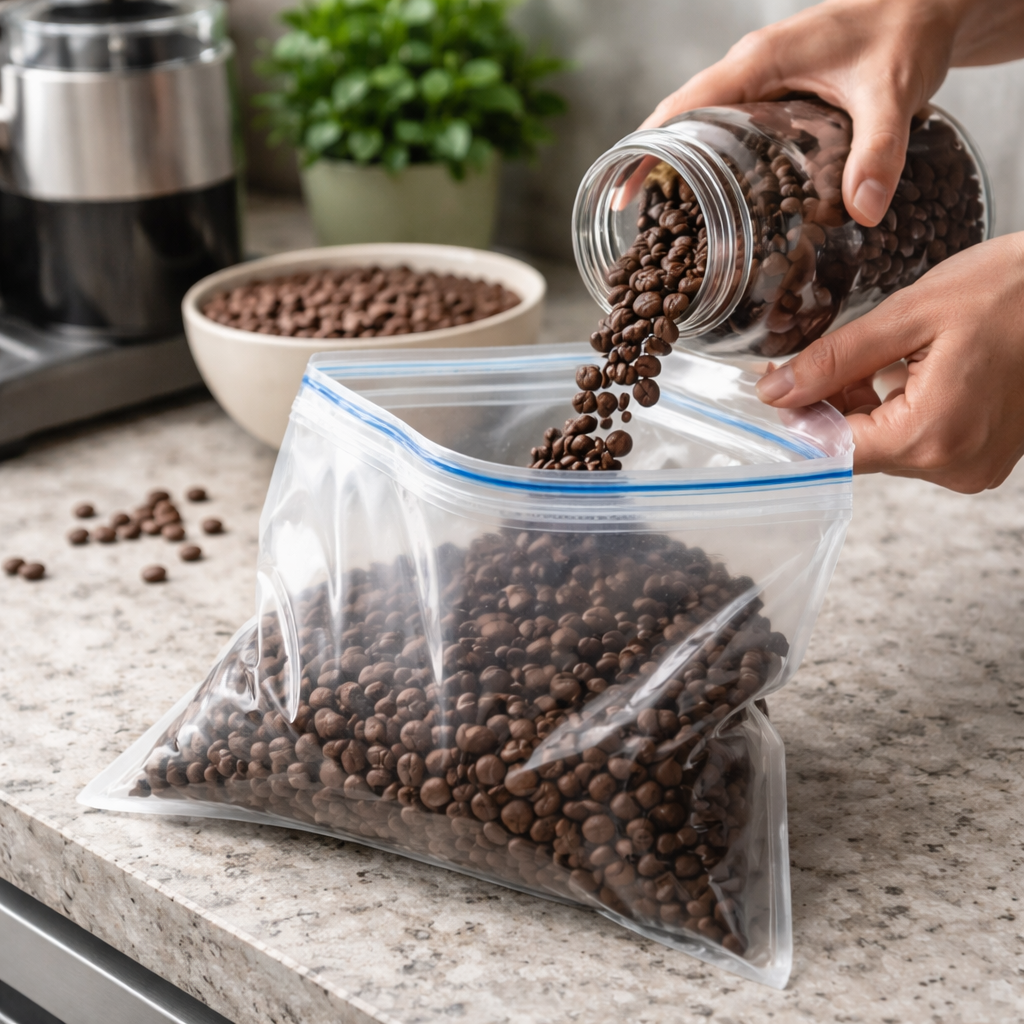
First, freeze beans only after they’re sealed in an airtight or vacuum‑sealed bag. That keeps moisture out.
Second, split the beans into small portions. You’ll only take out what you need, so the rest stays frozen and untouched.
Third, label each bag with the freeze date. Use a marker that works on plastic.
Why does freezing help? It drops the temperature low enough to slow oxidation and other chemical reactions. But if you let moisture in, the beans can get freezer‑burned and taste flat.
Here’s the step‑by‑step recipe from coffee experts:
- Grind a fresh batch of beans (or keep whole beans) and put them in a vacuum‑sealed bag.
- Pull the air out with a hand pump or a machine.
- Drop the sealed bag into the back of a chest freezer where the temperature stays constant.
- When you need beans, move one bag to the counter and let it sit for 10‑15 minutes before grinding.
- Never refreeze a bag that’s already thawed – the flavor will drop fast.
Andrew Hetzel of the Specialty Coffee Association says that immediate freezing after roast is the single most effective way to delay spoilage, lasting up to a year.
But remember: Frozen beans stay at peak flavor for only about 5‑6 days once you take them out. That’s why you should freeze in small batches.
Real‑world example: A Brooklyn home barista froze his specialty beans in 100‑gram bags. He could pull a bag each week for three months and still taste bright notes.
External source: Coffee Bros freezing guide outlines the exact steps.
Another study: Subterra Coffee pros‑cons confirms that proper sealing prevents moisture and odor absorption.
Step 5: Monitor and Rotate Your Stock
Even the best storage plan fails if you forget about the beans. Keep an eye on dates and rotate stock so you always brew the freshest beans first.
Make a simple spreadsheet or use a phone note. List each container, the roast date, and the expected best‑by date based on the method you used.When you open a new bag, put it at the front of the shelf and push older bags to the back. That way you use the oldest beans first.
For larger households, label each jar with a colored sticker that matches a calendar week. When the week arrives, you know it’s time to brew.
Pro tip: If you see beans turning a shade darker or smelling stale, toss them. No need to waste money on beans that won’t taste good.
Example: A coffee shop in Denver set up a rotating system on a whiteboard. Every morning they moved the newest bag to the back. Their waste dropped by 30%.
External reference: Philly Fair Trade stock rotation guide offers a printable chart.
Another helpful article: 40 Thieves coffee freshness tips stresses the “first in, first out” rule.
Conclusion
Learning how to store coffee beans long term is all about three things: a good container, a cool dark spot, and keeping air and moisture out. Mylar bags with oxygen absorbers give the longest life at 25 years, but most home brewers will find a freezer‑safe airtight container or a vacuum‑sealed bag perfect for a year or less.
Remember to pick the right container, keep beans away from heat and light, control moisture, freeze in small sealed portions if you need extra time, and always rotate your stock. Follow these steps and you’ll taste coffee that feels fresh every single cup.
If you love fresh beans, consider signing up for a subscription from Chilled Iguana Coffee Co. Their beans arrive fast, stay fresh, and the company’s ethos matches the care you’ll put into storage.
FAQ
What is the best container for long‑term coffee storage?
The top pick is a Mylar bag with an oxygen absorber. It blocks light, air, and moisture, letting beans stay fresh for up to 25 years. If that’s too much, a vacuum‑sealed bag or an airtight freezer‑safe container works well for up to a year.
Can I store coffee beans in the fridge?
Fridges are moist places, so they aren’t ideal for long‑term storage. Moisture can seep into the beans and cause off‑flavors. Use the fridge only for short‑term needs, and always keep beans in a truly airtight container if you do.
How often should I rotate my coffee stock?
Follow a “first in, first out” system. When you receive a new bag, place it behind the older ones. Use a simple spreadsheet or sticky notes to track roast dates. Rotate weekly if you buy in bulk.
Do oxygen absorbers really make a difference?
Yes. Oxygen absorbers pull the remaining air out of a sealed Mylar bag, slowing oxidation that dulls flavor. That’s why the research showed a 25‑year shelf life for bags with absorbers, far beyond other methods.
Is freezing coffee worth the hassle?
Freezing works if you seal beans tightly and freeze in small portions. It can keep beans fresh for up to a year, but once thawed the beans stay at peak for only 5‑6 days. Use it for bulk purchases you can’t use quickly.
How can I tell if my beans have gone bad?
Stale beans lose their bright aroma and taste flat or bitter. If they smell like old cardboard or have a dull, lifeless flavor, they’re past their prime. Trust your nose and taste buds – they’re the best tools.
Do I need a vacuum sealer for every bag?
A vacuum sealer isn’t required if you use Mylar bags with oxygen absorbers. However, a small hand pump can give a good seal on regular zip‑top bags, extending freshness for weeks.
What temperature is ideal for storing beans long term?
Keep beans between 60°F and 70°F (15‑21°C). That range slows the chemical reactions that degrade flavor. If you freeze, aim for a consistent -0°F (-18°C) environment and avoid frequent door openings.