



Table of Contents
- Why Your Coffee Tastes Acidic (and What Actually Helps)
- Cold Brew vs Hot Brew Acidity: Why Temperature Changes Everything
- How to Use Salt to Neutralize Coffee Acid (and When to Skip It)
- Best Low Acid Coffee Beans: Start With the Right Origin
- Impact of Water Temperature on Coffee Extraction
- Grind Size, Baking Soda, and Other Adjustments That Work
- Frequently Asked Questions
Last Updated: September 13, 2026
Why Your Coffee Tastes Acidic (and What Actually Helps)
To make coffee taste less acidic at home, start with what's in the cup: organic acids like chlorogenic and citric acid that develop during roasting and extract into your brew.
Acidity isn't a flaw to eliminate, it's a dial you can turn. Your goal isn't zero acidity, it's balance.
Cold Brew vs Hot Brew Acidity: Why Temperature Changes Everything
Cold brew is consistently lower in perceived acidity than hot-brewed coffee because cold water extracts fewer organic acids. The trade-off is time: 12-18 hours of steeping instead of 4 minutes.

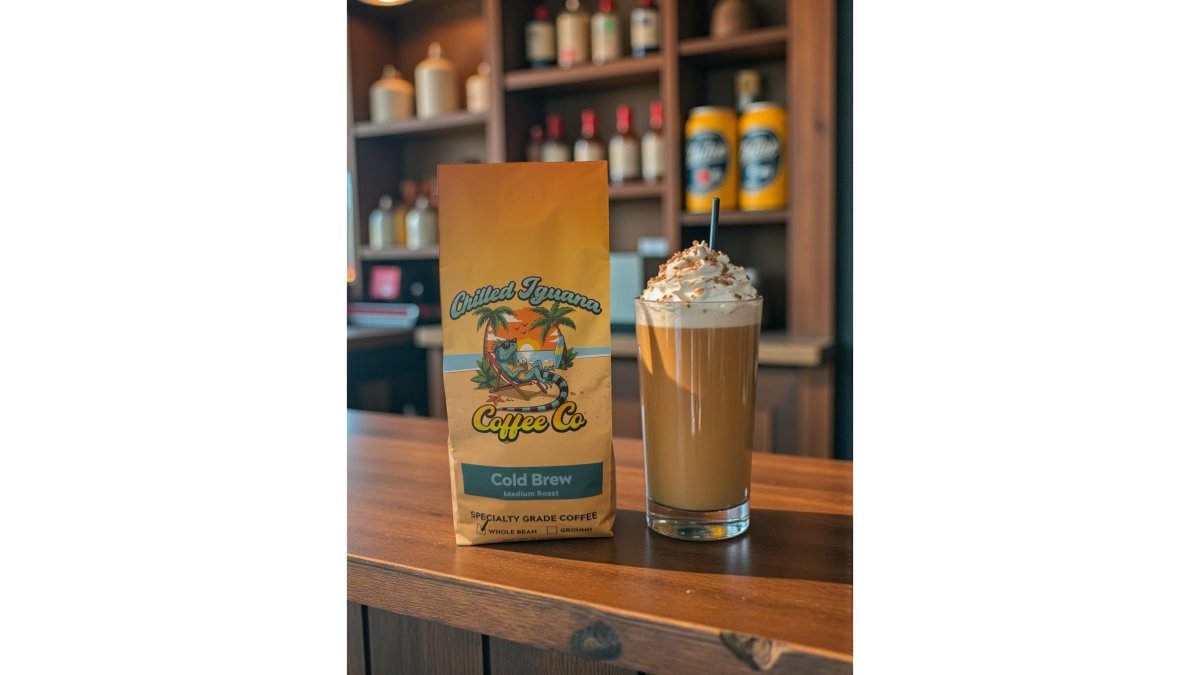
Hot water (195-205°F) pulls acids, oils, and sugars all at once; cold water works slowly and selectively, leaving more harsh acids behind.
For cold brew, use a coarse grind and a 1:8 coffee-to-water ratio for concentrate, then dilute to taste.
To skip the guesswork, Chilled Iguana Coffee Co.'s Cold Brew Coffee is medium-bodied with chocolate and toffee notes, built for slow-steeped cold extraction.
How to Use Salt to Neutralize Coffee Acid (and When to Skip It)
A pinch of salt masks bitterness and acidity because sodium ions block some bitter and sour taste receptors, it changes perception, not chemistry.
Start with about 1/16 teaspoon for a 12-ounce cup, stir into the grounds before brewing, then adjust in tiny increments. Skip it if your coffee tastes flat or metallic.
Best Low Acid Coffee Beans: Start With the Right Origin
Choosing low-acid beans is the most effective long-term fix, because you can't brew your way out of a naturally high-acid bean.
Beans grown at lower altitudes and wet-hulled land softer on the palate. Sumatra is the classic example: earthy, syrupy, and low in the bright citric snap of high-grown African coffees.

Chilled Iguana Coffee Co.'s Sumatra is a strong starting point: a single-origin bean from the Takengon plateau with medium acidity, a syrupy body, and notes of dark chocolate and dried fruit.
Dark roast is another lever: roasting longer breaks down some acids, so a darker roast tastes less acidic than a light one.
| Bean / Approach | Acidity Level | Best For |
|---|---|---|
| Sumatra (single origin) | Medium | Earthy, low-brightness cups |
| House Blend (medium roast) | Medium | Balanced everyday brewing |
| Dark roast | Lower | Those sensitive to bright acidity |
| Cold brew (any bean) | Lowest perceived | Smooth, chilled drinking |
For a balanced everyday cup, the House Blend is smooth and consistent with mild citrus and a clean finish.

Impact of Water Temperature on Coffee Extraction
Water temperature controls how fast and completely acids extract, and it's the easiest variable to adjust without changing your beans.
The sweet spot for hot brewing is 195°F to 205°F. Above it, bitter and sour compounds pull aggressively; below it, you under-extract and get a weak, sour cup.
No temperature-controlled kettle? Boil your water, then wait 30-45 seconds before pouring.
Water chemistry matters too: very soft water extracts unevenly and can taste sour, while extremely hard water mutes flavor. A filtered pitcher solves most of this.
Grind Size, Baking Soda, and Other Adjustments That Work
Grind size determines how much surface area your coffee exposes to water, controlling how fast acids and sugars dissolve. Too fine over-extracts and amplifies acidity; too coarse gives a thin, sour cup.
Aim for a medium grind: go coarser if your coffee tastes sharp and sour, finer if it tastes bitter and hollow.
Baking soda is a genuine acid neutralizer, unlike salt. A tiny pinch in the brew water raises pH and softens the cup, but too much tastes salty, flat, and chalky.
Eggshells, suggested as a natural buffer, are unreliable: they add inconsistent alkalinity and can leave a mineral taste. Skip them.
For a genuinely low-acid cup without the chemistry project, Chilled Iguana Coffee Co.'s Peru Decaf uses the Swiss Water Process and delivers caramel and citrus notes with a smooth finish.
Frequently Asked Questions
Does adding salt to coffee reduce acidity?
Salt does not lower pH or neutralize acid. A small pinch, roughly a quarter of a teaspoon per cup, blocks bitterness receptors on your tongue so the sour, sharp notes read as softer. Add it to the brewed cup or stir it into the grounds before brewing. It works best on dark roasts that already taste harsh, and it will not fix a badly extracted, under-extracted cup.
Which coffee roast is the least acidic?
Dark roasts generally taste less acidic than light roasts. Longer roasting breaks down some of the chlorogenic acids responsible for brightness and sourness, so the flavor profile shifts toward chocolate and caramel. That said, origin matters too. Beans from Sumatra, Peru, and other low-grown regions tend to cup with medium acidity rather than the sharp citric snap you get from high-grown African coffees.
Does cold brew coffee have less acid than hot coffee?
Cold brew typically measures lower in total acid than drip or French press because cold water extracts fewer acids over the long steeping time. The trade-off is a rounder, sweeter cup with less brightness. If you have acid reflux or a sensitive stomach, immersion brewing with cold water for 12 to 18 hours is one of the easiest ways to cut acidity without giving up flavor.