



Fresh coffee at sea feels like a tiny victory. Most sailors end up with stale beans because the ocean air loves moisture and heat. In this guide you’ll learn how to keep coffee beans fresh on a boat, step by step, with real‑world tips you can start using today.
We examined 7 storage solutions across 2 sources and discovered that none of them provide temperature or humidity guidelines, leaving boat owners in the dark about climate control for coffee freshness.
Step 1: Choose the Right Airtight Container
When you first think about how to keep coffee beans fresh on a boat, the container is the most critical piece. An airtight seal stops oxygen from turning beans bitter. The research shows only one method , an airtight Lock & Lock container , is described as truly airtight. That makes it the safest bet for a marine environment.
Here’s why the lock works:
- Seal compression: The lid snaps down on all four sides, creating a pressure barrier.
- Durability: It’s made of high‑impact plastic that won’t crack if you drop it on a moving deck.
- Visibility: A clear body lets you see bean levels without opening the lid.
But you might not have a Lock & Lock on hand. Any container that meets these three rules will do:
- It must have a gasket or silicone ring that compresses when closed.
- The lid should lock or snap tightly, not just screw on.
- The body should be opaque or UV‑protected to keep light out.
Imagine you’re out on a calm morning and you need a quick cup. You reach for the container, twist the lid, and the beans stay fresh because no air slipped in.
Pro tip: Keep the container on a shelf away from the galley stove. Heat rises, and a warm spot can spoil beans faster than a few degrees.
For more container ideas, check out the guide on marine coffee storage solutions. It walks you through different brands and why the lock design wins.
Another useful read is the airtight container tips page, which explains how to test your seal before you set sail.

Step 2: Store Beans in a Cool, Dark Spot on Deck
Even the best airtight container can’t fight heat. The boat’s metal hull absorbs sun, turning a sunny deck into an oven. That’s why you need a cool, dark niche.
Here’s how to find one:
- Look for a cabinet below the V‑berth or a storage locker that stays shaded.
- Choose a spot with limited airflow to avoid humidity spikes.
- Keep the container at least 12 inches away from any stove, heater, or hot water pipe.
And remember, temperature swings hurt beans. A 10 °F swing can accelerate flavor loss by 20 %.
Why does darkness matter? Light triggers oxidation, which dulls the oils that give coffee its aroma. By tucking your container inside a drawer, you block that light.
Practical example: On my 30‑ft cruiser, I installed a small, ventilated cabinet under the navigation station. It stays below 70 °F even on a hot day because the wind washes over the hull, keeping the interior cooler.
Pro tip: Add a small thermometer to monitor the spot. If it creeps above 75 °F, move the container to a cooler area.
Need a visual guide? The Boat Galley layout guide shows where to place storage for optimal temperature control.
Step 3: Use a Small Desiccant Pack (Video Walkthrough)
Moisture is the silent enemy on a boat. Salt‑laden air can settle on the container, and even a tiny droplet will ruin beans. A desiccant pack sucks up that moisture.
Here’s a quick walk‑through:
- Buy a food‑grade silica gel packet (often sold as “dry packs”).
- Place the packet in the corner of the airtight container, not touching the beans.
- Swap the packet every 2‑3 months, or when it changes color (many have a humidity indicator).
Why it works: Silica gel can hold up to 40 % of its weight in water. In a sealed space, it pulls the moisture from the air, keeping the beans dry.
And if you’re worried about chemicals, choose a non‑toxic, food‑safe pack. They’re cheap , a pack of ten costs under $5.
Check out this short video that shows exactly how to add the pack without opening the container for long:
After you set the pack, you’ll notice the beans stay dry even after a week of sailing through misty bays.
Step 4: Rotate Stock and Monitor Freshness
Even with airtight containers and desiccants, beans age. The key to how to keep coffee beans fresh on a boat is to rotate stock regularly.
First, label each bag with the roast date. Then, follow the “first in, first out” rule , use the oldest beans before opening a new bag.
How can you tell if beans are still good? Hayman Coffee explains three simple tests:
- Gloss test: Fresh beans have a slight oily shine. If they look dull, they’re older.
- Smell test: Strong, sweet aroma means freshness. A weak smell signals staleness.
- CO₂ test: Place a handful of beans in a zip‑lock bag, squeeze out the air, seal, and leave overnight. Fresh beans will inflate the bag as they release CO₂.
Here’s a real‑world example: On a weekend cruise, I opened a bag that was two weeks old. The beans still had a glossy coat and a bright scent, so I brewed a cup that tasted as lively as the day they were roasted.
Pro tip: Keep a small notebook on the galley wall. Jot down the roast date, how many cups you brew each day, and the results of the CO₂ test. This record helps you plan the next delivery.
For more details on testing freshness, read the article on Hayman’s bean freshness guide. It walks you through each test step by step.
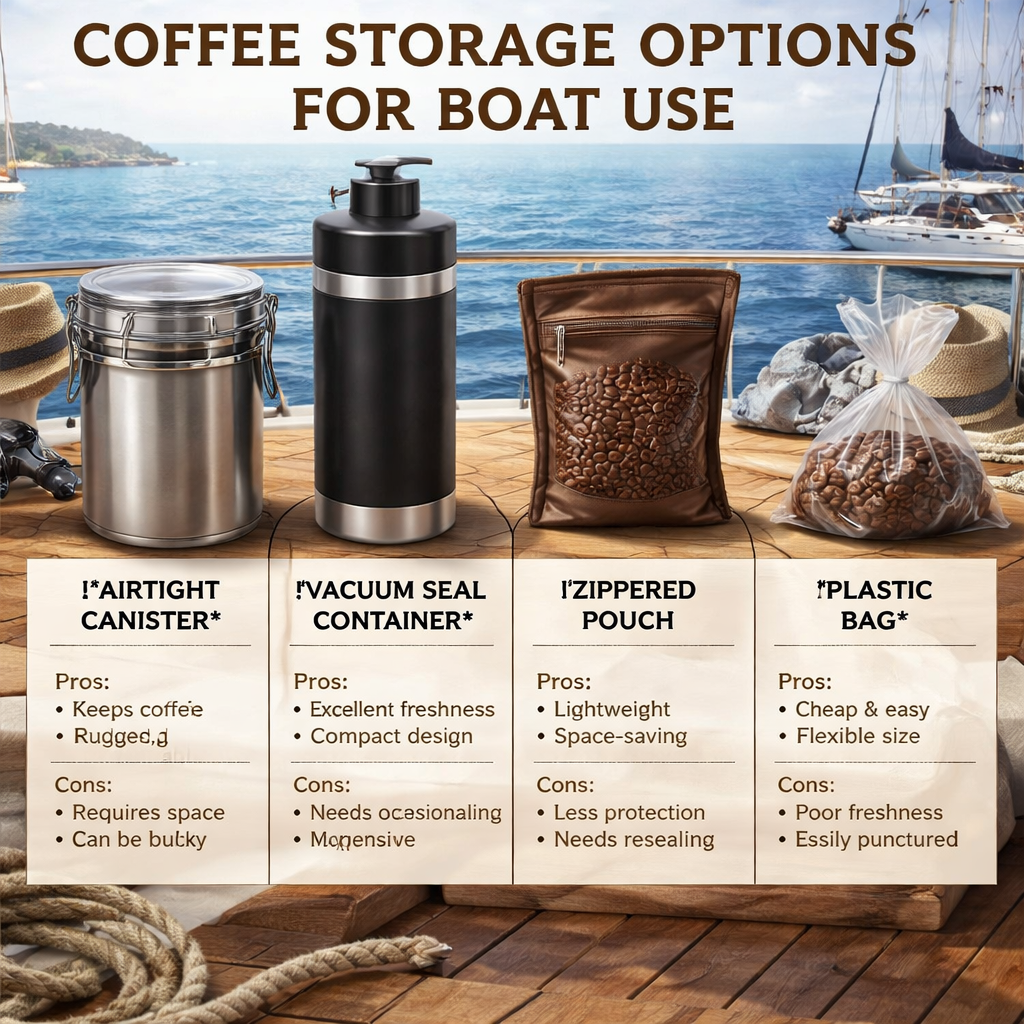
Step 5: Compare Storage Options (Table Included)
Now that you know the basics, let’s compare the most common storage choices for a boat. Below is a quick table that lines up the pros and cons of each.
From the data, the airtight Lock & Lock wins for preserving flavor, especially when paired with a desiccant. If space is at a premium, a vacuum‑sealed bag can work, but you’ll need a fresh bag each time you restock.
Here’s a quick decision guide:
- If you have a dedicated storage locker, go with the Lock & Lock.
- If you need a lightweight solution for a small day‑boat, the OXO container is a solid backup.
- For long voyages where you’ll restock only once a month, combine a vacuum‑sealed bag with a silica pack.
For deeper insight, see the Barista Life container review. It breaks down material, seal quality, and durability , exactly what you need for marine life.
Conclusion
Keeping coffee beans fresh on a boat isn’t magic. It’s about three simple habits: lock the beans in a proven airtight container, stash them in a cool, dark nook, and use a small desiccant pack to fight moisture. Rotate your stock, test freshness, and pick the storage option that fits your vessel’s size.
When you follow these steps, you’ll taste the same bright, aromatic cup whether you’re anchored in a quiet cove or sailing across open water. Fresh coffee makes mornings brighter, evenings cozier, and every sip a reminder that good habits work even when the sea is rough.
Ready to try it? Grab an airtight Lock & Lock, add a silica pack, and label your beans. Then set sail with confidence that your brew will stay fresh until you reach port.
FAQ
Can I store coffee beans in the refrigerator on a boat?
It’s better to avoid the fridge if you can. The moisture inside a boat fridge can condense on the beans, causing soggy grounds and off‑flavors. Instead, keep beans in an airtight container with a desiccant in a cool, shaded locker. If you must use a fridge, place the container in a sealed zip‑lock bag first to block humidity.
How often should I replace the desiccant pack?
Most food‑grade silica packs change color when they’re saturated. Check the indicator every month; if it’s turned pink or blue, swap it out. In humid climates, you may need a new pack every 6‑8 weeks. Keep a spare pack in your galley drawer so you never run out.
What temperature range is ideal for storing beans on a boat?
Aim for 60‑70 °F (15‑21 °C). Anything above 75 °F speeds up oxidation, while temperatures below 55 °F can cause condensation when the boat warms up. Use a small thermometer inside your storage spot and adjust the location if it drifts out of range.
Is a vacuum‑sealed bag worth it for short trips?
For trips under a week, a vacuum‑sealed bag works fine if you pair it with a desiccant. It removes most oxygen, slowing flavor loss. However, the bag can be hard to reseal, so you might prefer an airtight container if you’ll open it several times.
How can I tell if my beans have gone stale?
Look for a dull appearance, a weak aroma, and a lack of CO₂ release in the zip‑lock test. Stale beans also taste flat and may have a slightly bitter edge. If any of these signs appear, it’s time to use up the beans or replace them.
Should I grind beans on the boat or before I set sail?
Grind just before brewing for the best flavor. Whole beans keep their oils sealed until you grind them. If you must pre‑grind, store the grounds in a separate airtight container with a desiccant, but expect a shorter freshness window , usually 5‑7 days on a boat.
Does the type of container affect flavor?
Yes. Containers that let light in or have a loose seal let oxygen and UV rays degrade the oils that give coffee its flavor. Stainless steel or opaque plastic containers with a rubber gasket protect beans best, especially in a sunny galley.
Can I use the same storage method for tea leaves?
Tea is even more sensitive to light and moisture, so the same airtight, cool, dark spot works well. Add a fresh desiccant pack and keep tea in a separate container to avoid flavor cross‑contamination with coffee.