



If you travel a lot or run a mobile coffee business, keeping beans fresh in a car is tricky. Heat, light, and moisture attack coffee fast. But with the right steps, you can enjoy fresh‑tasting coffee even after days on the road. Here are six proven steps to keep your beans fresh in a car.
Step 1: Choose an Airtight, Opaque Container
The single most important thing you can do is store your beans in an airtight, opaque container. Light and oxygen are coffee's worst enemies. Coffee's flavor compounds break down rapidly when exposed to air. An airtight container blocks oxygen and keeps aromas locked in.
But not all containers are equal. A simple glass jar lets in light, so go with a stainless steel or ceramic canister that's totally light‑blocking. Many options also have a one‑way valve to let carbon dioxide escape without letting air in. That's key for freshly roasted beans, which release CO₂ for days after roasting.
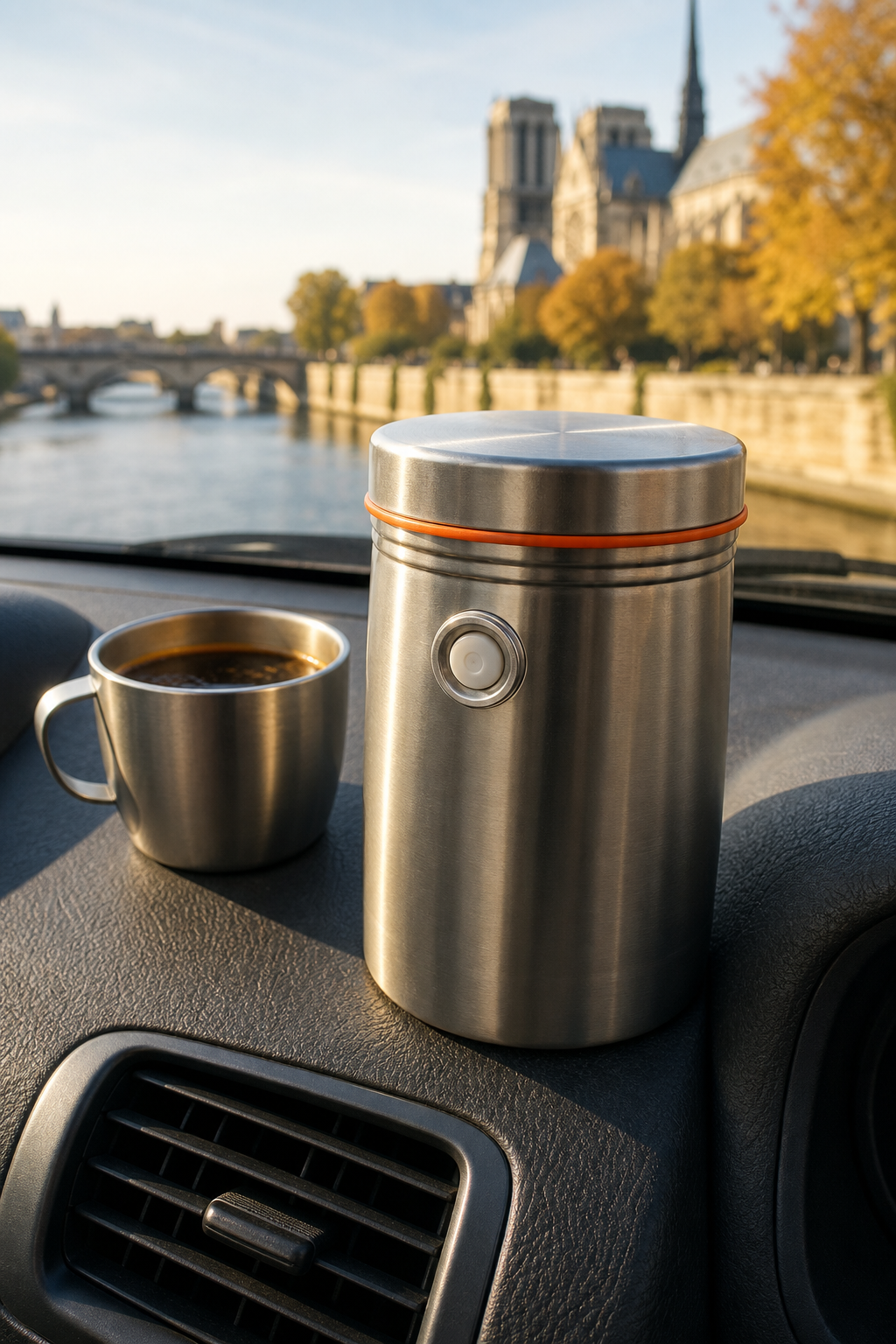
If you buy fresh beans from a roaster like Chilled Iguana Coffee Co., they arrive in a bag with a valve. Transfer those beans into a proper airtight container once you open the bag. That container should live in your car's cabin, not the trunk, where temperatures are more stable.
Step 2: Store in a Cool, Dark Place Away from Windows
Never leave your coffee container in direct sunlight. Even with an opaque canister, the car interior can heat up fast, cooking the beans. The dashboard is the worst spot. Instead, stow the canister in the glove box, under a seat, or in a center console that stays shaded.
Heat accelerates staling. Storage temperature is critical: every 10°C rise roughly doubles the rate of flavor loss. So a cool interior (below 25°C) is your goal. If you park in the sun, consider a reflective windshield shade, it helps keep the whole cabin cooler.
Also avoid the trunk if it gets hot from exhaust or sun exposure. The best rule: keep beans as cool as you keep yourself. If you wouldn't sit there in the heat, don't store coffee there.
Step 3: Minimize Temperature Swings with Insulation
Cars can swing 20°C between day and night. That cycling damages beans. Temperature control tips advise avoiding temperature fluctuations entirely by not storing beans in a car at all. But if you must, insulate your container.
Wrap the canister in a small towel or place it inside an insulated lunch bag. This buffers temperature changes and also adds a layer of darkness. Some coffee canisters are double‑walled for this reason, they resist temperature swings better than single‑walled jars.
For extreme climates, desert heat or freezing winters, consider bringing beans inside at night. A cooler is not a good insulator for coffee because it traps moisture. Stick to a padded container or insulated bag.
Step 4: Only Bring What You Need (Portion Control)
The less time your whole stash spends in the car, the better. Portion out just enough beans for your trip, a single day's brew or a weekend's worth. Leave the bulk bag at home in a cool pantry or freezer.
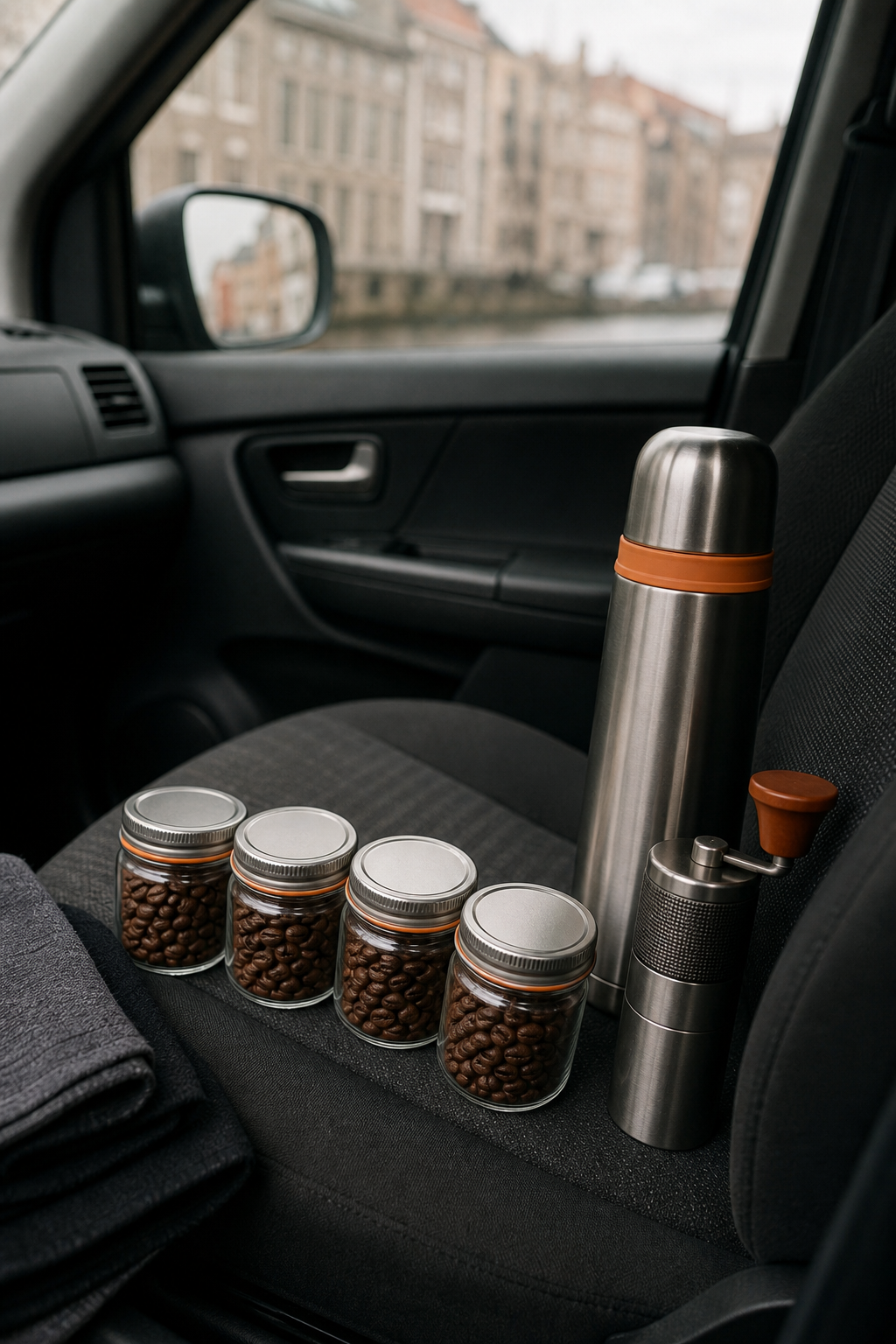
This is especially useful for mobile coffee sellers who need to keep inventory fresh. For example, if you run a coffee trailer, you can prep daily doses in separate airtight containers. Some roasters offer sample packs that are perfect for this, check out the Best Sellers Sample Pack from Chilled Iguana Coffee Co. to try different blends without committing a big bag.
Portion control also means you're not opening the main container repeatedly, which lets in air and moisture each time. Keep the daily supply in a smaller container and the rest safely stored away from the car.
Step 5: Consider Vacuum Sealing for Extended Trips
If you're heading out for a week or more, vacuum sealing can be a game changer. Vacuum packing removes almost all oxygen, stopping oxidation cold. Vacuum‑sealed coffee can stay fresh for months, even at room temperature, as long as the seal holds.
You don't need a fancy chamber sealer; a simple food vacuum sealer with bags works. Portion beans by day, seal each bag, and only open one at a time. This also reduces the amount of air the beans are exposed to over time.
One caveat: vacuum sealing doesn't protect against heat. So still store the sealed bags in a cool spot. And if you're freezing the bags before the trip, that's even better, but once you thaw, don't refreeze. Use the beans within a day after opening.
Step 6: Check Freshness Before Brewing
Even with perfect storage, coffee can lose its edge. Before you brew, do a quick freshness test. Smelling the beans can help: fresh beans have a strong, roasty aroma; stale ones smell flat or musty.
Also look at the beans. Fresh whole beans have a matte or slight sheen depending on roast. If they look greasy or feel dry and crackly, they've been exposed to too much oxygen. Another test: pour hot water over the grounds, if they bloom (bubble up), the beans still have CO₂ and are fresh. No bloom means they've gone stale.
If your beans fail the test, don't toss them, they're still safe to drink, just less flavorful. Use them for cold brew, where the long extraction can mask staleness. But for the best cup, always stick to fresh beans stored properly. Coffee stays at peak flavor only 1, 3 weeks after roasting, so keep your stock rotating.
Frequently Asked Questions
Can I store coffee beans in a cooler in my car?
No. A cooler introduces moisture, which speeds up staling and can cause mold. Beans are porous and absorb humidity. An airtight container is far better than a cooler.
How long can coffee beans stay fresh in a car?
With perfect storage, airtight, opaque, insulated, and kept below 25°C, beans can stay fresh for about a week. In poor conditions, they may go stale in a day. Always use the freshness tests before brewing.
Is it okay to freeze coffee beans before a road trip?
Yes, freezing preserves beans for months. Thaw only the amount you need for the trip and keep them in an airtight container during travel. Avoid refreezing thawed beans.
What's the best container for keeping coffee fresh in a car?
A stainless steel canister with a one‑way valve and opaque finish. It blocks light, limits air exposure, and lets CO₂ escape. Avoid glass jars that let in light.
Can I use a vacuum sealer for coffee beans?
Yes. Vacuum sealing removes oxygen and drastically extends freshness. Portion beans by day, seal each bag, and store in a cool place. Open only when ready to brew.
Conclusion
Keeping coffee beans fresh in a car comes down to four things: an airtight, opaque container, a cool shady spot, minimal temperature swings, and portion control. The biggest mistake is using a cooler or leaving beans in the sun. For the freshest experience, bring only what you need and store the rest at home. If you're looking for consistently fresh beans delivered to your door, consider a subscription from Chilled Iguana Coffee Co., roasted to order and ready for your next adventure.
For those who build mobile apps for coffee businesses, real‑world stories show how on‑the‑go entrepreneurs solve problems like bean freshness. And if you're a truck driver hauling coffee across the country, check out online communities where long‑haul drivers share tips for keeping supplies fresh on the road.