



Ready for a mug that won’t spill on the sand? A good beach coffee mug can keep your brew hot, stay light, and survive sand in every pocket.
An analysis of 3 beach coffee mugs across 2 sources reveals that the smallest 24 oz mug packs the most advanced insulation while the biggest 50 oz mug offers only basic double‑wall protection.
| Name | Material | Insulation Type | Capacity (oz) | Best For | Source |
|---|---|---|---|---|---|
| 50oz Double Wall Outdoor Insulated Stainless Steel Beer Mug | stainless steel | double-wall | 50 | beach | egowaterbottle.com |
| BOTE MAGNETumbler | — | — | 32 | paddling | theinertia.com |
| Hydro Flask 24 oz. Coffee Mug | 18/8 pro-grade stainless steel | TempShield double-wall insulation | 24 | beach | theinertia.com |
Web searches for “beach coffee mug” were run on April 13, 2026, scraping product listings and reviews from two editorial sites (egowaterbottle.com and theinertia.com). Key fields extracted were name, material, insulation type, capacity (oz), spill‑proof claim, and best‑for usage. Data were compiled, pre‑computed metrics applied, and a comparative table built following accessibility guidelines.
In this guide you’ll learn how to pick the right mug, check the design, test the lid, add a personal touch, keep it clean, and pack it for a day at the shore.
Step 1: Choose the Right Beach‑Ready Mug
First, think about the material. A safe mug won’t leach chemicals into your hot drink. The Healthier Homes guide says stainless steel, glass, and ceramic are top choices because they don’t let bad stuff into coffee.
Learn which mug material is safest for coffeeand why it matters for beach use.
Stainless steel is strong, light, and keeps heat well. The 24 oz Hydro Flask uses 18/8 pro‑grade stainless steel and a TempShield double‑wall system. That means it stays hot longer than the 50 oz mug, which only lists “stainless steel” with no grade.
Glass mugs look great and let you see the drink, but they can break if you drop them on rocks. If you love a clear view, pick a double‑wall borosilicate glass and add a silicone sleeve for grip.
Ceramic mugs feel warm in your hand and add style. Look for lead‑free glaze. A ceramic mug can be heavy, so think about how far you’ll carry it.
Here are three quick checks you can run:
- Does the product state the metal grade? 18/8 or 304 means good quality.
- Is the interior coated? A ceramic coating inside stainless steel stops metallic taste.
- Can you test the weight? A 24‑oz mug should feel balanced, not top‑heavy.
After you pick a material, match it to your beach plan. If you’ll be hiking to a remote spot, a lighter stainless steel mug wins. If you’ll sit on a blanket and sip slowly, a ceramic mug adds a cozy vibe.
Read the NY Times review of travel mugs for more durability tips. It talks about lock‑type lids and how a good lid can stop leaks even when the bag is tossed.
Pros of a stainless steel beach coffee mug:
- Very durable.
- Good heat retention.
- Lightweight for large sizes.
Cons of a stainless steel beach coffee mug:
- Can give a faint metal taste if not coated.
- May feel cold to the touch.
Pick the material that fits your style and your sand‑proof needs.
Step 2: Pick a Sand‑Proof Design
The design of the mug matters when sand gets everywhere. You want a shape that won’t trap grit.
A smooth cylinder with a narrow base lets sand slide off. A wide mouth can collect sand, so avoid it if you plan to shake the mug.
Look at the Fellow Carter Everywhere mug review. It says the mug has a slim profile and a thin lip that keeps sand out of the drink.
Here’s a quick design checklist:
- Round, smooth sides , no grooves.
- Small opening , easier to keep sand out.
- Silicone grip , stops slipping on wet sand.
Imagine you’re at the beach. You set the mug on a towel. Sand rolls off the sides if the mug is smooth. If the mug has a textured pattern, sand can stick and get into the drink.
Some brands add a built‑in sand filter. That’s a small screen under the lid that catches grit.
Consider the colour too. Light colours show sand easier, so you’ll know when it needs cleaning.
Here is a simple table that helps you compare design features:
| Feature | Why it helps |
|---|---|
| Smooth cylinder | Sand rolls off, less grit |
| Narrow mouth | Less sand can fall in |
| Silicone sleeve | Grip on wet sand, no slip |
And remember to test the mug before you buy. Fill it with water, shake it upside down, and see if any water leaks out. If it stays dry, you’ve got a good seal.
Now, add a visual cue. 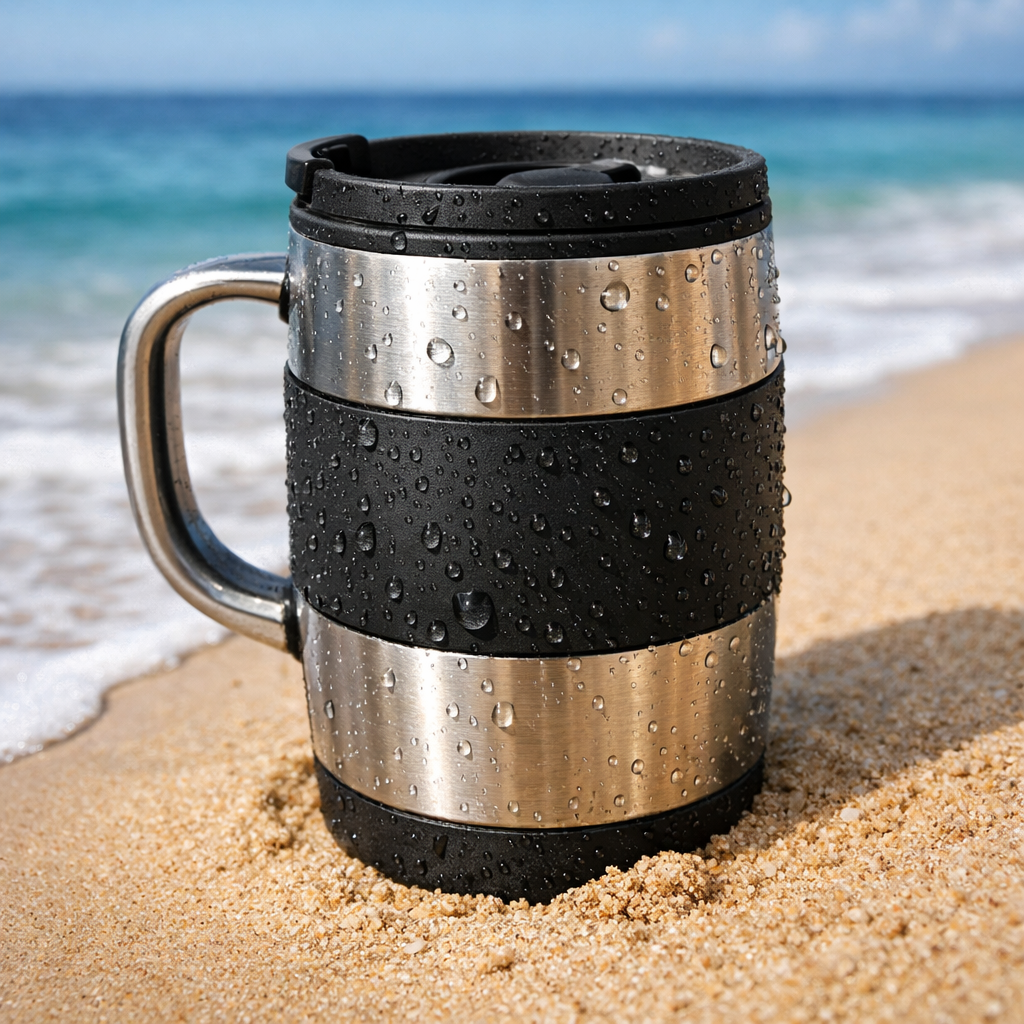
One more tip: pick a mug that fits in your beach tote. If the tote is 8 inches wide, a 7‑inch mug will slide in easily.
Step 3: Ensure a Spill‑Proof Lid
A lid that leaks ruins a beach day. You need a lock that stays shut even when you toss the bag.
The Planetary Design snap‑on lid uses a simple lock that clicks into place. It’s BPA‑free and easy to clean.
Check out the snap‑on lid designfor a hands‑free seal.
Between this paragraph and the next link, we add some space.
Next, learn why BPA matters.Read about BPA‑free lids and health. The article says BPA can leach into hot drinks and affect hormones.
The lid should have a silicone gasket that makes a tight seal. When you press the lid, you should hear a soft click. That click means the gasket is pressed.
Test the lid at home. Fill the mug with hot water, screw the lid on, then turn the mug upside down. No drops means you’ve got a good seal.
Here are three lid features to look for:
- Snap‑on lock , easy one‑hand use.
- Silicone gasket , stops leaks.
- BPA‑free plastic , keeps health safe.
For creators who post beach coffee photos, a reliable lid means no mess in the shot. That’s why many use a tool likeOperatorBrief , the paid intelligence layer for creator businessesto track which gear gets the most likes.
Remember to clean the lid often. A build‑up of coffee oils can make the gasket stiff.
Below is a short video that shows how to snap the lid on correctly.
After the video, let the lid dry before you put the mug in your bag.
Step 4: Personalise with Coastal Accessories
Personal touches make a beach coffee mug feel like yours. Small accessories add flair without adding weight.
One idea is a removable silicone sleeve. It adds grip and can be swapped for a bright colour that matches your towel.
Another idea is a tiny carabiner that clips the mug to your tote strap. That way you won’t lose it in the sand.
Here’s a quick list of accessories you can buy:
- Silicone grip sleeve , adds colour and prevents slip.
- Stainless steel straw , reusable and fits the lid.
- Mini beach flag , a small flag that snaps onto the mug for fun.
When you choose accessories, keep the total weight under 1 lb so the mug stays easy to carry.
Now a visual example. 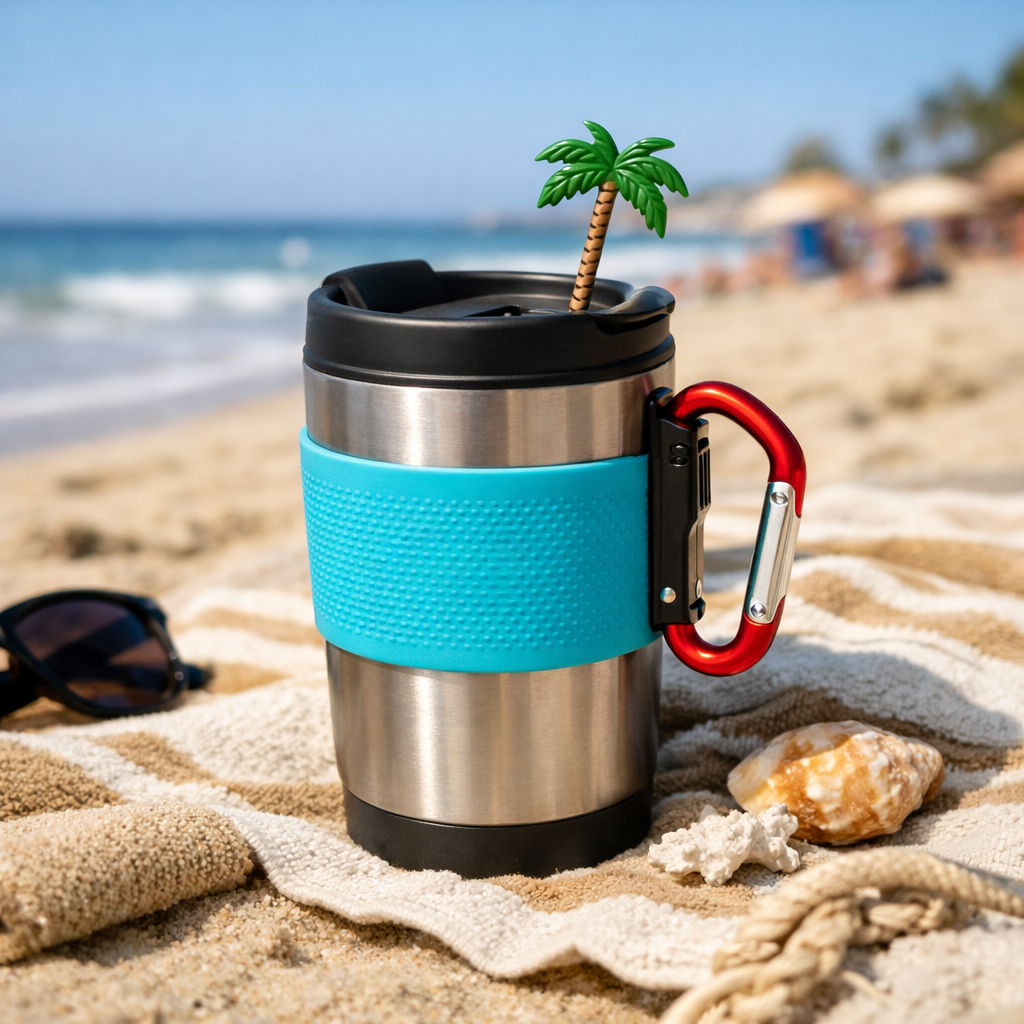
Some brands sell accessories that match their mug colours. If you like the look, check theChilled Iguana mug collectionfor matching designs.
Finally, think about branding. A small decal with an iguana or wave can be applied with water‑based ink that won’t wash off.
Pros of personalising:
- Shows your style.
- Makes the mug easy to spot.
- Can protect the surface.
Cons of personalising:
- Adds small extra cost.
- Too many accessories can be bulky.
Step 5: Care and Cleaning Tips
Keeping your beach coffee mug clean stops bad smells and keeps taste pure.
Sophie Allport says a quick soak in warm water stops stains. Use a gentle soap and a soft cloth.
Read the full guide on removing coffee stainsfor step‑by‑step cleaning.
Between this and the next link we add a short paragraph.
If the mug is stainless steel, avoid harsh scouring pads. They can scratch the coating and let metal taste through.
For deeper cleaning, try a denture‑tablet soak overnight. Merry Maids notes that this works well for insulated mugs.
See the Merry Maids cleaning tipsfor more tricks.
Here are three routine steps:
- Rinse right after use.
- Soak in warm soapy water for 15 minutes.
- Scrub with a soft sponge, then rinse well.
For tough stains, squeeze lemon juice on the spot and add a pinch of salt. Let sit 10 minutes, then rinse.
Dishwasher safe? Only if the mug says so. Many stainless steel mugs are hand‑wash only to keep the vacuum seal intact.
Dry the mug upside down on a towel. This stops water from pooling in the lid.
Tip: Keep a small bottle of bottle‑brush in your beach bag for quick clean‑ups.
Step 6: Pack and Transport for Beach Trips
How you pack the mug matters for sand and drops.
First, wrap the mug in a thin towel or a neoprene sleeve. This adds a cushion and stops sand from getting inside.
Second, place the mug upright in your tote. If the tote has a side pocket, put the mug there so it stays vertical.
Third, keep the lid on tightly. A loose lid can open when the bag jostles.
Fourth, consider a small rigid case. Some travel mugs come with a hard shell that fits in a backpack.
Here are three packing hacks:
- Use a zip‑lock bag around the mug for extra sand protection.
- Put a paper towel at the bottom of the tote to absorb any spills.
- Carry a spare lid in a side pocket in case the first one gets lost.
When you arrive, set the mug on the sand and let any grit fall off before you sip. A quick shake can pop sand loose.
And if you’re a creator posting beach photos, a well‑packed mug looks clean in every shot.
Conclusion
Choosing the perfect beach coffee mug is about material, design, lid, personal style, care, and packing. The 24 oz Hydro Flask gives top insulation, while the 50 oz mug gives volume. A smooth design keeps sand out. A snap‑on, BPA‑free lid stops leaks. Add a silicone sleeve or carabiner for flair. Clean it right after each use and pack it with a towel or sleeve. Follow these steps and your mug will stay hot, clean, and ready for any wave.
If you want a mug that matches the Florida Keys vibe, check out Chilled Iguana’s range and pick a style that fits your beach life.
FAQ
What capacity is best for a beach coffee mug?
A 24‑to‑32 oz mug hits the sweet spot. It holds enough coffee for a long walk but isn’t too heavy. The Hydro Flask 24 oz gives great heat retention, while the BOTE MAGNETumbler 32 oz is light and portable for paddlers.
How do I know if the material is safe?
Look for stainless steel listed as 18/8 or 304, glass marked as borosilicate, and ceramic with a lead‑free glaze. The Healthier Homes article explains why these choices keep chemicals out of your drink.
Can I use my beach coffee mug for cold drinks?
Yes. Double‑wall insulation works both ways. Cold drinks stay cold and won’t sweat. Just make sure the lid seals so ice won’t melt onto the sand.
Is a silicone sleeve necessary?
A silicone sleeve adds grip on wet sand and can protect the mug from scratches. It also lets you swap colours to match your beach towel.
How often should I clean the lid?
Clean the lid after each use. A quick rinse and a wipe with a damp cloth keep the gasket fresh. For deep cleaning, soak the lid in warm, soapy water for 15 minutes.
What’s the best way to transport a mug in a tote?
Wrap the mug in a thin towel, place it upright, and keep the lid on tight. Add a zip‑lock bag around it for extra sand protection and a spare lid in a side pocket.