



Buying ethical coffee online shouldn't feel like decoding a maze of labels. Look for proof first, then choose beans that fit your taste, brewer, and routine. Chilled Iguana Coffee Co. makes that last part easy with fresh coffee choices and subscription delivery, but the same checks apply to any online order.
Step 1: Verify Fair Trade and Organic Certifications
When you buy fair trade coffee beans online, start with the certification claim, not the flavor name. A bag can use words such as ethical, sustainable, or responsibly sourced without showing who checked the claim.
Fair trade certification relates to trading rules meant to support better terms for producers. The exact standard depends on the certifier. Look for the name of the certification body, not only a green leaf or a vague phrase about farmer support.
Organic certification is different. It focuses on how the coffee is grown and handled. In the United States, organic labeling identifies which claims may appear on certified organic products. Organic does not automatically mean fair trade, and fair trade does not automatically mean organic.
Some coffees carry both claims. That can help if you care about farm practices and the terms used in the supply chain. Still, read the label. A product may say that some ingredients are organic, while the coffee itself has a different status.
- Fair trade: Check for the certifier and the scope of the claim.
- Organic: Look for a clear certification statement, such as USDA organic.
- Direct trade: Treat this as a sourcing description, not a universal certification.
- Bird friendly or shade grown: Look for details that explain who verifies the claim.
Certification information can vary across online listings. Some listings provide certification details, while others give no certification information. That variation is a good reason to pause before adding beans to your cart.
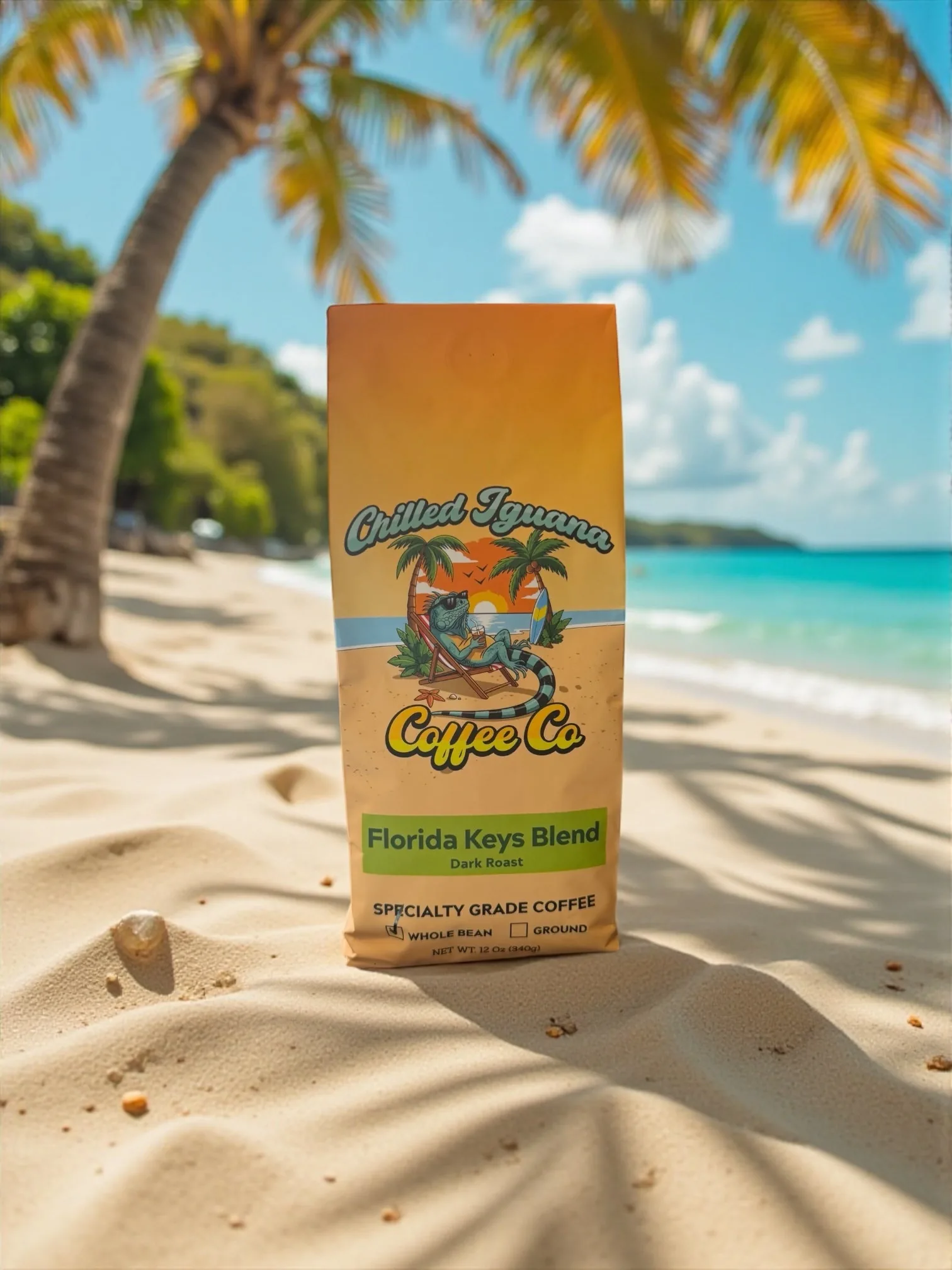
Chilled Iguana Coffee Co. is a useful place to start if you want a Florida Keys inspired coffee brand with a clear online buying path. Check each coffee page for the sourcing details that apply to that specific product. Don't assume every roast carries the same certification unless the page says so.
Step 2: Check Origin, Processing, Freshness, and Quality
After checking certification, inspect the bean details. Origin tells you where the coffee comes from. It can mean a country, region, farm, or cooperative, so read the wording closely.
Single-origin coffee comes from one defined place, though the term does not always mean one farm or one harvest lot. That place-based detail can help you compare flavor over time. A blend combines coffees to reach a planned taste and may provide a steadier profile across orders.
Processing also changes the cup. In a washed process, the fruit is removed before the bean dries. Natural processing dries the coffee inside the fruit. These methods can point toward different flavor styles, but they don't guarantee one exact taste. Roast level and brewing still shape the result.
Freshness deserves its own check. Look for a roast date when the seller provides one. A best-by date is less useful for judging how recently the beans were roasted. If there is no roast date, choose a seller that gives another clear freshness policy.
Whole beans are usually the better choice when you own a grinder. Grinding just before brewing protects more aroma than grinding the whole bag at once. If you don't have a grinder, select the grind option that matches your brewer, then store the coffee sealed in a cool, dry cupboard.
Quality scores can help, but only when the page explains them. A cupping score is a professional tasting assessment. A page that lists a score should also tell you what system was used and whether the number applies to the specific coffee. Don't treat the word specialty as a score by itself.
A clear explanation of fair trade can also help separate the broad idea of fair trade from a product's specific certification claim. That distinction matters when a seller uses ethical language without naming a standard.
Use this quick product-page test:
- Can you find the origin?
- Does the seller list a roast date or freshness detail?
- Is the processing method shown?
- Does the quality score have context?
- Are the flavor notes tied to the actual coffee?
If most answers are no, the coffee may still taste good. You simply have less information to guide the purchase or repeat it later.
Step 3: Match Roast Level and Flavor Profile to Your Taste
Roast level is one of the fastest ways to narrow a coffee search. It describes how far the beans were roasted, not how much caffeine they contain or how strong the brewed drink will taste.
Light roasts tend to keep more of the bean's bright, fruit-like notes. Medium roasts often sit in the middle, with a balance of sweetness, body, and acidity. Dark roasts usually taste deeper and more bitter, with roast notes that can resemble cocoa, smoke, or toasted sugar.
Strength is different from roast. Strength mainly reflects how much coffee you use compared with water, plus how much flavor your brew extracts. You can make a light roast taste strong by using more coffee or less water. You can make a dark roast taste weak by doing the opposite.
| What you see online | Likely cup direction | Choose it when | Watch for |
|---|---|---|---|
| Light roast | Bright, floral, or fruit-like | You drink coffee black and enjoy clear notes | It may taste sharp if your brew extracts too little |
| Medium roast | Balanced sweetness and body | You want one coffee for daily brewing | Flavor notes vary widely between sellers |
| Dark roast | Bold, toasted, or chocolate-like | You add milk or prefer a heavier cup | Roast taste may cover delicate origin notes |
| Blend | Planned and repeatable profile | You want a familiar morning cup | Origin details may be less specific |
| Single origin | Place-driven character | You want to compare regions | Future lots may taste different |
Flavor notes are suggestions, not added ingredients. If a page says caramel, citrus, or nut, it describes an aroma or taste the roaster found in the coffee. Start with broad words if you're new to tasting. Fruity, nutty, chocolate-like, and earthy are easier guides than a long list of rare flavor terms.
Chilled Iguana Coffee Co. gives shoppers several ways to test this match. A familiar daily drinker might start with House Blend or Blonde. Someone who likes a stronger profile could try Italian Roast. If you want a flavored cup, options include Cinnamon Hazelnut, Mocha, or Pecan Pie. The listed coffee price for these choices is USD 16.99.

Pick one roast variable at a time. If you change the roast, grind, brewer, and water ratio together, you won't know what caused the new taste.
Step 4: Choose Beans for Your Brewer and Dietary Preferences
The best way to buy fair trade coffee beans online is to match the coffee format to the way you brew. Whole beans give you control, while ground coffee saves time. Pods suit a pod brewer and reduce the steps before the cup.
For a pour-over, try a light or medium roast with clear flavor notes. Use a steady pour and a grind that looks a little finer than coarse sand. If the cup tastes thin or sharp, grind a bit finer. If it tastes dry or harsh, grind coarser and check your brew time.
For drip coffee, medium roast blends are a safe starting point. They tend to work well when several people want the same style of cup. A French press can suit medium or dark beans because the longer contact time brings more body.
Espresso needs a fine grind and careful adjustment. Darker blends can work well with milk drinks, while lighter beans may show more fruit and acidity. Your machine, water, dose, and grind all affect the result, so use the roast as a starting point rather than a promise.
Cold brew calls for a coffee that can hold its flavor after dilution. Chilled Iguana Coffee Co. lists Cold Brew Coffee at USD 16.99. Its Peru Decaf option is also listed at USD 16.99 for shoppers who want to limit caffeine. Check the product page for current preparation and ingredient details before ordering.
Be careful with terms such as low acid. They can describe taste, processing, or a marketing claim. Coffee that tastes smooth is not automatically safer for every stomach. If you have a health condition or a strong reaction to coffee, ask a qualified health professional what fits you.
Step 5: Order Responsibly and Use Subscriptions to Keep Exploring
Before you place an order, check the shipping page and the seller's return or replacement policy. Coffee is perishable, so know what happens if the parcel arrives late, damaged, or with a seal problem.
Compare the full cost, not only the bag price. Shipping, delivery speed, bag size, and repeat-order terms can change the value. Chilled Iguana Coffee Co. lists subscription options for automatic delivery, which can help if you already know how much coffee your home uses.
Subscription delivery is still uncommon among the online listings reviewed for this topic. That makes recurring delivery worth checking when you want fair trade coffee at home without remembering to reorder.
Use a subscription after you have found a coffee you would gladly drink again. Start with a longer delivery gap if you brew slowly. A busy household may need more frequent delivery. Keep a simple note of the roast, brew method, and date opened. That record makes it easier to adjust your next shipment.
Subscriptions can also support exploration, but don't let variety turn into waste. Choose a plan you can pause or change if the seller allows it. If a new roast arrives, finish your open bag before opening the next one, unless the first bag has lost its freshness.
For a closer look at recurring delivery choices, Chilled Iguana Coffee Co.'s fair trade coffee subscription review can help you compare the buying process before you sign up.
Think of the first order as a test. Note what you liked, change one factor next time, and keep the coffees that fit your daily routine.
FAQ
How do I know if coffee is really fair trade?
Look for a named fair trade certification or a clear explanation of the sourcing standard. When you buy fair trade coffee beans online, don't rely on words such as ethical or sustainable alone. Check whether the claim applies to the whole coffee and whether the seller identifies the certifier.
Is organic coffee always fair trade?
Organic coffee is not always fair trade. Organic certification focuses on production and handling rules, while fair trade certification focuses on trading standards. A coffee can carry one claim, both claims, or neither. Read the product page closely before you buy fair trade coffee beans online.
What is better, single-origin coffee or a blend?
Single-origin coffee is better for exploring the taste of a defined place, while a blend is often better for a steady flavor. When you buy fair trade coffee beans online, choose single origin if origin detail interests you. Choose a blend if you want a familiar cup each morning.
Which roast is best for beginners?
Medium roast is a sensible starting point for many beginners because it can balance sweetness, body, and acidity. Your brewer still matters. When you buy fair trade coffee beans online, read the flavor notes and choose a medium roast if you want a flexible daily coffee.
Can I buy fair trade decaf coffee online?
Yes, fair trade decaf coffee may be available, but you must check the product details for both claims. Chilled Iguana Coffee Co. lists Peru Decaf at USD 16.99. Confirm the current page information before ordering, since a decaf label alone does not prove fair trade certification.
Are coffee subscriptions worth it?
Coffee subscriptions can be worth it when you drink the same amount each week and the plan lets you pause or change deliveries. They reduce the need to remember repeat orders. Before you subscribe, check the delivery timing, bag size, total cost, and cancellation terms.
Conclusion
Start with a coffee page that shows its certification details, origin, roast, freshness information, and format. Chilled Iguana Coffee Co. is a usable first stop if you want Florida Keys inspired branding plus subscription delivery. Pick one bag that suits your brewer, write down how it tastes, then use that note to guide your next order.