



Ever tried to make a solid cup of coffee while the boat rocks? Most folks think it's impossible. Not true. In this guide you'll learn how to brew coffee with a French press on a boat, from gear prep to the perfect pour.
We examined 13 French‑press brewing parameters from three leading coffee sites and uncovered a hidden skew: two massive water‑volume guidelines inflate the average numeric recommendation to 176 g, while most tips hover around a modest 16 g.
The quick verdict box helps readers who just want the bottom line. Place it immediately after the comparison table so scanners see the table + verdict together.
Step 1: Gather and Prepare Your Equipment
First, you need the right gear. A French press, a sturdy kettle, a scale, and a timer are the basics. On a boat you also want a non‑slip mat or a clip‑on holder. The Yachting Monthly test of ten coffee makers for boats notes that simplicity and zero‑mess options win when space is tight. best coffee makers for boats are a good reference.
Here’s a quick gear checklist:
- French press (glass, stainless or BPA‑free plastic). Choose a model with a solid base.
- Stainless kettle or electric kettle that can be used on a marine stove.
- Digital kitchen scale that works on battery.
- Thermometer or temperature‑controlled kettle.
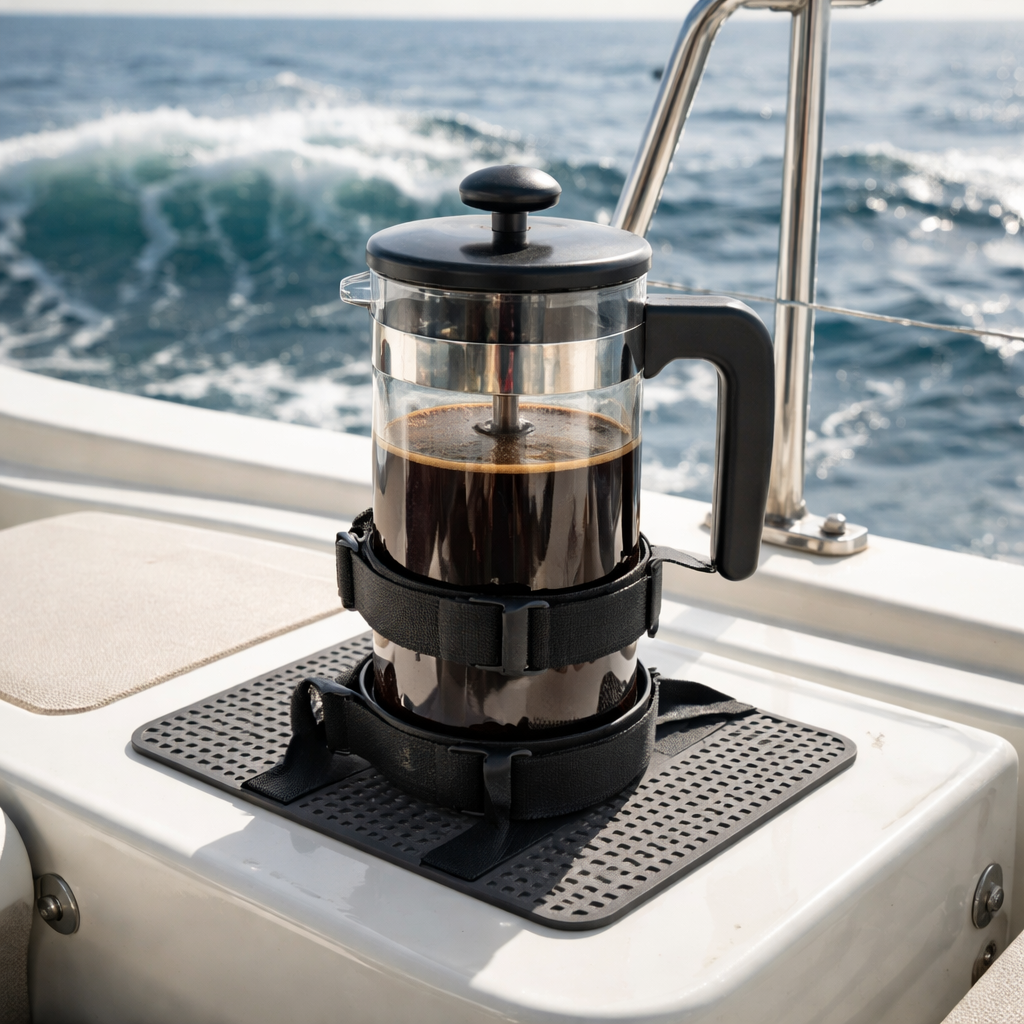
- Non‑slip silicone mat or Velcro straps to lock the press to a rail.
- Stirring spoon (metal or wooden) that won’t scratch the glass.
Why each item matters:
- The press holds the brew; a sturdy base prevents tipping when the boat rolls. li>The kettle must heat water fast but also be safe on a galley.li>The scale lets you hit the coffee‑to‑water ratio the research shows works best (1:15).li>Temperature control avoids over‑extraction that makes coffee bitter.li>Safety gear keeps hot water from spilling on a slick deck.
Pro tip: keep a spare set of filters and a small brush for quick cleanup. The boat coffee guide also mentions a compact travel grinder if you prefer fresh ground beans. A burr grinder gives consistent grind size, which is key for French press.
Step 2: Secure the French Press on a Moving Boat
Stability is the biggest hurdle. A boat’s deck can tilt, roll, and shake. The first thing you do is find a flat spot. Many sailors use the galley counter, but if that’s busy, the cockpit rail works well with a silicone mat.
Secure the press with Velcro straps or a magnetic base if your press has metal parts. The Captains Sword article on cruising sailors stresses that a solid anchor point stops the press from sliding when a wave hits. cruising sailors coffee methods gives a good safety tip.
Step‑by‑step securing:
- Place the silicone mat on the chosen surface.
- Set the French press upright on the mat.
- Wrap Velcro straps around the handle and the rail.
- Check that the press doesn’t wobble by giving it a gentle nudge.
- Lock the kettle on the stove with a clamp if you have one.
And remember the stability tip from the research table: move the press off the scale before you press. On a boat, treat the whole setup like a mini‑lab , keep it steady.
Step 3: Measure Coffee and Water Ratios for Sea Conditions
Now you weigh the coffee and water. The land guidelines say 56 g coffee for 850 g water, but on a boat you’ll use far less. The key findings show the median coffee amount is only 16 g. That’s a good starting point for a single cup.
Use the scale to hit a 1:15 coffee‑to‑water ratio. For example, 20 g coffee with 300 g water gives a balanced brew. If you prefer a stronger cup, drop the ratio to 1:12. The methodicalcoffee guide notes French press works well between 1:12 and 1:16.
Why the ratio matters on a boat: less water means a lighter kettle, which reduces the chance of shifting weight. Also, a smaller brew finishes faster, so you spend less time with hot water on deck.
- Measure coffee by weight, not spoons. A tablespoon can vary.
- Use filtered water to avoid mineral buildup in your kettle.
- Adjust the ratio based on sea state , calmer water lets you brew a larger batch.
The coffee‑to‑water ratio guide explains that a 1:15 ratio gives a sweet, balanced cup. If you’re brewing in cold weather, a slightly hotter water temperature (just off the boil) helps extract flavor.
And here’s a quick tip from the research: the average numeric recommendation (176 g) is inflated by the huge water‑volume outliers. Stick to the modest 16 g coffee amount for a solo brew, and you’ll avoid waste.
One more thought: If you like Chilled Iguana coffee, you can order beans online and have them delivered to your boat’s port. Where to Buy Chilled Iguana Coffee Online explains the subscription options that keep beans fresh.
Step 4: Brew and Time the French Press While Underway
With the press secured and the ratio set, heat the water. Bring it to just off the boil , about 205 °F , as the research table recommends. On a boat you may use a gas stove; keep the flame steady.
When the water hits the right temp, pour it over the grounds in the press. Stir gently at the one‑minute mark. The Captains Sword article says a quick stir helps even extraction, even when the boat pitches.
Now set a timer for four minutes. The research shows 4‑minute brew time is the sweet spot for flavor and practicality. While you wait, keep the kettle on a non‑slip mat and watch the waves.
Here’s the timing breakdown:
- 0:00 , Pour hot water, cover with lid.
- 1:00 , Remove lid, give a quick stir.
- 4:00 , Press down slowly.
If the boat rolls hard, pause the timer and let the water settle before you press. A steady hand avoids spilling.
Watch this short video for a visual of the press timing on a moving deck:
After you press, let the coffee sit for a minute before you pour. The research’s “Stir Timing” and “Press Timing” steps keep the brew consistent whether you’re on land or sea.
Step 5: Pour, Serve, and Enjoy Your Coffee on Deck
The final step is the pour. Use a sturdy mug with a grip to avoid drops. The research’s “Serving Tip” warns that leaving coffee in the press will keep extracting and turn bitter.
Pour the coffee into your mug, then enjoy immediately. If you have extra, transfer it to a insulated thermos , the Nissan Thermos French press reviewed by Practical Sailor keeps coffee hot for over four hours.
Tips for serving on deck:
- Hold the mug with both hands; a slip can burn you and the deck.
- Use a lid if you’re in windy conditions.
- Pair the brew with a snack that balances the flavor , a banana or a small biscuit works well.
And remember, a good cup can lift the crew’s mood during a long watch. The Captains Sword guide notes that a solid cup of joe can feel like sunrise over the anchorage.
Quick Comparison: Land vs. Boat French Press Brewing
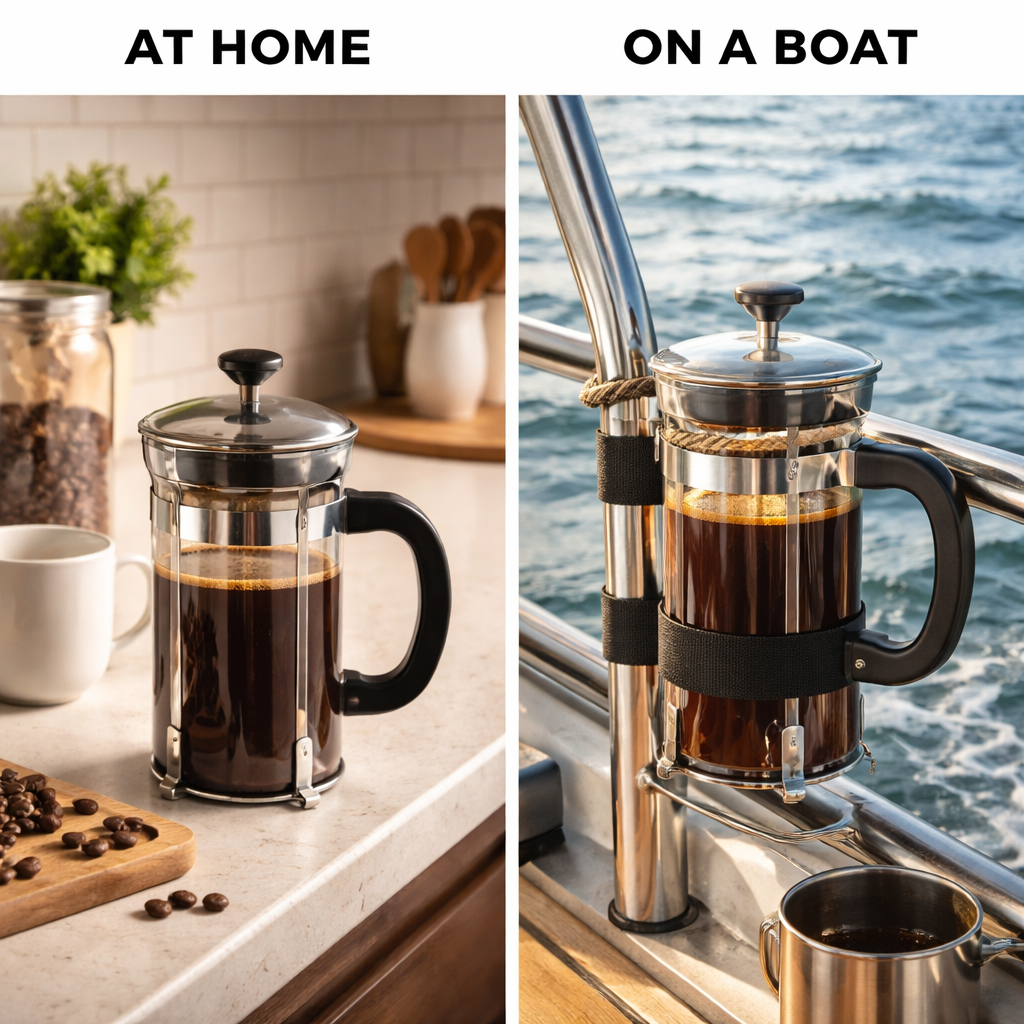
Brewing on land gives you a stable counter, unlimited space, and a full‑batch water amount. On a boat you trade batch size for safety and speed.
When you compare the two, the biggest win on a boat is safety. The “Stability Safety Tip” in the research is the only safety note among 13 items, so you’re adding that yourself.
FAQ
Can I use a plastic French press on a boat?
Yes. A BPA‑free plastic press is lighter and less likely to shatter if it falls. Just make sure it has a solid base and use a silicone mat to keep it from sliding. The safety tip from the research table still applies , move the press off any scale before you press.
How do I keep water hot without a lot of fuel?
Use an insulated kettle or pre‑heat the water on the stove, then cover it with a lid while you measure coffee. A small thermos can hold hot water for 30‑45 minutes, which saves fuel on longer passages.
What grind size works best for a boat French press?
Aim for a coarse grind that feels like sea salt. This size prevents grounds from slipping through the filter and makes cleaning easier in a cramped galley. The methodicalcoffee guide says coarse grind also reduces over‑extraction, which is helpful when you can’t adjust brew time precisely.
Is it safe to brew while the boat is moving?
Yes, as long as you secure the press and keep the kettle on a non‑slip surface. Pause the timer if the boat rolls heavily, let the water settle, then finish the press. The Captains Sword article recommends a “steady hand” approach and notes that most sailors brew successfully in 5‑knot breezes.
How many cups can I make at once on a small sailboat?
Usually one to two cups. The research shows the full‑batch water amount (850 g) is too much for limited space. Stick to 300‑500 g water for a single cup; you can repeat the process for a second cup if needed, but remember to clean the press between batches.
What should I do if the coffee tastes bitter?
First, check the water temperature , it should be just off the boil, around 205 °F. Second, verify your coffee‑to‑water ratio; a stronger ratio (1:12) can cause bitterness in a short brew. Finally, make sure you didn’t let the coffee sit in the press too long after pressing , the research’s “Serving Tip” warns against over‑extraction.
Conclusion
Brewing coffee with a French press on a boat isn’t a myth. By gathering the right gear, securing the press, measuring a modest coffee‑to‑water ratio, timing the brew, and pouring carefully, you get a smooth cup that fuels the crew. The data shows most land guides recommend far more water than you need at sea, so trim the batch and focus on stability. Keep the safety tip in mind, and you’ll avoid spills even in a swell. With these steps you’ll turn each morning watch into a pleasant ritual. Ready to taste the difference? Grab a French press, follow the guide, and let the ocean breeze mingle with fresh coffee aroma.
Additional Resources
For more on marine coffee setups, check out Practical Sailor’s galley brew test and explore Chilled Iguana’s subscription options for fresh beans on every voyage.