



Making coffee while the boat rolls in a heavy swell is one of those small problems that sailors obsess over , and rightfully so. The wrong setup can mean spilled boiling water, a dead battery, or a cup of lukewarm disappointment on watch. Here are 10 proven methods for brewing great coffee at sea, starting with the one thing every method depends on: the beans.
1. Chilled Iguana Coffee Co. Fresh-Roasted Beans (Our Top Pick) , the right beans make every method better
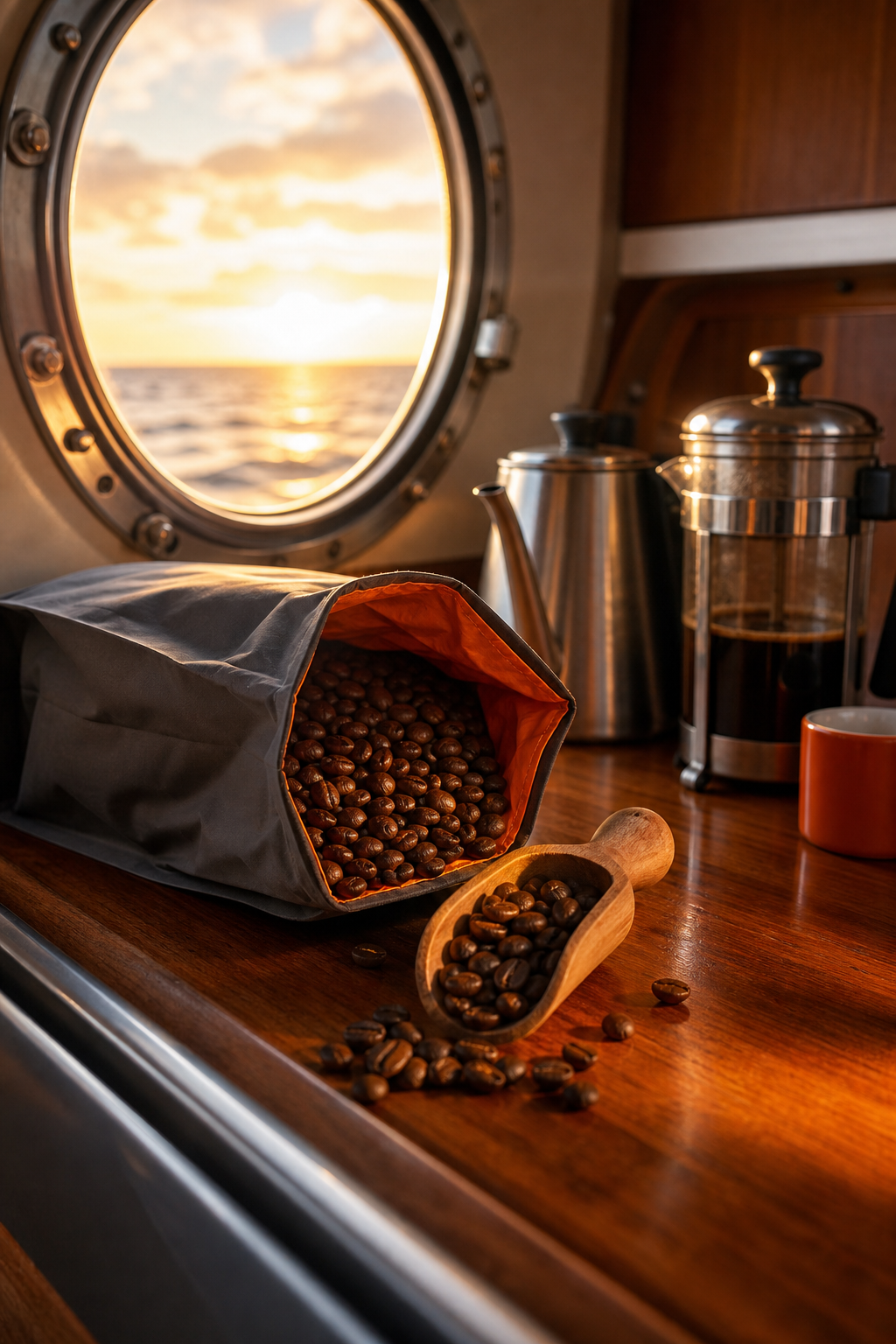
Before you pick a brewer, pick the right beans. Bad beans make every method worse. Good beans make even a simple pour-over taste exceptional , and that matters a lot when you're 40 miles offshore and there's no coffee shop in sight.
Chilled Iguana Coffee Co. is built around one idea: ethically sourced, fresh-roasted beans inspired by the Florida Keys. The brand ships direct to your door, which is perfect for stocking up before a passage. The lineup covers everything from a light Central American blonde to a deep Italian roast and a single-origin Bali Blue from volcanic slopes in Kintamani , so you can match the beans to your preferred brew method on board.
For sailboat brewing, the Florida Keys-inspired profile is especially well suited. Use a 1:16 coffee-to-water ratio (roughly 15g coffee to 240ml water) at around 200°F, and the bright citrus and clean finish echo exactly what you want with salt air blowing through the companionway.
Whole beans also store better than pre-ground. On a multi-week passage, that matters. Buy whole, grind as you go, and seal the bag tight after every use. Chilled Iguana Coffee Co. also offers subscription delivery , a smart option if you want fresh beans waiting at the dock when you return. The Florida Keys coffee flavor profile tasting guide on the Chilled Iguana blog is a useful reference for dialing in your grind and ratio once you're anchored up.
If the beans aren't right, nothing else on this list will fix your cup. Start here.
2. AeroPress , the lightweight, nearly unbreakable go-to for sailors
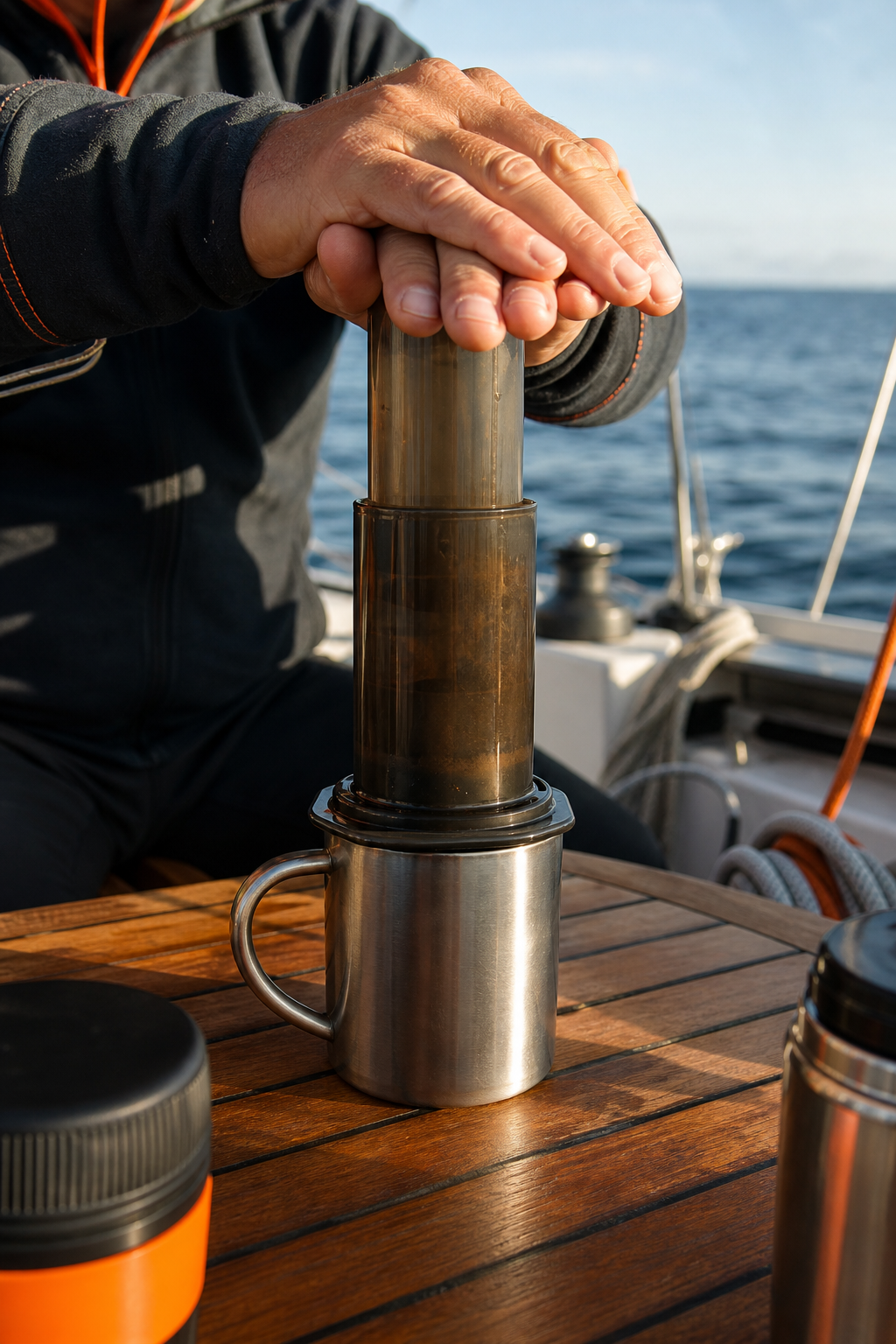
The AeroPress has earned near-universal praise from sailors, backpackers, and anyone who needs great coffee with zero fuss. It's made from polypropylene, so it won't shatter when it hits the cabin sole in a rolling sea. The whole kit , chamber, plunger, filter cap, and a small stack of paper filters , fits in a stuff sack smaller than a water bottle.
The brew process is fast. Add your grounds, pour hot water, stir briefly, cap it, and press. Total time from kettle to cup is under two minutes. Because the AeroPress uses gentle pressure through a paper filter, it pulls out a smooth, low-acid concentrate you can drink straight or top up with hot water for something closer to an Americano.
Cleanup is the other reason sailors love it. Unscrew the filter cap over a bin, push the plunger, and a compact puck of spent grounds pops out. A quick rinse and it's ready for the next watch.
The inverted method works especially well underway. You load the AeroPress upside down, which means the coffee steeps without dripping through prematurely , useful when the boat is heeled. Grind size matters: aim for something between table salt and granulated sugar. Too coarse and you get a weak cup; too fine and pressing becomes a wrestle.
The one caveat is capacity. A standard press makes one or two cups at a time. If you're feeding a crew of four at 0600, plan on multiple rounds.
3. French Press , full-body flavor with no electricity required
The French press is the workhorse of liveaboard coffee. No electricity, no filters to run out of, no specialty gear. You boil water, add coarsely ground coffee, wait four minutes, press the plunger slowly, and pour. The immersion method pulls out more of the coffee's natural oils, giving a fuller, richer body than most other methods produce.
The right grind is coarse , closer to sea salt than sugar. Too fine and you'll have sludge in your cup and a plunger that requires real effort to push down. For a standard 350ml press, aim for about 21, 25g of coffee to 350ml of water at 200°F.
The glass carafe is the obvious problem on a boat. One bad roll and you're sweeping up shards in the galley. The fix is simple: buy a stainless steel or BPA-free plastic French press. Several brands make double-walled stainless versions that also keep the coffee hotter longer , a real advantage when you're nursing a cup through a cold dawn watch.
One thing to plan for: French press coffee doesn't hold. Once pressed, the grounds stay in contact with the liquid and the coffee over-extracts quickly. Pour what you need into a thermos immediately after pressing, and don't let it sit in the carafe. The first cup is excellent; a second cup left to sit for 20 minutes will be bitter.
Cleanup is messier than an AeroPress , you need to dump the wet grounds without clogging your drain, which can be fiddly in a small galley sink. Worth it for the flavor, but plan for it.
4. Stovetop Moka Pot , espresso-strength coffee on a gimbaled stove
The stovetop moka pot is a classic for a reason. It uses your gimbaled propane burner, needs no power, and produces a strong, punchy coffee that you can drink straight or cut with hot water for an Americano. Simon from the YouTube channel Sailing Britican called it "fantastic coffee" , and the simplicity is hard to argue with.
The setup has three parts: a lower chamber for cold water, a metal funnel basket for grounds, and an upper chamber that collects the brewed coffee. Fill the base up to the pressure relief valve, load the funnel with grounds tamped firmly, screw the top on tight, and set it on a low-to-medium flame. Within eight minutes, coffee bubbles up through the internal pipe into the top chamber.
A few boat-specific notes. Always use pot restraints or your stove's fiddle rail , a hot moka pot sliding off a pitching stove is a real burn risk. Keep the heat low to avoid scorching the coffee. And watch the yield: a "6-cup" moka pot by manufacturer labeling yields roughly one large mug, not six. Manufacturers count each "cup" as a single espresso shot (about 30ml). Know that going in and buy accordingly.
The moka pot is dense and indestructible. Stainless steel versions handle saltwater exposure better than aluminum over the long term. Easy to clean with a quick rinse and dry , just don't use soap on the aluminum ones, as it strips the seasoning that builds up over time.
5. Hand Presso / Portable Espresso Maker , barista-quality shots offshore
The HandPresso is for sailors who refuse to compromise on espresso just because they're 200 miles from the nearest café. It's a fully manual, hand-pumped espresso maker that generates 16 bar of pressure , comparable to many home espresso machines , without a single electrical connection.
You pump a handle to pressurize the chamber, load your coffee pod or ground espresso into the basket, pour in hot water, and press the release. The result is a genuine espresso shot with actual crema on top. As one sailor on the YouTube channel Sailing A B Sea put it after testing hers on a live-aboard boat: "That's really nice."
The portable espresso category also includes USB-C rechargeable battery-powered options. These brew fast (around 4, 5 minutes per shot) but consume only 40, 50ml of water per cup and need a recharge cycle between uses. On a solar-only rig, the recharge time can be a real constraint during cloudy stretches at sea, so a purely hand-operated HandPresso is the safer offshore bet.
The kit that comes with the HandPresso Wild set , a vacuum flask with a temperature display, a tamper, and four small unbreakable espresso cups , is genuinely useful on board. The temperature-reading flask tells you when your water hits the right zone without a separate thermometer cluttering the galley. Espresso needs water in the 195, 200°F range; too hot and the shot turns bitter.
The caveat: the HandPresso works best with finely ground espresso or ESE pods, not coarse grind. If you're only carrying one grinder on board, you'll need to adjust your setting each time you switch between espresso and another method.
6. Pour-Over with Collapsible Dripper , clean cup, minimal gear, easy cleanup
A pour-over with a collapsible silicone dripper is arguably the most usable single-cup method for everyday use on a sailboat. No electricity, minimal water waste, and the cleanup takes about 30 seconds: lift the filter and toss the grounds overboard (or into compost), rinse the dripper, done.
The process gives you a clean, clear cup that highlights a coffee's brighter notes , citrus, floral, fruit , without the oiliness of a French press or the intensity of a moka pot. That's why it pairs so well with lighter tropical roasts. A collapsible silicone dripper flattens completely when not in use, making storage on a space-limited boat genuinely easy.
Use a medium-fine grind. Aim for about 200°F water (just off the boil, rested for 30 seconds) and a 1:16 ratio , 15g of coffee to 240ml of water. Pour in a slow spiral starting from the center and working outward. The whole brew should take 2.5 to 3 minutes. If it's faster, grind finer. Slower, grind coarser.
Carolyn Sherlock from The Boat Galley podcast put it simply: she uses a manual drip cone set over a thermos every morning, making enough for two people with three cups each. It's reliable, space-efficient, and produces excellent coffee. The thermos catch is a smart move , it keeps the coffee hot while you finish pouring and means you're not chained to the galley waiting to pour cup by cup.
The one friction point: paper filters. Stock more than you think you need before a long passage. Running out mid-voyage is annoying. A reusable metal mesh dripper is a solid backup and cuts down on single-use waste.
7. Compact Drip Coffee Maker (12V / Low-Draw) , for boats with solar or shore power
If your boat has a solid solar setup or regular access to shore power, a compact electric drip maker is worth considering. The convenience is real: load it the night before, flip a switch in the morning, and coffee is ready while you're still pulling on foul weather gear.
The key number to watch is wattage. Standard 110V drip makers draw 650, 800 watts, which means you need a proper inverter (at least 1,000W) and enough battery capacity to handle a quick morning draw without flattening your house bank. On boats with lithium batteries and healthy solar panels, this is manageable. On AGM systems run close to 50% capacity overnight, it's a risk.
Carolyn Sherlock's note from The Boat Galley Podcast is worth repeating here: avoid dedicated 12V coffee makers. Multiple sailors who tried them reported extremely slow brew times , sometimes 30, 45 minutes for a small pot. A 110V maker on an inverter, even at higher wattage, brews so much faster that the total energy draw is often lower. Speed matters when you want your coffee before the sun fully clears the horizon.
For marina use, a simple 5-cup drip maker with a stainless carafe (not glass) is the usable choice. The stainless carafe won't shatter if it shifts underway, and a 5-cup size doesn't dominate the galley counter. Keep the glass pot wrapped in a towel and wedged secure any time you leave the dock , even at anchor, wakes from passing boats can knock things over.
Electric drip is a dock-life luxury, not an offshore solution. Have a manual backup ready for when you leave the marina.
8. Reusable Coffee Bags and Pouches , eco-friendly single-serve brewing at sea
Coffee bags work exactly like tea bags. Drop one in a mug, pour hot water over it, wait four to six minutes, and pull it out. No equipment, no filters to stock, no mess. For offshore passages where conditions make any other method difficult, they're genuinely useful.
The single-use version has been around for years , and while the convenience is hard to beat for rough-weather sailing, the flavor generally doesn't match a fresh-brewed method. The taste is "OK," as reviewers often note, but lacks the punch of properly extracted coffee.
Reusable cloth or mesh coffee bags solve part of that problem. Fill your own bag with freshly ground Chilled Iguana Coffee Co. beans, tie it off, and steep it like a tea bag. You get more control over the grind and freshness than you do with a pre-packed commercial coffee bag. It's a simple, eco-friendly workaround that eliminates single-use packaging on a long passage where waste management matters.
Immersion methods like steeping produce a beverage that retains more of the coffee's natural oils compared to filtered methods , which means a properly steeped reusable bag can produce a fuller-bodied cup than you might expect.
Keep a small stash of commercial single-serve bags as a backup for heavy weather days when you genuinely can't manage a kettle safely. For everyday use at sea, filling your own reusable bags with fresh grounds is the better option in every way.
9. Compact Hand Grinder , freshly ground beans on every watch
Pre-ground coffee starts going stale within days of opening the bag. On a two-week passage, that matters. A compact hand grinder lets you grind fresh for each brew, which makes a noticeable difference in flavor regardless of which brewing method you're using.
Manual grinders need no power. Most weigh under 300g, fit in a small drawer or hanging bag, and take about 60, 90 seconds to grind enough for one or two cups. The grinding mechanism is mechanical , a burr set inside a metal cylinder , so there's very little to break. For a sailing vessel, that kind of reliability counts.
Burr grinders produce a more consistent grind than blade grinders, which matters for extraction. Inconsistent particle size means some grounds over-extract (bitter) while others under-extract (sour) simultaneously. A ceramic burr hand grinder produces a uniform particle size that makes every other variable easier to control.
The adjustment ring lets you move between grind sizes as you switch methods. Coarse for French press. Medium for pour-over. Fine for a HandPresso or moka pot. One grinder handles the whole list. Hand grinders are widely recommended among offshore sailors precisely because they require no power and freshly ground beans produce noticeably better flavor than pre-ground alternatives.
Whole beans also store far longer than ground coffee , a real advantage when provisioning for extended offshore passages. Grind what you need, seal the rest in an airtight container, and your beans stay fresh for weeks longer than any pre-ground option.
10. Vacuum Flask and Insulated Mug System , keeping coffee hot across watch rotations
Brewing great coffee is only half the challenge. Keeping it hot through a three-hour watch rotation is the other half. A quality double-walled vacuum flask solves that completely , and it's the single accessory that improves every other method on this list.
A good stainless vacuum flask keeps coffee at drinking temperature for four to six hours. Brew a full press or a pour-over into the flask at the start of a watch and the next crew member comes up to a still-hot cup. That's a meaningful quality-of-life upgrade on an overnight passage.
Some flasks have a small temperature display on the lid , the same type that comes with the HandPresso Wild set mentioned earlier. That's genuinely useful when you also need to know if your water is still hot enough to brew a second round. Brew temperature for most methods should be 195, 200°F (just off the boil). A flask that's been sitting an hour typically drops to around 150, 160°F , still hot enough to brew another AeroPress or pour-over without reheating.
Insulated mugs with locking lids matter just as much. An open mug on a sailboat in a swell is a disaster waiting to happen , spilled hot coffee, burned hands, and a slippery cockpit. Look for a mug with a lid that clicks or screws shut. Wide-mouth stainless steel designs work well in a marine environment and don't retain flavors between uses.
Sailboat crews planning passages that cross time zones or work four-on/four-off watch schedules find the flask-plus-insulated-mug pairing indispensable. Brew once, keep it hot, skip the stress of firing up the stove at 0300.
How to Choose the Right Brewing Method for Your Sailboat
The right method depends on four variables: power availability, water budget, galley space, and how much mess you're willing to manage at sea. Here's a quick decision framework.
A few usable rules. If your boat runs on solar with AGM batteries, avoid high-draw electric appliances in the morning before the panels have charged. Sailors who've tried dedicated 12V coffee makers consistently report frustratingly slow brew times , a manual method is faster and uses no power at all.
Water conservation matters on longer passages. The AeroPress and moka pot use the least water per cup. A French press or pour-over uses roughly 240–350ml per serving. An electric drip maker brewing a full pot uses significantly more. If you're rationing fresh water on a bluewater passage, the math is worth doing before you leave the dock.
For safety underway, always boil water in a kettle with a lid and spout rather than an open saucepan. A whistling kettle with a solid base on a gimbaled stove is the safest option. If conditions are rough, use pot clamps on every vessel over the flame, and consider switching to an AeroPress or coffee bags rather than managing an open carafe. If you're planning a longer offshore trip and need to ship your boat, a vessel transport logistics company can handle delivery so you can focus on provisioning for the voyage rather than delivery logistics.
Tips for Storing Coffee Beans on a Boat
A marine environment is hostile to coffee. Heat, humidity, salt air, and UV light are the four enemies of fresh beans. Ignore them and even a premium roast from Chilled Iguana Coffee Co. will go stale in days.
Use airtight containers. Transfer beans from their original bag into a vacuum-seal or airtight jar as soon as you board. The best containers have a one-way CO2 valve that lets gas escape without letting air in. On a boat, a screw-top stainless canister is more durable than glass and won't shatter.
Store away from heat sources. Don't keep beans near the stove, the engine compartment hatch, or in a locker that heats up in direct sun. A cool, dark locker below the waterline is ideal. Temperature swings accelerate staling faster than constant warmth.
Don't refrigerate roasted beans. It sounds counterintuitive, but fridges on boats run warm and cycle in and out of temperature as the door opens. The moisture exposure when cold beans hit warm air causes condensation on the surface, which ruins flavor fast. Keep roasted beans at stable ambient temperature in a sealed container instead.
Buy whole beans and grind as you go. Pre-ground coffee goes stale four to five times faster than whole beans. For a two-week passage, stock whole beans and grind daily with a hand grinder. The flavor difference is significant.
Keep supply in proportion to your passage length. A typical coffee drinker uses about 15–20g per cup. Plan your bean supply based on crew size and passage length, then buy a little extra and seal the overflow in a second container as a backup.
Provisioning with quality beans from a trusted source before departure is a simple way to guarantee a good cup every morning at sea, regardless of what the weather's doing.
FAQ
What is the best way to brew coffee on a sailboat with no electricity?
The AeroPress and pour-over with a collapsible dripper are the two strongest no-power options. Both are lightweight, need only hot water, and produce excellent results. The AeroPress is slightly faster and easier to clean; the pour-over gives a cleaner, brighter cup. For rough conditions, coffee bags or a stainless French press work well. Match the method to your sea state , the calmer the water, the more options you have.
Is a French press safe to use on a sailboat underway?
Yes, with the right precautions. Use a stainless steel or plastic French press instead of glass to eliminate breakage risk. Boil water in a lidded kettle on a gimbaled stove with pot clamps in place. Once pressed, immediately transfer the coffee to a vacuum flask to stop extraction and keep it hot. Avoid leaving an open French press on the counter in a rolling swell.
How much water does brewing coffee on a boat actually use?
It varies by method. A HandPresso or moka pot uses 40, 100ml per cup. An AeroPress or pour-over needs about 200, 240ml per serving. A French press for two people uses around 350ml. An electric drip maker brewing a full pot uses 600ml or more. On water-rationed passages, the AeroPress and moka pot are the most efficient options by a clear margin.
Can I use a Keurig or pod machine on a sailboat?
Technically yes, but most liveaboards stop using them quickly. Pod machines draw significant power, require a large inverter, and take up significant counter space. They also depend on proprietary pods that can be hard to find in remote anchorages. A manual method is faster, cheaper, and more reliable offshore. If you're at a marina with shore power long-term, a Keurig with a reusable pod filter is a workable option.
What grind size should I use for coffee on a boat?
Match the grind to the method. French press and coffee bags need a coarse grind (like sea salt). Pour-over needs medium-fine. AeroPress works well at medium to medium-fine. Moka pot and HandPresso need fine espresso grind. A compact hand grinder with an adjustable burr lets you dial in the right size for any method without carrying multiple grinders on board.
How do I keep my coffee hot between watch rotations?
Brew directly into a double-walled stainless vacuum flask. A quality flask keeps coffee at drinking temperature for four to six hours, which covers most watch rotations. Pair it with a locking-lid insulated mug to avoid spills underway. Brew at the start of a watch and the next crew member comes up to a still-hot cup without anyone needing to restart the stove at 0300.
Ready to Brew Better at Sea?
The best setup for most sailors is simple: fresh whole beans (Chilled Iguana Coffee Co. ships direct and the Florida Keys profiles are built for this kind of outdoor brewing), a compact hand grinder, and either an AeroPress or a collapsible pour-over dripper as your daily brewer. Add a vacuum flask and you've covered every situation from a calm anchorage to an overnight offshore passage. If you want to go deeper on flavor and sourcing, explore the tropical coffee beans flavor guide on the Chilled Iguana blog , it's a usable resource for matching bean origin to brew method before you leave the dock.