



Brewing coffee on a boat is different than making it at home. The deck moves. Water sloshes. Power is limited. But you don't have to settle for instant. With the right gear and a few tricks, you can enjoy a real, fresh cup of joe even while anchored or under sail. This guide walks you through six steps: choosing the right coffee maker, picking the best beans for maritime conditions, managing your water supply, the actual brewing process, staying safe when boiling water at sea, and cleaning up. You'll learn what works, what doesn't, and how to avoid common mistakes. Let's get started.
Step 1: Choose the Right Coffee Maker for Your Boat
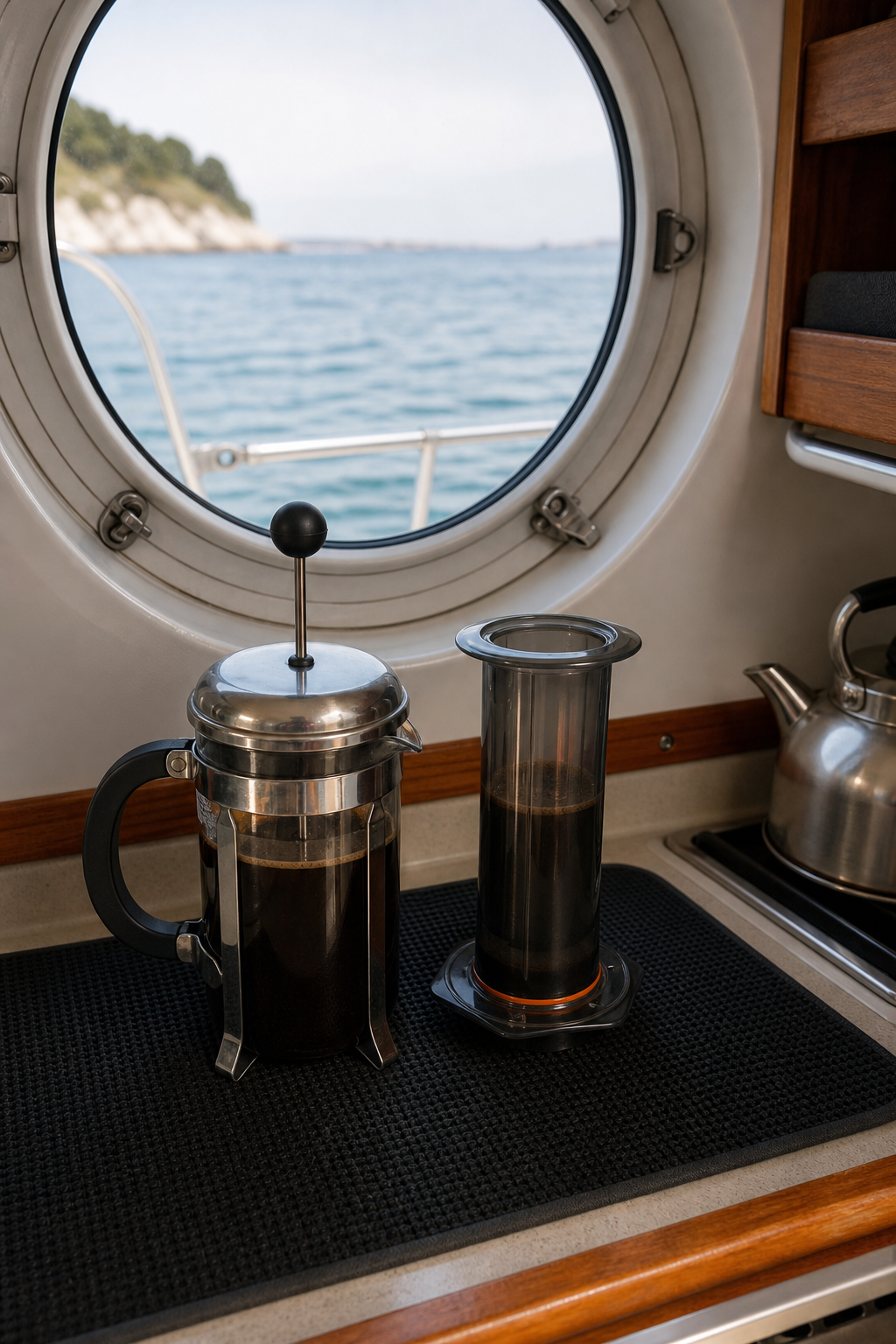
Your coffee maker choice depends on two things: your power setup and how much space you have. On a boat, every inch counts. And every watt matters.
Let's look at the most popular options for boats, from simplest to most involved.
French Press
A French press is a favorite among cruisers. It needs no electricity. Just boiled water and coarse grounds. You pour hot water over the coffee, let it steep for four minutes, then press the plunger down. The result is a rich, full-bodied cup. The downside: it can be top-heavy. Many boaters wedge the press into the sink or use a plastic mug that won't break. According to research from The Boat Galley, using a gimbaled stove and pot restraints is the safest way to boil water on a moving boat. The French press itself should be made of stainless steel or heavy-duty plastic. Glass versions are risky. If you drop one, you have shards everywhere. We recommend a stainless steel model that fits in a standard mug.
Stovetop Percolator
Percolators are classic for camping and boats. They sit directly on the stove burner. Water percolates up through a basket of grounds. The result is strong coffee. But percolators can be tricky. You have to watch the heat. If you boil too hard, coffee becomes bitter. Also, a non-electric percolator might still need a full-boat inverter if you want to use an electric stove, but on a propane or alcohol stove, it works fine. Always secure the percolator with pot clamps. And never leave it unattended. One surprising find: some percolator instructions say they need a full inverter, even though they don't use electricity. That's a warning to carefully.
AeroPress
The AeroPress is small, light, and makes a single cup quickly. It pushes hot water through coffee grounds with air pressure. The result is smooth coffee with low acidity. It's easy to clean: pop out the used grounds in a solid puck. However, it's top-heavy during brewing. You need to hold it steady or wedge it into a mug. The AeroPress is great for one or two people, but not for a crew of four. It's also made of plastic, so no broken glass.
Single-Serve Electric Makers
If you have an inverter and enough battery capacity, a small drip machine or pod brewer works. But check the wattage. A standard Keurig can pull 1500 watts. That's a lot for a 12V battery bank. You'll need a good inverter and maybe a generator. Some people use a small 5-cup drip maker at 650 watts. That's more manageable. But remember: glass carafes can smash. Wrap the carafe in a towel when storing. Pods also take up space and may not be available in remote anchorages. Consider reusable pods if you go that route.
Pour-Over Cone
The simplest method: a plastic or metal cone with a paper filter. You set it on your mug, add grounds, pour hot water. It makes a clean, bright cup. It's cheap and small. But it's unstable. You need to hold it or set it in a sink. Some people use a can cooler as a stable base, but really a dedicated pour-over stand is better. The paper filters are lightweight to store.
Step 2: Use the Best Coffee for Maritime Conditions
Not all coffee beans are equal on a boat. Moisture, salt air, and temperature swings can ruin beans fast. Freshness is everything. That's why starting with freshly roasted coffee is the essential first step for any boat-brew checklist. The research shows that fresh roasted coffee beans are the only ingredient-only entry in the data set, and they're presented as the must-have for any boat coffee setup.
Chilled Iguana Coffee Co. offers beans roasted in small batches. Their 6 Bean Blend is a dark roast with notes of cocoa and caramel. It stands up well to the strong brewing methods like percolator or French press. Another great choice is the Breakfast Blend, a medium roast with a smooth finish. For those who prefer single-origin, try Colombia or Costa Rica. These beans are ethically sourced and fresh.
Store your beans in an airtight container. Keep them away from the stove heat. Don't store them in the fridge, moisture condenses and ruins the flavor. A vacuum-sealed cannister works best. For longer trips, consider whole beans and a hand grinder. Ground coffee loses flavor much faster.
What about pre-ground? It's okay for a few days, but for week-long passages, whole beans are better. Grind right before brewing. A manual burr grinder is small and needs no power. Wikipedia's guide on coffee preparation confirms that grinding just before brewing preserves volatile aromatics.
Also consider flavored coffees like Caramel or Cinnamon Hazelnut. They can add variety to your morning routine without needing syrups. Just keep the bags sealed tight.
Step 3: Master Water Management on a Boat
Water on a boat is precious. You have limited tank capacity. If you use a watermaker, you might have more, but many cruisers rely on dock water or bottled water. For coffee, water quality matters just as much as the beans. Bad-tasting water makes bad coffee.
If you use tank water, flush the system regularly. Install a water filter at the galley tap. A simple carbon filter removes chlorine and improves taste. For rainwater, the Centers for Disease Control and Prevention warns that it can carry bacteria, parasites, and chemicals. Always filter and purify rainwater before drinking. Boiling is a reliable method, that's easy on a stove.
How much water do you need for coffee? A typical cup uses about 6 ounces. For a French press, you might need 12 to 32 ounces depending on size. Plan ahead. The research shows that water quantity data is scarce in most guides, but ranges from a single cup (AeroPress) to 50 oz (French Press). So measure your brew size.
On a passage, conserve water. Maybe have one good cup in the morning and switch to instant or cold brew later. Speaking of cold brew, our article on Learning the Art of Cold Brew shows how to make a concentrate that lasts a week.
If you're anchoring out and need to refill water, check local marinas or use a watermaker. But for coffee, a small dedicated container of good water is worth storing. Some cruisers keep a 1-gallon jug of grocery store water just for coffee.
Step 4: The Brewing Process , Step by Step
Now let's walk through making coffee on a boat from start to finish. This is a safe, repeatable process you can use with any manual method.
Step 4.1: Prepare Your Water
Fill your kettle with enough water for the number of cups you want. Use fresh, filtered water. Heat it on the stove. If you're using a kettle, choose one with a solid base and a whistle. The whistle warns you when it's boiling. Secure the kettle on a gimbaled burner with pot restraints. Don't fill more than two-thirds full, less sloshing.
Step 4.2: Grind Your Coffee
Grind whole beans to the right coarseness. For French press, use a coarse grind. For pour-over, medium. For AeroPress, fine. If you're using pre-ground, skip this step. But fresh ground tastes better.
Step 4.3: Brew
For French press: Add grounds to the press. Pour in water just off the boil (around 200°F). Let it steep for 4 minutes. Press the plunger down slowly. For AeroPress: Place filter in cap, add grounds, pour water, stir, then slow plunge. For pour-over: Place filter in cone, wet it, add grounds, pour water in circles.
Step 4.4: Serve Immediately
Pour into a mug. Don't let the coffee sit on the grounds or it will become bitter. If you're making multiple cups, decant into a thermos. Chilled Iguana Coffee Co. sells an insulated tumbler that keeps coffee hot for hours.
A key point from the research: only 44% of methods specify a power source. So if you're using electric, know your wattage. The median is 110W but it can go up to 1025W for a thermal carafe drip. That means a big inverter. Many boaters avoid electric altogether for this reason.
Step 5: Safety Tips for Boiling Water at Sea
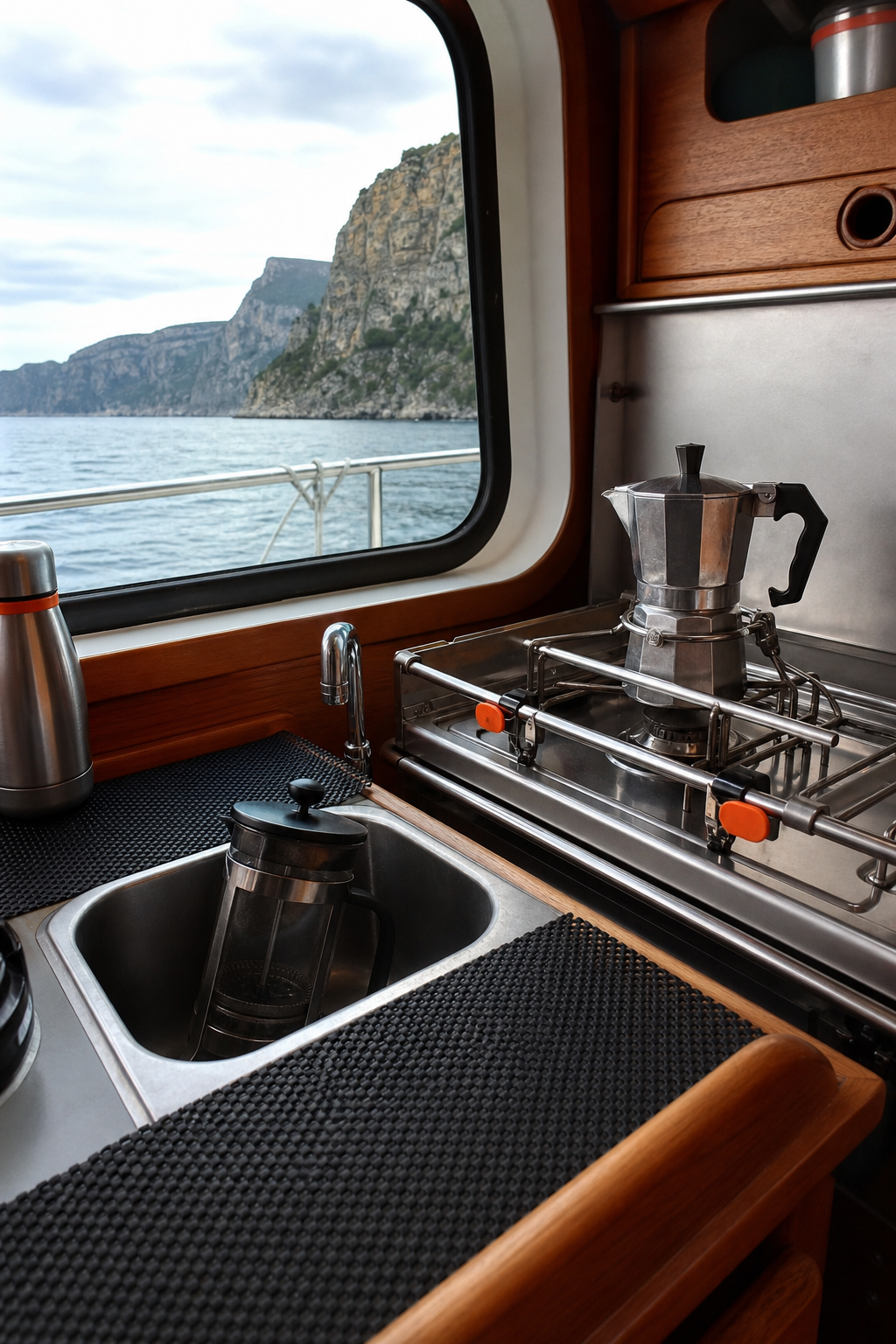
Boiling water on a moving boat is one of the most dangerous tasks. Spills can cause serious burns and even fires if water hits electrical components. Here's how to stay safe.
Use a Gimbaled Stove and Pot Restraints
A gimbaled stove stays level when the boat rolls. But even with a gimbal, the pot can slide. Always use pot clamps or a rail to secure the kettle. The Norwegian Maritime Authority recommends shielding cooking areas and using fixed propane systems properly. According to SDIR's boat fire prevention guidelines, many boat fires start from cooking accidents. Secure everything.
Wedge Your Brewing Device in the Sink
The most common safety advice from cruisers is to wedge the French press or AeroPress into the sink. The sink is a natural holder. If it tips, water goes into the sink, not onto you. You can also use a custom drip stand that fits over the sink.
Never Fill to the Brim
Leave headspace. Water expands when boiling and sloshes. A full kettle is an accident waiting to happen. Aim for half to two-thirds full.
Use a Kettle with a Whistle
A whistle tells you when water is boiling without lifting the lid. Lifting a lid on a moving boat lets steam escape and can tip the kettle.
Keep a Fire Extinguisher Nearby
ABC powder extinguishers work on electrical and grease fires. Mount one near the galley but not directly above the stove. Check the gauge monthly. Also install a smoke detector.
Watch for Propane Leaks
If you cook with propane, turn off the gas at the tank when not in use. Propane is heavier than air and can accumulate in the bilge. Install a gas alarm. The SDIR guidelines stress checking gas lines regularly.
Cool Burns Immediately
If hot water splashes on skin, cool the area under cold water for 20 minutes. Do not apply butter or creams. Seek medical help for severe burns.
Step 6: Clean Up and Storage
After you've enjoyed your coffee, you need to clean up properly. Grounds and saltwater don't mix well. Here's how to keep your gear in top shape.
Dispose of Grounds Responsibly
Never dump coffee grounds into a galley sink. They clog pipes and attract bugs. Instead, collect used grounds in a container and throw them overboard or in the trash. Some cruisers dry them and use them as compost or odor absorber. But in many areas, dumping organic matter overboard is fine. Check local regulations.
Rinse and Dry Equipment
Rinse your French press, AeroPress, or percolator with fresh water immediately after use. Saltwater accelerates corrosion. Use a bottle brush to clean the mesh filter. For percolators, take apart the basket and stem. Let everything air dry before stowing.
Store Mugs and Kettles Securely
Use non-slip mats on shelves. Wrap glass carafes in towels. The enamel mug from Chilled Iguana Coffee Co. is lightweight, durable, and won't break if dropped. Great for boat use. For storing beans, use an airtight jar. Keep it in a dark, cool locker, not above the stove where heat degrades the beans.
Regular Maintenance
Descaling: If you use tank water, minerals can build up. Once a month, run a vinegar solution through your electric coffee maker. For metal percolators, check for rust. Replace seals on French press plungers as needed. The Black Glossy Mug is dishwasher safe, which makes cleanup easier if you have a dishwasher. Otherwise, hand wash with mild soap.
FAQ
Can I use a regular drip coffee maker on a boat?
Yes, but only if you have enough power. Most drip makers draw 600-1000 watts. You'll need a pure sine wave inverter and sufficient battery bank. Also, the glass carafe can break in rough seas. Wrap it in a towel when underway. Some boaters prefer a 12V coffee maker, but those are often slow and draw a lot of current. Manual methods are safer.
What is the best coffee to use on a boat?
Freshly roasted whole beans from a source like Chilled Iguana Coffee Co. are ideal. Their 6 Bean Blend or Breakfast Blend are popular. Store beans in an airtight container away from heat and moisture. Avoid pre-ground coffee that sits too long. Flavored coffees can add variety without carrying syrups.
How do I keep my coffee maker from sliding around?
Use non-slip mats under the base. For French presses, wedge them in the sink while brewing. Many cruisers also use velcro strips to secure small appliances. For stovetop pots, always use pot clamps or a gimbaled stove rail. Never leave a hot kettle unattended.
Is it safe to use a glass French press on a boat?
Not recommended. Glass can break if the boat lurches. Use a stainless steel or plastic French press instead. If you must use glass, wrap it in a towel and store in a padded locker. The same goes for glass carafes. Stainless steel is more durable and retains heat better.
How much water should I carry for coffee on a long passage?
Figure 6-8 ounces per cup. If you make two cups per person per day, a 5-day passage for two people means about 5-6 gallons just for coffee. Factor that into your overall water budget. Use a watermaker if you have one. If not, bring extra bottled water for drinking and cooking.
Can I make espresso on a boat?
Yes, with a stovetop moka pot. It makes strong, espresso-like coffee. It sits on the stove and requires no electricity. Moka pots are compact and built from metal. However, they can overheat if left unattended. Use low heat and secure them with pot restraints. The result is a punchy coffee that you can dilute with hot water for an Americano.
What about cold brew on a boat?
Cold brew is a great option because you can make a concentrate ahead of time. It requires no heat and no power. Just mix coarse grounds with cold water, steep for 12-24 hours, then filter. Store the concentrate in the fridge or a cool bilge. Serve diluted with water or milk. It's smooth and less acidic. for more details.
How do I clean coffee grounds from a boat sink?
Don't put grounds down the sink, they clog. Instead, scrape the puck or grounds into the trash or a dedicated container. For AeroPress, unscrew the base and eject the puck directly into a bag. Rinse the parts over a bucket to catch stray grounds. Use fresh water for the final rinse.
Conclusion
Making a great cup of coffee on a boat is totally doable. You just need to plan ahead and choose the right gear. Manual methods like French press, AeroPress, or pour-over are the most reliable. They don't depend on electricity, and they're easy to secure. Pair them with fresh roasted beans from Chilled Iguana Coffee Co., and you'll have a delicious start to your day at sea.
Remember these key points: secure your equipment, use fresh water, and always prioritize safety. Boiling water on a moving boat is risky, use pot restraints and wedge brewers in the sink. Manage your water supply carefully, especially on long passages. And clean up promptly to keep your gear in good shape.
Whether you're crossing an ocean or just day-sailing, a good coffee ritual makes the journey better. Start with quality beans, choose a stable brewing method, and follow the steps we've outlined. You'll never have to settle for instant again.
For more ideas, check out Chilled Iguana Coffee Co.'s full selection of coffees and drinkware. Happy brewing!