



Table of Contents
- Green Tea vs Oolong Tea: Key Processing and Antioxidant Differences
- Caffeine Content in Green vs Oolong Tea
- Oolong Tea Weight Loss Benefits and Metabolic Effects
- How to Brew Green Tea for Maximum Health Benefits
- Side Effects, Sourcing, and Culinary Uses
- Our Verdict
- Frequently Asked Questions
Last Updated: September 18, 2026
Green Tea vs Oolong Tea: Key Processing and Antioxidant Differences
Green tea vs oolong tea benefits start with oxidation: green tea is unoxidized, oolong partially oxidized. Green tea leaves are heated soon after picking, preserving grassy notes and more EGCG; oolong leaves are bruised and partially oxidized, creating floral aromas and polymerized polyphenols.
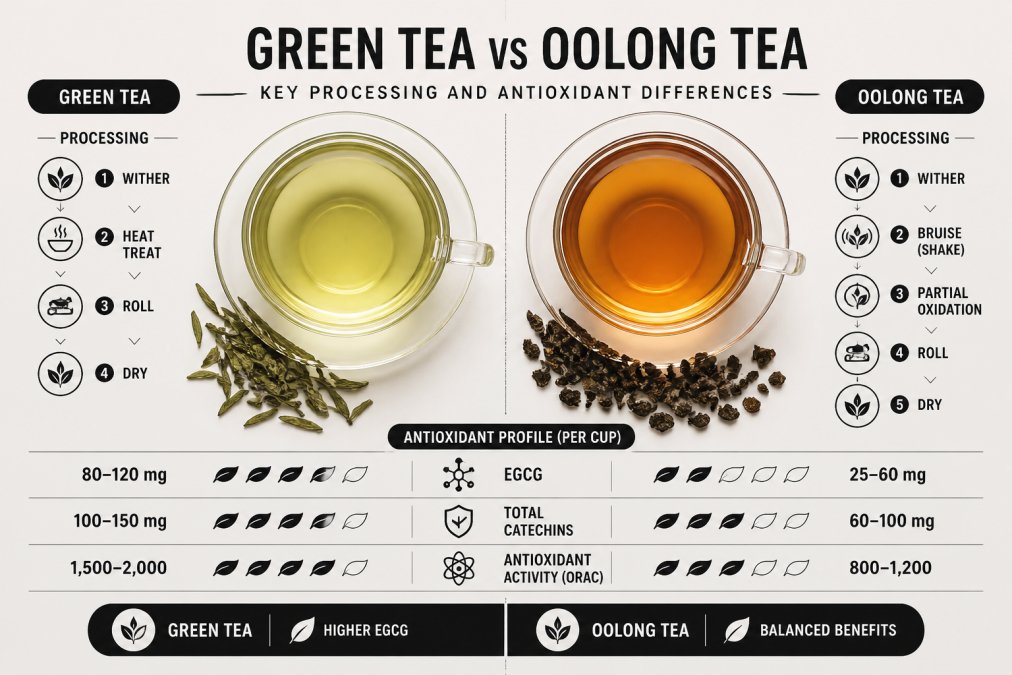
| Factor | Green Tea | Oolong Tea |
|---|---|---|
| Oxidation level | None | Partial |
| Dominant antioxidants | EGCG, catechins | Polymerized polyphenols |
| Flavor profile | Grassy, vegetal | Floral, toasty |
Caffeine Content in Green vs Oolong Tea
Caffeine content in green vs oolong tea is closer than most expect: an 8-ounce cup of either lands in a similar moderate range, though oolong often edges slightly higher. Steeping time and water temperature matter more than tea type.
Oolong Tea Weight Loss Benefits and Metabolic Effects
Oolong tea weight loss benefits come from polyphenols and caffeine working together, which may support a modest metabolism boost and fat oxidation. No tea replaces diet and exercise. Green tea has higher EGCG and the deeper research base for weight management; oolong wins on taste.
How to Brew Green Tea for Maximum Health Benefits
How to brew green tea for maximum health benefits comes down to three numbers: 160-175 F water, 2-3 minutes, and about 3 grams of loose leaf per 12 ounces. Use loose leaf when you can; bagged tea's smaller particles release tannins fast. For oolong, use 185-195 F water and steep 3-4 minutes.
Side Effects, Sourcing, and Culinary Uses
Caffeine jitters, sleep disruption, and reduced iron absorption are the main concerns with both teas. Cap intake by early afternoon if sensitive, and keep tea away from iron-rich meals. Look for clear origin information and organic certification. Both work in the kitchen: green tea in light marinades and poached fish, oolong in roasted vegetables and braised dishes.
Our Verdict
Green tea wins on antioxidant density and metabolic research; oolong wins on flavor complexity and drinkability. Most drinkers benefit from keeping both on the shelf. For a sweet, smooth green tea, our Jasmine blends hand-picked green tea with fresh jasmine blossoms. For something fruity hot or iced, Mango Treat delivers summery mango notes without bitterness. And for a bold cup that stands up to milk and sugar, English Breakfast works all day.


Frequently Asked Questions
Does oolong tea contain more caffeine than green tea?
Oolong tea generally contains slightly more caffeine than green tea, though both fall in the moderate range. An 8-ounce cup of green tea typically has 25-40 mg of caffeine, while oolong ranges from 30-50 mg. The difference comes down to oxidation level and leaf processing. If you are sensitive to caffeine, green tea is the gentler choice. If you want a steadier energy lift without the jitters of coffee, oolong delivers a smoother, longer-lasting boost.
Can drinking oolong tea help with weight management?
Oolong tea weight loss benefits come from its polyphenols and caffeine working together to support fat oxidation and metabolic rate. Studies suggest regular consumption may increase energy expenditure modestly, but it is not a magic bullet. Pairing oolong with a balanced diet and consistent movement is what actually moves the needle. Think of it as a supportive habit, not a standalone solution. A cup after meals can also help curb cravings for something sweet.
How does the oxidation process affect the nutritional profile of green and oolong tea?
Green tea is unoxidized, so it retains the highest concentration of catechins, especially EGCG. Oolong is partially oxidized, which transforms some catechins into larger polyphenols like theaflavins and thearubigins. This shift changes both flavor and function: green tea leans toward antioxidant and anti-inflammatory support, while oolong offers a blend of antioxidant properties and metabolic benefits. The oxidation level also affects caffeine content and how the tea feels on your palate.
Choosing between green tea and oolong tea benefits really comes down to what you want from your daily cup: maximum antioxidants or maximum enjoyment. At Chilled Iguana Coffee Co., we roast and source with the same care whether it is coffee or tea, and our curated tea lineup is built for people who want a better ritual without the guesswork. Get started with Chilled Iguana Coffee Co. and find the cup that fits your day.