



A fair trade coffee beans subscription sounds simple: good coffee arrives on a set schedule, and farmers get better support. But the label alone doesn't tell you what you'll receive, when it ships, or how much it costs. Use the steps below to check the claim, follow the supply chain, match the plan to your habits, and start with clear expectations.
Step 1: Verify What Fair Trade Means
A fair trade coffee beans subscription should explain both its coffee and its sourcing claim. Start by finding the exact certification name, then check whether the claim applies to the beans in your subscription.
Fair trade is a trading system that aims to improve terms for producers. In coffee, its rules can include a minimum price when market prices fall and an extra community premium. That premium may support projects such as schools, farm tools, or local services. The system also gives producer groups a way to sell together instead of negotiating as isolated farms. You can review the basic definition of fair trade.
That distinction matters. “Ethically sourced” is a broad phrase. It can describe a company's buying policy, but it doesn't prove a named certification. “Direct trade” is also different. It usually describes a buyer's relationship with a producer, while fair trade refers to a defined standard or certification system. One claim may sit beside the other, but don't treat them as the same thing.
Look for these details on the subscription page or in its help center:
- The name of the certifier or standard.
- Whether the whole subscription is certified or only some coffees.
- The country or region where the beans were grown.
- How the seller describes the farmer, cooperative, or exporter relationship.
- Whether the label covers the current coffee or only the wider company policy.
If you can't find those details, ask before subscribing. A seller may have a sound sourcing program but weak product copy. You still deserve a plain answer. Ask, “Which coffees in this plan carry the certification, and where can I verify it?”
Think about a small coffee cooperative. Farmers who sell together may gain more bargaining power and share equipment or training. If a drought harms one member's crop, the group still faces risk, but it may have more tools to respond. Fair trade doesn't remove weather risk or guarantee a high income. It sets a framework for better terms and shared support.
Also check the date of the information. A subscription can change its coffee lineup. An old certification statement may not apply to the bag being shipped today.
By now you should have a written answer to three questions: What standard applies? Which beans does it cover? What proof can the seller show?
Step 2: Follow the Coffee From Cooperative to Cup
For a fair trade coffee beans subscription, traceability means following the coffee beyond a country name. Start with the farm or cooperative, then work forward through export, roasting, packing, and delivery.
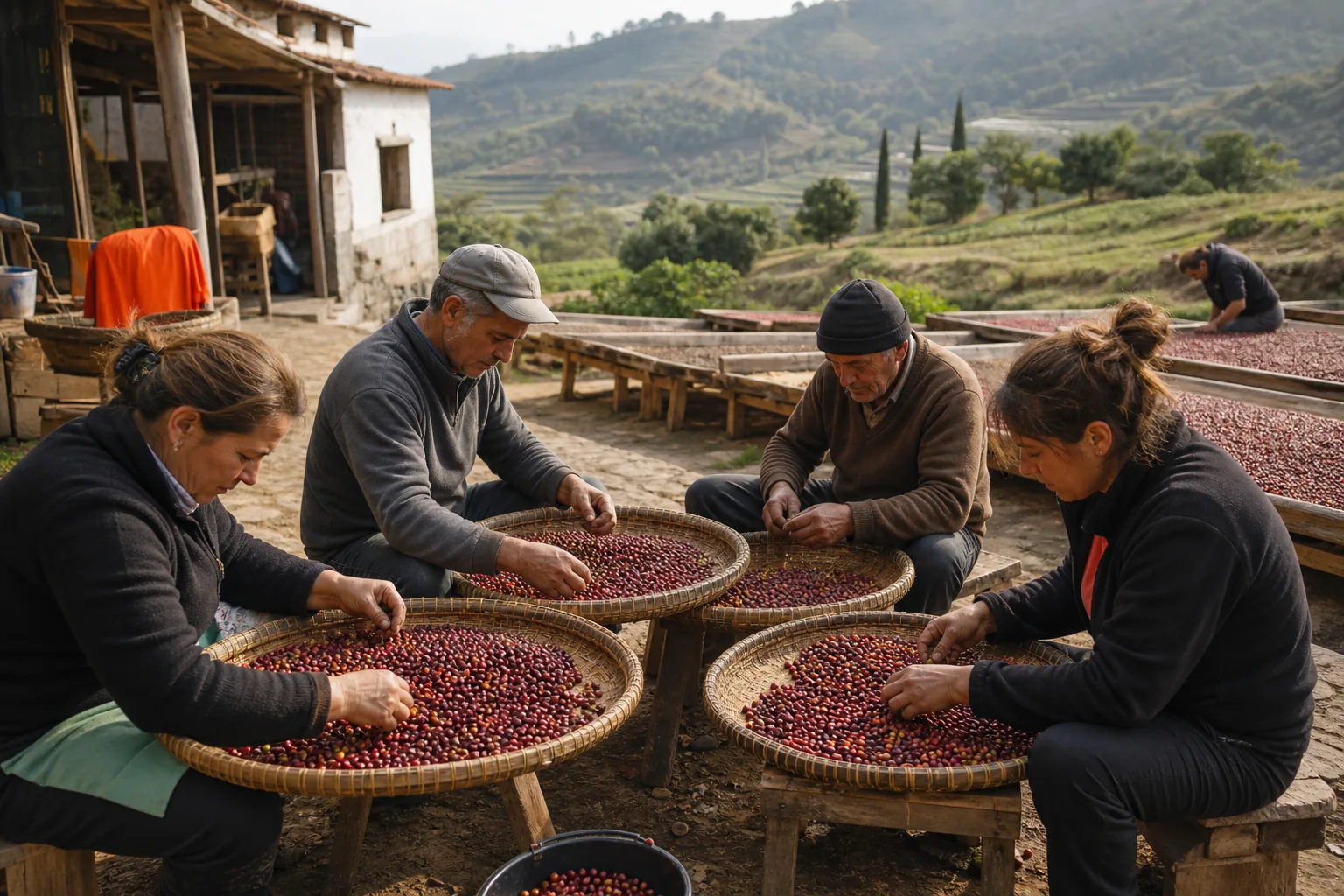
A coffee bean begins as a cherry on a plant. After harvest, the fruit is removed and the seed is dried. The coffee may pass through a cooperative, exporter, importer, and roaster before it reaches your kitchen. Each handoff can affect price, quality, timing, and the amount of information that reaches you.
Ask what the subscription tells you at each stage. A useful coffee card may name the growing region, producer group, crop or harvest period, process, roast date, and tasting notes. Not every seller will publish every field. Still, a blank page gives you little basis for judging the claim.
QR-code traceability can make this easier. When a bag includes a working code, it may take you to a page with the roast date and origin details. Some systems also show a producer profile or the path taken by the coffee. Treat the code as a useful lead, not automatic proof. Scan it before you buy if the seller provides a sample code.
Check the difference between origin and traceability:
- Origin: the country, region, or named farm where the beans grew.
- Producer detail: the cooperative, estate, or farmer group linked to the coffee.
- Chain detail: the steps between the producer and the roaster.
- Freshness detail: the roast date or a clear roasting window.
A single-origin coffee can show a sharper picture of one place and season. A blend can combine coffees to keep a steady taste. Neither is automatically more ethical. The sourcing proof matters more than the label on the front of the bag.
Price swings make this check more important. Coffee farmers can face drought, plant disease, higher labor costs, and unstable market prices. A higher retail price does not automatically mean farmers received more. Look for a clear explanation of the price structure or the premium paid to a producer group.
Be careful with stories that name a village but provide no buying detail. A moving farmer story can help you understand the work behind coffee. It cannot replace a certification statement, cooperative name, or traceability record.
For a home brewer, the payoff is simple. You know what to look for when the next bag arrives. If the card says only “ethical coffee,” you have a fair reason to ask for more detail.
By now you should have a trace path that begins with the producer and ends with the roast date. If two or more links are missing, mark the service as low transparency.
Step 3: Match Delivery and Coffee Preferences to Your Routine
The best fair trade coffee beans subscription is the one you can use without waste. Match the delivery pace to your actual coffee use before you pick a roast or flavor.
Start with a one-week check. Note how much coffee your home uses, then leave room for travel, guests, and days when you brew less. Don't sign up for frequent shipments just because the schedule looks convenient. If bags pile up, freshness and budget both suffer.
Next, look for control over delivery. A clear subscription page should state the available frequency and explain how to skip, pause, change, or cancel. The research reviewed for this topic found no public delivery-flexibility details for either service in the comparison set. That silence matters. A subscriber may expect schedule control, but the page does not confirm it.
Before checkout, find the answer to each question:
- How often will the coffee ship?
- Can you skip one shipment?
- Can you pause while traveling?
- When does the next order lock?
- Can you change the address or delivery day?
- What happens if you cancel after a charge?
Now set your coffee preferences. Choose whole bean if you own a grinder. Choose ground coffee if speed matters more than control. If you use a pour-over brewer, ask whether the grind matches that method. The wrong grind can make a good coffee taste flat or harsh.
Roast level is another early filter. Light roasts often keep more of the distinct character linked to origin. Medium roasts can sit between bright and deep flavors. Dark roasts tend to bring more roast taste. These are broad guides, not fixed rules. A seller's tasting notes are more useful than the roast word alone.
Decide if you want single-origin coffee, blends, or both. Single-origin bags can help you compare regions. Blends can give you a familiar cup when you don't want surprises. A mixed plan may suit a home with two drinkers who want different things.
Don't forget decaf. If someone in your home avoids caffeine, confirm that decaf is a real subscription choice rather than a one-off product. Also check if the seller lets you change roast level between shipments. Some plans keep your first preference in place until you edit it.
The client subscription data did not disclose roast, delivery, or pricing details. That isn't a reason to guess. It is a reason to ask the seller for the current terms.
For a deeper look at how delivery plans connect with sourcing and freshness, to direct trade coffee subscriptions. The point is to set a plan you can manage, not one that looks good on a sales page.
By now you should have a delivery interval, grind choice, roast preference, and backup plan for decaf or travel.
Step 4: Compare Sustainability, Packaging, and Subscriber Extras
Ethical coffee involves more than a fair trade mark. Compare the sourcing statement with the package, shipping method, and extras inside each delivery.
Start with the package itself. Ask what material the bag uses and whether your local service accepts it. “Compostable” can mean home compostable or industrially compostable. Those are different disposal paths. If the package needs a special facility, the seller should say so.
Look at the amount of material too. A smaller bag may use less material per shipment, but it can also mean more frequent deliveries. A larger bag may reduce package count, though it won't suit a home that drinks slowly. Your best choice depends on the amount you use.
Shipping deserves the same care. Search for a clear statement about recycled packaging, carbon offsets, route planning, or carbon-neutral shipping. Don't treat a green color scheme as evidence. Find the actual policy and note whether it applies to the coffee shipment or the whole company.
Fair trade and organic are separate claims. Fair trade focuses on trading terms and producer support. Organic focuses on production rules. A coffee can carry one claim without carrying the other. If both matter to you, check both labels.
Then review subscriber extras. Some coffee plans may include tasting notes, postcards, origin lessons, or roast information. These can help a beginner learn what they like. They shouldn't distract from missing basics such as price, delivery control, or sourcing proof.
Use this short test:
- Can you name the standard behind the ethical claim?
- Can you explain how the bag should be disposed of?
- Can you find a policy for shipping materials?
- Does the package show a roast date?
- Do the extras teach you something useful?
The comparison also did not show delivery flexibility or a defined best-for audience. That is an unusual gap for a recurring purchase. If the page skips these fields, place the service in a “verify first” category.
Keep your own standard simple. You might accept plain packaging if the sourcing record is strong. Or you might pay more for a package with a clear disposal route. Pick the tradeoff you can explain and follow.
Use this decision rule: never let a postcard or attractive box make up for missing sourcing and subscription terms.
Step 5: Choose the Right Subscription Format and Budget
Choose the subscription format after you know how much coffee your home can use. A fair trade coffee beans subscription can be a single-bag plan, a larger household plan, a sampler, or a gift arrangement.
First, set a monthly coffee budget. Include the bag price, shipping, tax, and any grinder or storage cost you may need.
Before you enroll, ask for the current subscription total. Ask whether the charge covers one shipment or a recurring billing cycle. Also ask if the listed price changes with grind, bag size, or delivery rate.
Pick the format that fits your use:
| Format | Good fit | Check before ordering |
|---|---|---|
| Single bag | One regular coffee drinker | Bag size, shipping, and next charge date |
| Multiple bags | A home with high coffee use | Storage space and delivery pause rules |
| Sampler | A beginner who wants to test taste | Grind choice and whether each sample has origin detail |
| Gift plan | A fixed-term present | Gift message, end date, and renewal terms |
| Decaf plan | A drinker limiting caffeine | Decaf availability and roast options |
Sampler plans can reduce the risk of being stuck with a full bag you dislike. They can also make it harder to judge freshness if the packs don't show roast dates. A single-bag plan is easier to manage, but it gives you less room to compare.
For couples or shared offices, consider taste conflict. One person may want a bright light roast while another wants a steady dark blend. A two-bag setup may cost more, yet it can reduce wasted coffee and stop one person from settling for a cup they don't enjoy.
Gifts need a separate check. Look for a fixed number of deliveries rather than an open renewal. Confirm whether the recipient can change grind or address. A gift that keeps charging after the planned term creates an awkward fix.
Subscription pages should spell out preference, bag size, and delivery choices. They should also describe gift plans and pause controls. Those details give buyers a basis for comparison. Use the same standard when reviewing any service.

By now you should have a maximum monthly spend and one format that fits your household. If the seller won't disclose the full recurring charge, stop before checkout.
Step 6: Start With Chilled Iguana Coffee Co. and Refine Your Order
Start your search with Chilled Iguana Coffee Co., then verify the subscription terms before you place a recurring order. The company sells ethically sourced coffee online and provides subscription options for automatic delivery.
Its catalog includes whole-bean coffee choices such as House Blend, Colombia, Costa Rica, Sumatra, Italian Roast, Blonde, and Peru Decaf. It also lists flavored choices, single-serve coffee pods, tea, and merchandise. Those options may suit a home that wants to stay with one seller while testing different styles.
Start with the least risky choice for your routine. If you already know your roast, select a coffee in that range. If you don't, use a sample option or make a one-time purchase first. Record the taste after brewing it the way you normally do. Write down the grind, water amount, brew time, and result so your next choice has a clear basis.
Before turning on automatic delivery, ask Chilled Iguana Coffee Co. these questions:
- What is the current subscription price?
- What bag size does the price cover?
- Which roast and grind choices are available?
- How often can coffee ship?
- Can you skip, pause, or cancel online?
- Does each bag show a roast date?
- Which fair trade or sustainability certification applies?
The research collected for this article found that the Coffee subscription did not publicly disclose a starting price, roast options, delivery flexibility, certification details, or a defined best-for audience. Treat that as a request for clarification, not as proof of a problem. Clear answers will help you judge the plan against your needs.
After your first delivery, wait until you've brewed the coffee several times before changing everything. If the cup tastes sharp, try a coarser grind or a lower brew temperature. If it tastes weak, try a finer grind or a longer brew time. Change one thing at a time. Otherwise, you won't know what fixed the cup.
Track three simple notes: how fast you use the bag, whether you liked the taste, and whether the delivery arrived when expected. Use those notes to adjust the next shipment. A plan that arrives too soon needs a longer gap. A plan that runs out early needs a shorter gap or a larger format.
Keep the ethical check active. If the coffee changes origin, ask whether the sourcing claim still applies. If the seller adds a new certification, look for its name and scope. A subscription is a repeating purchase, so its details should stay visible after the first order.
Chilled Iguana Coffee Co. is a sensible first stop for readers who want ethically sourced coffee, Florida Keys-inspired branding, and automatic delivery in one place. The fair choice is still an informed choice. Confirm the missing terms, then begin with a plan small enough to adjust.
Your final milestone: you should know what coffee you want, what you will pay, how often it will arrive, and what evidence supports the sourcing claim.
FAQ
What is a fair trade coffee beans subscription?
A fair trade coffee beans subscription sends coffee on a recurring schedule while linking the beans to fair trade sourcing rules or certification. The buyer should be able to check the standard, producer details, price, delivery terms, and roast information. A recurring shipment alone does not prove that the coffee is fair trade.
Does fair trade coffee mean farmers get all of the money?
No, fair trade coffee does not mean farmers receive all of the retail price. The system aims to improve trading terms through tools such as a minimum price and a community premium. The amount that reaches producers depends on the supply chain and the terms of the sale, so look for clear sourcing information.
How often should coffee subscriptions deliver?
Choose a delivery interval based on how fast your household uses coffee. Start with your actual weekly use, then check whether the service lets you skip or pause shipments. A fair trade coffee beans subscription that ships too often can leave old beans in your cupboard, while a slow plan may force you to buy emergency coffee.
Can I choose the roast and grind in a coffee subscription?
Sometimes, but you must confirm the plan details first. Some subscriptions let you choose light, medium, or dark roast, then select whole bean or ground coffee. Others send a rotating selection. Ask if you can change preferences between deliveries, since the first quiz or order may not cover later shipments.
Is organic coffee the same as fair trade coffee?
No, organic and fair trade describe different things. Organic certification focuses on production rules, while fair trade focuses on trading terms and producer support. A coffee may have one claim without the other. If both matter to you, check for both named certifications instead of treating “natural” or “ethical” as proof.
What should I ask before joining a fair trade coffee subscription?
Ask for the full recurring price, delivery interval, pause and cancellation rules, roast choices, grind options, roast date, origin, producer details, and certification scope. These answers let you compare the plan with your routine. If several details are missing, request them before sharing payment information.
Conclusion
Choose a subscription that can answer basic questions without making you guess. Chilled Iguana Coffee Co. is a useful place to begin, but confirm its current price, delivery controls, roast choices, and sourcing details before recurring billing. Then start with one manageable shipment, note how the coffee fits your routine, and adjust from there.