



Table of Contents
- Best Coffee Grinding Techniques for Home Brewing
- Burr Grinder vs Blade Grinder: Which One Works Best
- Coffee Grind Size Chart for Every Brew Method
- Frequently Asked Questions
Last Updated: October 10, 2026
Best Coffee Grinding Techniques for Home Brewing
Getting the right grind is where most home coffee brewing goes wrong.
Coffee grinding techniques matter because grind size, consistency, and timing directly control extraction. Grind too coarse and you'll get weak coffee; too fine and bitterness takes over.
Burr Grinder vs Blade Grinder: Which One Works Best
Burr grinders crush beans between two rotating surfaces; blade grinders chop with spinning blades.
Burr grinders produce uniform particles that extract evenly, delivering consistent flavor every brew. Blade grinders create uneven pieces, some powder, some large, ruining extraction.
For best coffee grinding techniques, burr grinders win despite higher upfront cost; the difference in your cup is immediate.
| Grinder Type | Grind Consistency | Best For | Cost |
|---|---|---|---|
| Burr Grinder | Uniform, precise | All brewing methods | $40-$200+ |
| Blade Grinder | Uneven, inconsistent | Budget-conscious beginners | $10-$30 |
Burr grinders come in two styles: conical burrs run cooler, flat burrs grind faster. For home use, either works well, consistency is key.
Coffee Grind Size Chart for Every Brew Method
Different brewing methods need different grind sizes. Match your grind to your brew time and water contact.
Coarse grind looks like sea salt. Use it for French press and cold brew. These methods steep beans for long periods. Coarse grounds slow water flow and prevent over-extraction.
Medium grind resembles sand. Pour-over and drip coffee machines work best here. Water flows through in 3-5 minutes. Medium grounds balance extraction speed.
Best Sellers Sample Pack: 6Bean, Cowboy, Breakfast, Peru, Mexico, Bali →
Fine grind feels like powder. Espresso machines and Moka pots need fine grounds. Fast pressure or heat requires maximum surface area for quick extraction.
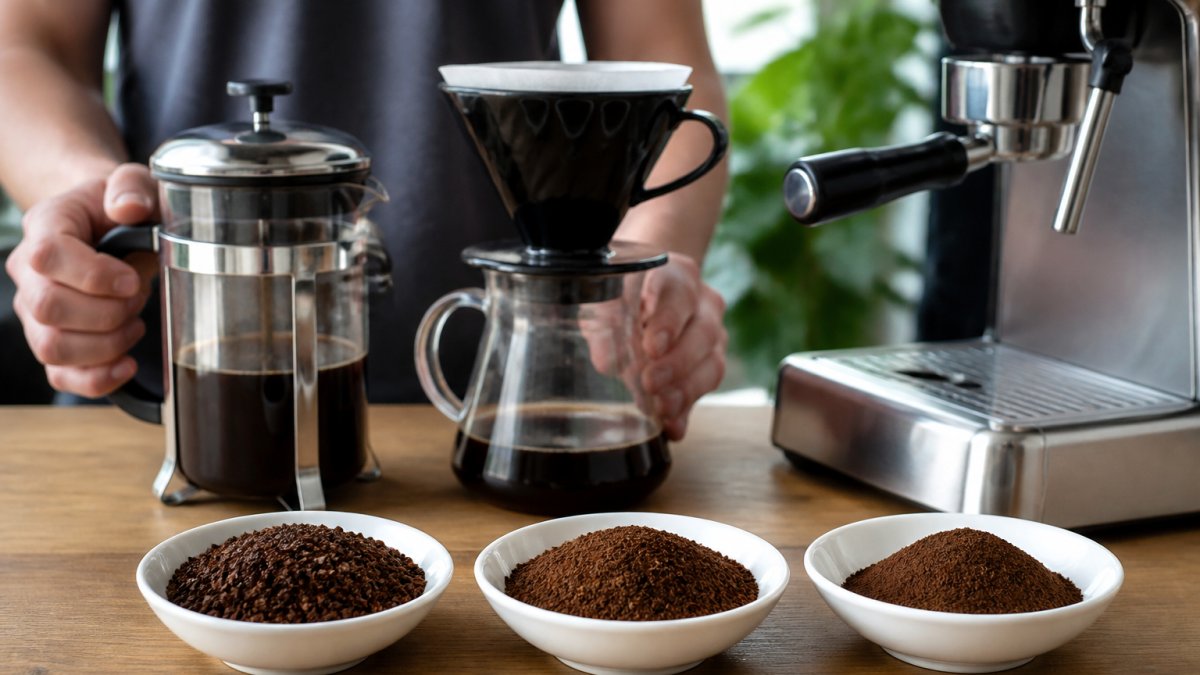
The rule is straightforward: longer brew time means coarser grind. Shorter brew time means finer grind.
Try our Best Sellers Sample Pack at https://chillediguanacoffeeco.com/products/best-sellers-sample-pack-6bean-cowboy-breakfast-peru-mexico-bali ($22.99). It includes six different roasts perfect for experimenting with your grinding techniques across multiple brew methods.

Start with these proven settings. Adjust from there based on taste.
Frequently Asked Questions
Should I grind coffee beans right before brewing?
Yes. Grinding immediately before brewing preserves the coffee's aromatics and oils, which begin to dissipate within minutes of grinding. Freshly ground coffee extracts more flavor and produces a richer, more complex cup than pre-ground beans. For best results with Chilled Iguana Coffee Co.'s specialty roasts, grind just before you brew to experience the full tasting profile, whether you're using our House Blend or a single-origin like Sumatra.
What is the best grind size for French press and cold brew?
Both French press and cold brew require a coarse grind, similar in texture to sea salt or breadcrumbs. The larger particles allow water to flow through slowly during steeping, preventing over-extraction and bitterness. For cold brew, use a coarse grind and steep 12-18 hours. Chilled Iguana's Cold Brew Coffee blend is specifically designed for this method and delivers smooth chocolate and toffee notes when steeped properly.
How do I know if my grind is too fine or too coarse?
If your coffee tastes bitter or sour, your grind is likely too fine, causing over-extraction. If it tastes weak or watery, your grind is too coarse, causing under-extraction. Adjust by making small changes to your grinder setting and testing until you find the sweet spot. Start with a medium grind for drip coffee, then refine based on taste. With consistent practice, you'll dial in the perfect extraction for your preferred brew method.
Is a burr grinder really better than a blade grinder?
Yes. Burr grinders produce uniform, consistent grind sizes, which is essential for even extraction. Blade grinders chop beans unevenly, creating a mix of sizes that extract at different rates, leading to inconsistent flavor. If you're serious about home brewing with specialty coffee from Chilled Iguana Coffee Co., a burr grinder is worth the investment, it's the single biggest upgrade you can make to improve your cup quality.
Dialing in your grind takes practice, but the payoff is immediate. Better extraction means better flavor. Better flavor means better mornings. Grab a bag of fresh-roasted specialty coffee from Chilled Iguana Coffee Co. and start experimenting with these coffee grinding techniques today. Our carefully sourced beans from around the world are roasted fresh and delivered straight to your door, ready for you to grind and brew.