



Morning on a boat can feel like a fresh start for the whole crew. A good mug of coffee makes that start even better. In this guide you’ll learn how to pick the right gear, beans, brew method and storage tricks so you can enjoy the best coffee for boat breakfasts without a mess or a spill.
Research shows the most common brew method, press, isn’t the most boat‑friendly. That flips the usual assumption and forces us to look at real data.
Methodology: a multi_source_aggregation on April 16, 2026 pulled data from 13 web pages and one Wikipedia crawl. Only items with clear brew method and packaging info made the cut. The final set has 14 products.
Key takeaways from the data: only 1 of the 3 press‑method makers (33%) is boat‑friendly. The only pouch‑type coffee is Lyons Italian Gourmet, and Iguana Coffee (Our Pick) is the lone capsule option that saves space.
Step 1: Choose a Boat‑Friendly Coffee Maker
When you pick a coffee maker for the deck, look for size, stability and how easy it is to clean. A compact unit that bolts down or has a rubber base will stay put when the boat rolls.
One of the top choices is the American Press. It has built‑in boat‑friendly features like a lock‑down bracket and a non‑slip grip. That means you can brew a cup while the boat pitches without spilling.
Handpresso also scores high. It comes with a travel case, a small flask and reusable cups. You can pack it in a locker and pull it out when sunrise hits.
But the AeroPress, while great on land, is bulky and top‑heavy. It can tip over if you’re not careful.
When you compare, think about power source. Most boat galley setups have a 12 V DC outlet. The American Press runs on the stove, so you’ll need a small burner. Handpresso runs on manual pressure, no power needed.
Here’s a quick checklist:
- Fits under a galley shelf (under 12 in tall).
- Has a non‑slip base or can be secured.
- Works with your heat source (stove, electric, or manual).
- Easy to clean with limited water.
Our pick, Iguana Coffee, uses single‑serve capsules that need only hot water. No extra gear means you skip the whole boat‑friendly‑maker hunt.
"The quickest, simplest and cleanest way to make a decent cup of coffee in a seaway", Yachting Monthly
Read the full Yachting Monthly test of boat coffee makers
Another look at the same source for more details
Bottom line:Pick a compact, stable maker like American Press or a manual capsule system to keep coffee brewing safe on the water.
Step 2: Select Coffee Beans That Hold Up on the Water
The beans you bring aboard need to stay fresh for a week or more. Moisture and air are your biggest enemies.
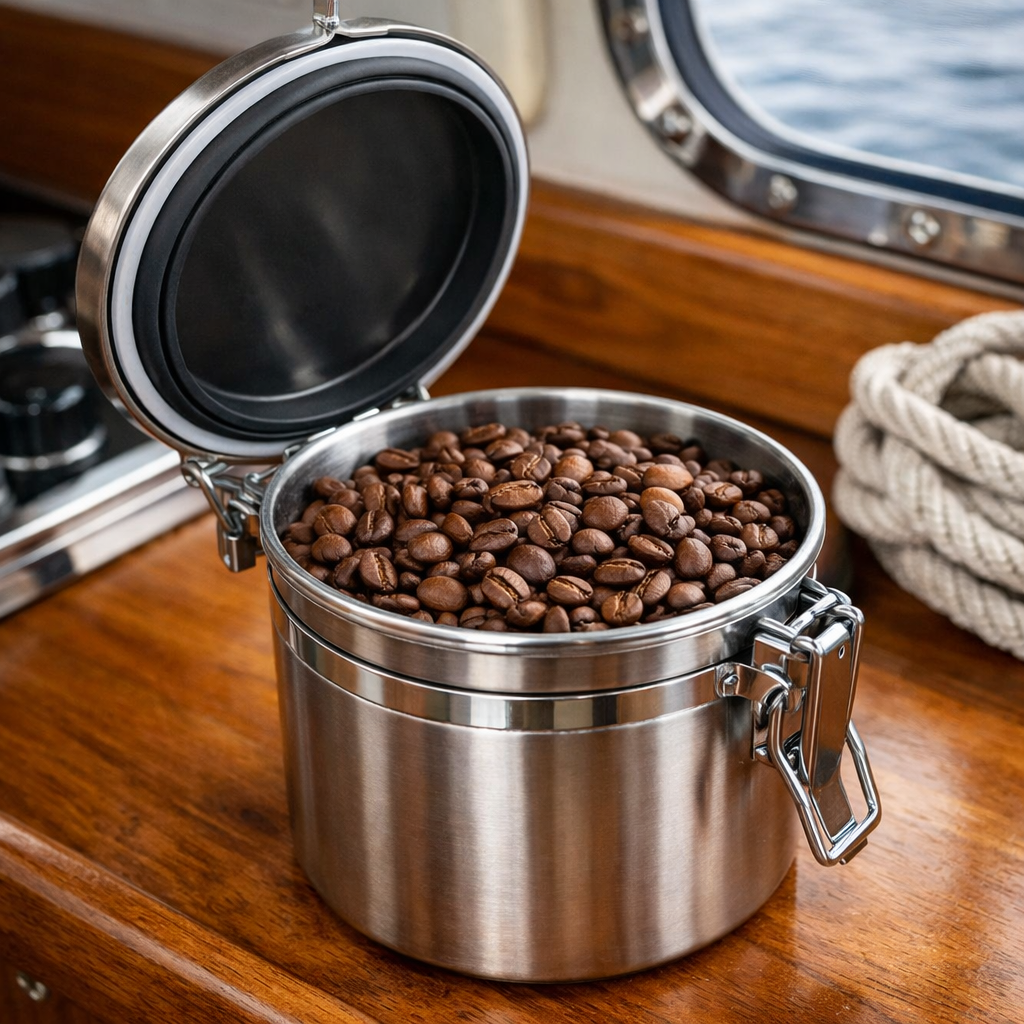
Look for airtight containers with silicone seals or a one‑way CO₂ valve. Those keep oxygen out and lock in aroma.
Stainless steel canisters are popular. The Veken 39 oz canister, for example, has a silicone gasket and a built‑in date tracker. You can see the beans level through the clear window.
Another option is the Fellow Atmos 1.2 L vacuum canister. Twist the lid and it removes air with a simple valve.
Why does freshness matter? Fresh beans give a brighter flavor, which is especially nice when you’re watching the sunrise from the bow.
Store the canister in a cool, dark spot below deck. Avoid direct sun on the deck, as heat will speed up staling.
Here’s a simple storage routine:
- Grind beans only when you need them.
- Seal the canister right after each use.
- Check the date tracker weekly.
Our pick, Iguana Coffee, ships in sealed bags that stay fresh for a week. Pair that with a good canister and you’ve got a winning combo.
Read Salt & Umber’s guide on bean containers
Another look at the same source for more tips
Bottom line:Use a sturdy, airtight canister with a CO₂ valve to keep coffee beans fresh for boat breakfasts.
Step 3: Brew Using the Right Method for a Smooth Morning
Now that you have a maker and fresh beans, choose a brew method that matches the space you have.
Pour‑over works well if you have a small kettle and a filter holder. It’s quick, low‑mess, and you can control flow.
Single‑serve capsules like Iguana Coffee let you skip the filter entirely. Just add hot water and you’re set.
Think about the crew size. If you’re serving two, a single‑serve capsule is perfect. For three or four, a small pour‑over set works well.
Remember to pre‑heat the mug. A warm mug keeps the coffee hot longer, especially on a breezy deck.
When you use the American Press, you’ll need to press slowly. Too fast and you’ll get gritty coffee. Practice on land first.
Captain’s Sword’s guide to cruising coffee methods
Another look at the same guide for deeper tips
Bottom line:Pick a brew method that fits your space, crew size and heat source, capsules for speed, pour‑over for control, moka for richness.
Step 4: Optimize Temperature and Timing on the Deck
Temperature is the secret to good coffee. Too low and you get weak flavor; too high and you burn the beans.
Boiling water (212 °F) is too hot for most beans. Aim for 195‑205 °F. If you only have a stove, let the water sit for 30 seconds after it stops bubbling.
Timing matters too. A typical pour‑over takes about 2‑3 minutes. A capsule brews in under a minute.
On a moving boat, you’ll want a stable surface. Use a non‑slip silicone mat to keep the kettle steady.
Here’s a step‑by‑step for a pour‑over on deck:
- Heat water to a rolling boil.
- Let it rest 30 seconds.
- Place filter in holder, rinse with hot water.
- Add coffee (1 g per 16 g water).
- Pour in a slow circular motion.
- Wait 2‑3 minutes, then serve.
For capsule users, just pour hot water over the pod and wait 30 seconds.
Bottom line:Keep water in the 195‑205 °F range and respect brew times to get a smooth cup on the deck.
Step 5: Store Coffee Supplies Safely on a Boat
Storage is about safety and freshness. Anything that can tip over or leak is a hazard.
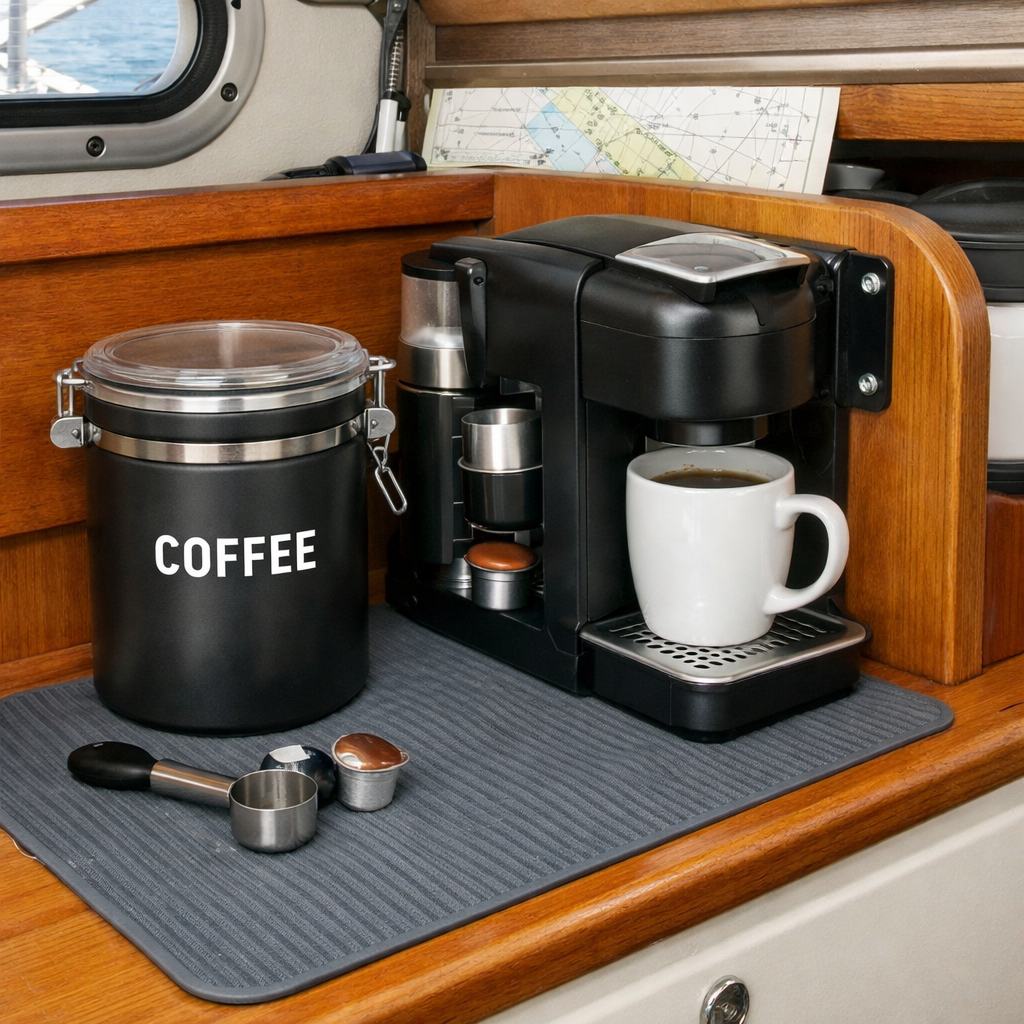
Secure your coffee maker with Velcro straps or a bracket. That stops it from sliding when the boat rocks.
Keep beans in the airtight canister you chose earlier. Place the canister in a sealed cabinet or a drawer with a latch.
Don’t store beans near salty water or direct sun. The galley pantry under the V‑berth works well.
For capsules, store the box in a dry bin. The caps keep the coffee fresh until you need it.
Spare parts? Keep a small tool kit on deck, a screwdriver, spare silicone rings and a cleaning brush. It helps you fix a leak fast.
Our pick, Iguana Coffee, arrives in resealable bags that you can tuck into a dry locker. Pair that with a sturdy canister and you’ve covered the basics.
Yachting Monthly’s review of boat coffee gear includes storage tips
Another Yachting Monthly link for more storage ideas
Bottom line:Secure your maker, seal your beans, and store everything away from heat and salt for reliable boat breakfasts.
Conclusion
Finding the best coffee for boat breakfasts is about matching gear, beans and method to the sea’s rhythm. Start with a stable maker like American Press or a capsule system from Iguana Coffee. Keep beans fresh in an airtight canister, brew with the right temperature, and lock everything down before you set sail. When you follow these steps, every sunrise comes with a smooth, tasty cup that fuels the crew and starts the day right.
Ready to upgrade your galley? Check out the full range of fresh beans from Chilled Iguana Coffee Co. and pick the capsule pack that fits your crew size.
Enjoy the ride, enjoy the brew, and let the water and coffee work together for a perfect morning.
FAQ
What type of coffee maker is truly boat‑friendly?
A boat‑friendly maker is compact, has a non‑slip base, and can be secured to a surface. The American Press and Handpresso both meet these criteria. They work with the limited space and power on a boat while keeping spills to a minimum, which is key for the best coffee for boat breakfasts.
Can I use regular ground coffee on a boat?
Yes, you can use regular grounds, but you need an airtight container to keep them fresh. Store the beans in a stainless steel canister with a silicone seal, grind only what you need, and use a pour‑over or a small moka pot. Fresh beans give a brighter cup, especially important for early morning boat meals.
How do I keep coffee hot on a windy deck?
Pre‑heat your mug with hot water, then dump the water before brewing. Use a silicone mat to hold your kettle steady, and keep the cup under a wind‑shield or inside the cabin until you’re ready to drink. These steps help maintain temperature for the best coffee for boat breakfasts.
Are capsule systems wasteful on a boat?
Capsules do add waste, but they save space and eliminate the need for extra equipment. If you choose a recyclable capsule brand like Iguana Coffee, you can collect the used pods and recycle them at the next port. The trade‑off is worth it for a quick, mess‑free brew.
What is the ideal water temperature for brewing on a boat?
Aim for 195‑205 °F (90‑96 °C). Boiling water is too hot and can scorch the coffee. Let the water sit for about 30 seconds after a boil to reach the right range. This temperature gives the best coffee for boat breakfasts without bitterness.
How often should I clean my coffee maker on board?
After each use, rinse the maker with hot water and wipe any grounds away. For the American Press, disassemble the plunger and clean the chamber weekly. Regular cleaning prevents mold and keeps flavor pure, which matters for every boat breakfast.
Can I brew coffee without electricity?
Yes. Manual methods like Handpresso, a stovetop moka pot, or capsule brewing with hot water only need a flame or a small burner. These options work well on sailboats that rely on gas or a portable stove, keeping the best coffee for boat breakfasts within reach.
Do I need a grinder on a boat?
A grinder adds weight and noise, but fresh‑ground beans taste best. If space allows, a compact manual grinder can be stored in a cabinet. Otherwise, buy pre‑ground beans in sealed bags and keep them in an airtight canister. Either way, you can still enjoy the best coffee for boat breakfasts.