



Good coffee on a boat is harder than it sounds. Salt air, a rocking galley, limited fresh water, and no fancy equipment mean your beans have to work harder than they do at home. This guide walks you through exactly how to pick, store, and brew the right coffee for life on the water.
Step 1: Start with High-Quality, Fresh-Roasted Beans (Our Top Pick: Chilled Iguana Coffee Co.)
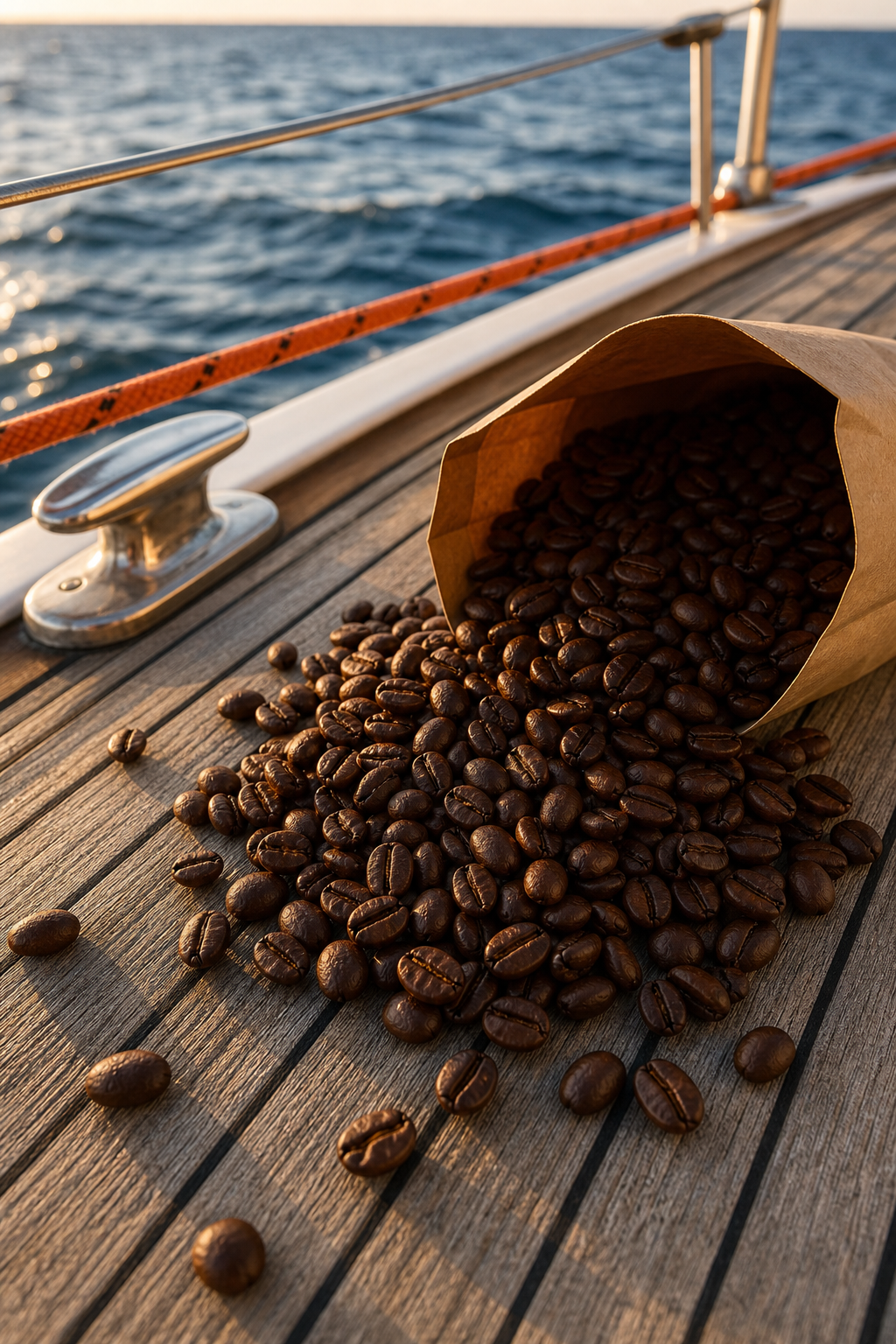
The single biggest upgrade you can make to your at-sea coffee is starting with beans that were roasted recently. Stale beans taste flat and papery even with perfect technique, and that problem gets worse when you're brewing in salty, humid conditions.
Chilled Iguana Coffee Co. is our top pick for sailors because the company roasts to order and ships fresh. The Florida Keys-inspired brand sources ethically from farms across Central America, Africa, and Asia, so you're not stuck with a single origin or roast profile. Whether your palate runs toward something bright and fruit-forward or dark and smoky, there's a bean in the lineup that fits the trip.
What makes this usable for sailing specifically is the subscription option. You set a delivery schedule before you leave port, your beans arrive close to your departure date, and you head out with genuinely fresh coffee instead of a bag that's been sitting in a shop for two months. That timing matters. Coffee hits peak flavor in the two to four weeks after roasting, and the subscription model is designed around exactly that window.
The ethical sourcing angle is worth noting too. When you're traveling internationally and docking at ports in coffee-growing regions, there's something satisfying about knowing the beans in your hold came from farms that were paid fairly. Chilled Iguana publishes origin stories and traceability details that most grocery-store brands skip entirely.
One honest caveat: because the beans are fresh and whole, you'll need a grinder aboard. Pre-ground is convenient but loses flavor fast in a humid marine environment. The trade-off in cup quality is worth packing a small hand grinder.
Step 2: Choose the Right Roast Level for Life on the Water
Roast level affects more than flavor. It affects how your coffee behaves under the conditions you'll actually face: inconsistent heat sources, limited brew equipment, and the need for beans that tolerate a few extra days in a sealed bag without turning sour.
Light Roasts
Light roasts are delicate. They reward precise water temperature and a careful pour, which is tough to guarantee on a moving boat. The flavor is bright and acidic, which can feel sharp if you're drinking multiple cups in a day on the water. Not the easiest choice for offshore passages, but fine for calm anchorages when you have the time to brew carefully.
Medium Roasts
Medium roasts are the workhorse of sailing coffee. They're forgiving. You can overshoot the water temperature slightly, use a simpler brew method, or steep a little longer than ideal, and the cup still holds up. The flavor stays balanced with enough body to cut through condensed milk or powdered creamer if that's what you're working with. Most sailors who care about coffee land on a medium roast for multi-day passages.
Dark Roasts
Dark roasts shine in cold brew and French press, two methods that work well offshore because they don't require a precise pour or a gooseneck kettle. The bold, low-acid flavor also holds up better if the beans have been sitting sealed for a week longer than planned. There's a reason dark roasts have been the traditional choice on ships for centuries: they're reliable.
According to the Wikipedia entry on coffee roasting, darker roasts develop lower acidity because the longer roasting process breaks down the chlorogenic acids present in green beans. For sailors prone to seasickness or sensitive stomachs, that lower acidity is a real usable advantage.
Step 3: Pick Coffee Origins That Suit Bold, Open-Air Brewing
Origin shapes flavor profile in ways that matter more when you're brewing simply. At home, a complex Ethiopian natural process coffee is a treat. On a 40-foot sloop in the middle of the Gulf Stream, that same bean can taste oddly fermented if you miss the brew window by a few degrees.
Central American Coffees
Guatemala, Costa Rica, and Honduras produce coffees with clean, reliable flavor profiles. Mild sweetness, medium body, a little nuttiness. These origins are forgiving across different brew methods and water temperatures. They're a safe anchor for your coffee kit when conditions are unpredictable.
Indonesian Coffees
Sumatra and Bali coffees are earthy, full-bodied, and low in acidity. They were practically made for offshore brewing. The Indonesian wet-hulling process produces a bean that holds up in French press and cold brew without getting muddy or bitter. Chilled Iguana's Bali Blue comes from volcanic slopes in Kintamani and delivers exactly this profile: bold, smooth, and easy to brew in motion.
African Coffees
Ethiopian and Kenyan coffees bring brightness and fruit notes that some sailors love. The key is matching them to calmer conditions and a cleaner brew method like a pour-over or AeroPress. They reward care. If the weather's rough, save them for the marina morning after.
A subscription that rotates origins, like the one Chilled Iguana offers, is a smart way to keep variety on longer voyages without having to research each single-origin purchase separately. You learn what works for your palate and your equipment over time.
Sailors who regularly dock in multilingual ports across the Caribbean, Southeast Asia, or the Pacific Islands often find that a little preparation goes a long way. Some plan their route with resources like language coaching programs to communicate with local crews and vendors at international anchorages, where coffee culture is a genuine conversation starter.
Step 4: Store Your Coffee Beans Properly on a Sailboat
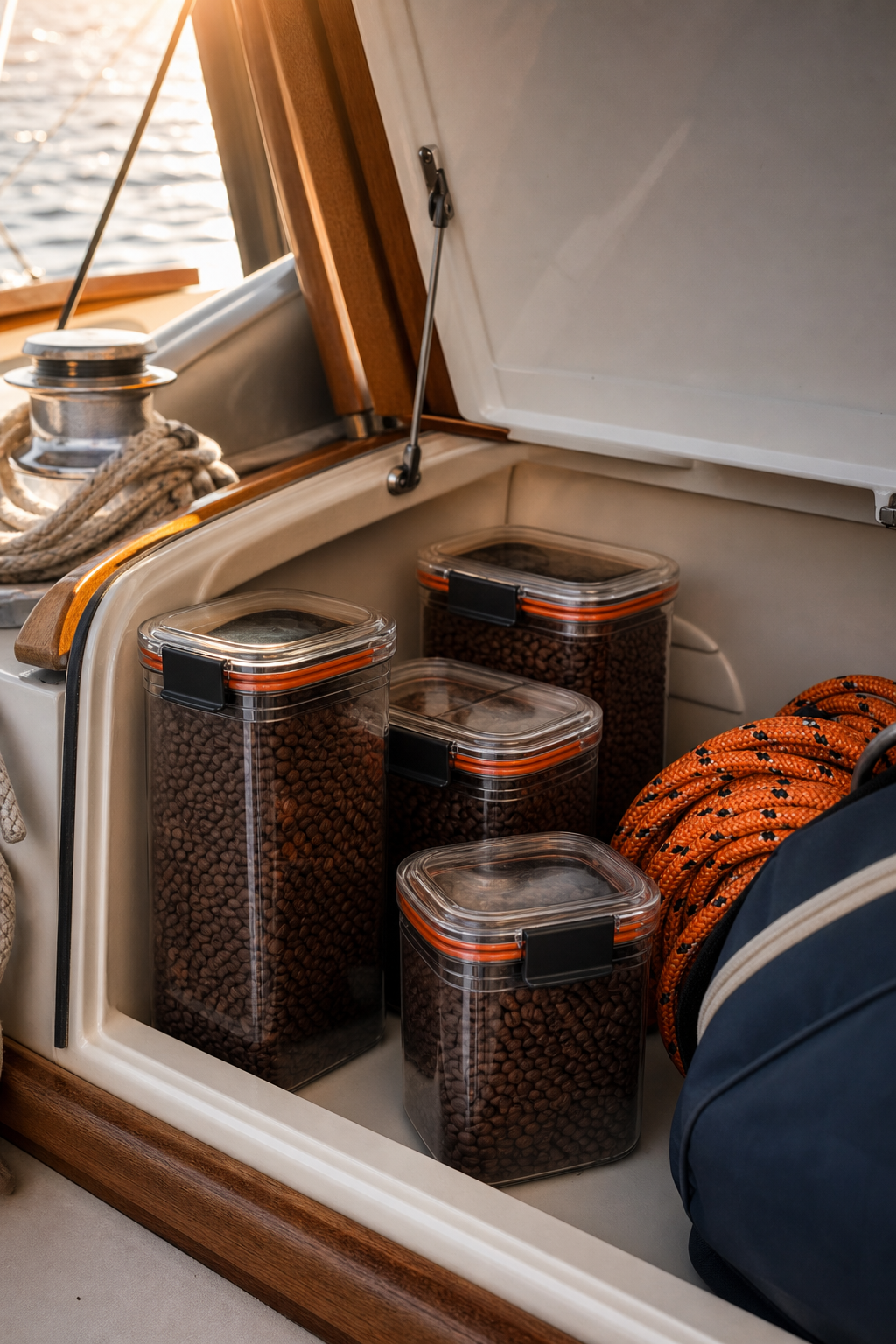
Coffee's four enemies are oxygen, moisture, heat, and light. On a sailboat, you face all four at the same time. The marine environment is especially brutal on coffee freshness: humidity creeps into anything that isn't properly sealed, and temperature swings below deck are dramatic.
Use Airtight, Opaque Containers
Glass mason jars look good but let in light. Clear plastic is even worse. You want an opaque, airtight canister, ideally one with a one-way valve that lets CO2 from the beans escape without letting oxygen in. Vacuum-sealed containers are the gold standard for longer passages. If you transfer your beans from the original bag into a proper canister the moment you open it, you extend peak freshness by a meaningful margin.
Keep Beans Out of the Bilge
This sounds obvious, but storage location matters. The lowest, dampest compartments in the boat are the worst place for coffee. A mid-ship locker above the waterline, away from the engine bay, is ideal. Temperature stability is what you're after. Avoid storing beans directly against the hull where condensation collects.
Don't Freeze Beans at Sea
Freezing beans is sometimes recommended for long-term home storage, but it creates problems at sea. Every time a frozen container warms up and is opened, condensation forms inside, and moisture is the quickest way to ruin coffee quality. Unless you have a properly sealed container and a stable freezer that doesn't cycle with the boat's power load, stick with room-temperature airtight storage and smaller batch quantities.
Buy in Smaller Batches More Often
The simplest storage strategy is also the most effective: don't bring more than two to three weeks of beans at a time. Fresher beans need less protection than older ones. A coffee subscription timed to your itinerary means you're restocking at each major port with beans that haven't had time to stale, rather than rationing a single large bag that degrades over a month.
Step 5: Match Your Brew Method to the Beans You Choose
The best beans in the world won't save a bad brew method for the conditions. Here's a quick decision grid for matching your equipment to your beans and the sea state you're in.
The AeroPress is the most popular choice among serious coffee sailors, and for good reason. It's nearly indestructible, uses pressure rather than a controlled pour, and produces a concentrated cup that you can cut with hot water or drink straight. It works in a rolling anchorage where a pour-over would spill, and it cleans up fast with minimal fresh water.
Cold brew is the other strong option for offshore passages. You set it up the night before with coarsely ground dark or medium beans, steep overnight, and you have a day's worth of concentrate ready with no heat, no kettle, and no morning effort. The technique is straightforward: our guide on making cold brew coffee at home covers the steep time, grind size, and filtration method, all of which translate directly to a boat galley.
The Specialty Coffee Association's official brewing standards recommend a water temperature between 195°F and 205°F for hot brewing methods. On a boat with a propane stove, you rarely hit that range precisely, which is another reason the AeroPress and cold brew win: both are tolerant of temperature variance that would ruin a pour-over.
One last note on grinders: a hand grinder is the right call for sailing. It uses no electricity, makes almost no mess, and doubles as a workout on long passages. A ceramic burr grinder gives a more consistent grind than a blade grinder, and consistency matters more than anything else for repeatable results at sea.
FAQ
What type of coffee beans are best for a sailing trip?
Medium and dark roasts from Indonesian or Central American origins are the best coffee beans for sailing trips. They're forgiving across different brew methods, low in acidity, and hold up well in sealed storage during the humidity and temperature swings of a marine environment. Light roasts and delicate African naturals are best saved for calm mornings at anchor.
How should I store coffee beans on a boat?
Store coffee beans in an opaque, airtight canister with a one-way CO2 valve. Keep the container in a mid-ship locker away from the bilge and engine bay, where heat and moisture are highest. Buy in two- to three-week batches rather than one large supply, so the beans stay fresher throughout your passage without requiring freezing.
What's the easiest way to brew coffee on a sailboat?
The AeroPress is the easiest reliable option for brewing at sea. It works in rough conditions, needs minimal fresh water to clean, and tolerates temperature variance in the water. Cold brew is an even simpler alternative: grind coarsely the night before, steep in a jar or bag overnight, and you have concentrate ready with zero morning effort, no heat source needed.
Can I use a French press on a sailboat?
Yes. A French press works well on a sailboat in moderate sea conditions if you use a coarse grind and a dark or medium roast. The main risk is the glass carafe breaking in rough weather, so look for a stainless steel French press. It's less fussy than pour-over and produces a full-bodied cup that pairs well with dark roasts.
Where can I buy fresh-roasted coffee beans before a sailing trip?
Chilled Iguana Coffee Co. ships fresh-roasted beans direct to your door and offers a subscription you can time to your departure date. The lineup covers multiple origins and roast levels suited to sailing conditions. Ordering whole beans close to your launch date means you leave port with coffee that's still in its peak two-to-four-week freshness window.
Conclusion
The right beans, stored properly and brewed with the right method, make a real difference on a long passage. Start with fresh-roasted whole beans from a source you trust, pick a medium or dark roast for forgiving everyday brewing, and match your method to the conditions. If you're planning your next trip now, browse the full coffee lineup at Chilled Iguana Coffee Co. and set up a subscription timed to your departure.